Homeowner Name
Bosco Sodi and Lucia Corredor
About (information sourced from public biographical records)
Bosco Sodi is a contemporary artist represented by nine international galleries; Lucia Corredor founded AD100-listed DECADA design firm. Their April 2022 Architectural Digest feature highlighted their Folegandros home. Both from Mexico City's elite—Bosco from the multi-generational Sodi dynasty, Lucia from established business circles—they built careers through galleries and design while founding Casa Wabi artist residency.
Epstein Connection?
 DETECTIVE
 RESEARCHER
 EDITOR
Property Details
Wealth Score
5.0
/ 10
Wealth Source
MIXED
Bosco Sodi's career as a blue-chip contemporary artist represented by nine major…
Professional Category
ART
Fame Score
6
39,043 wiki views
Board Memberships
Unknown (legacy text), None found as traditional museum trustees. Bosco's work is in permanent collections of Harvard Art Museums, Nasher Sculpture Center, Walker Art Center, The Phillips Collection, and Museo Jumex.; Founder, Fundación Casa Wabi; Founder, Assembly (Monticello, NY); Treasurer (Lucia Corredor), Foundation for Mexican Art and Culture; Unknown (legacy text), Founders of Fundación Casa Wabi (Oaxaca, Mexico); Founders of Assembly (non-profit art space, Monticello, NY); Lucia serves as Treasurer of the Foundation for Mexican Art and Culture.
Influence Score
—
Architectural Digest Issue:
“the long view”
by Sam Cochran
Home Score Summary (Custom Aesthetic Scoring Instrument v2.3)
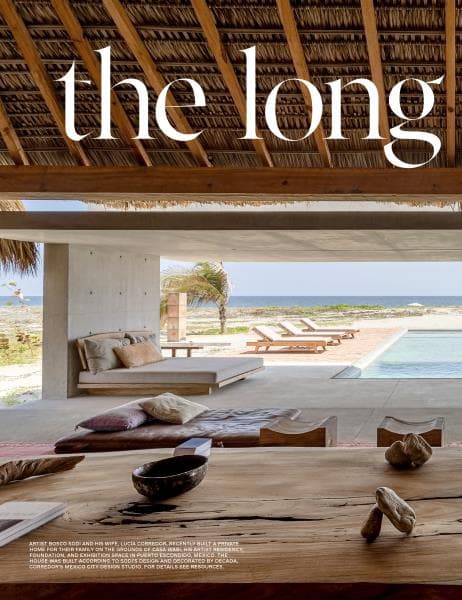
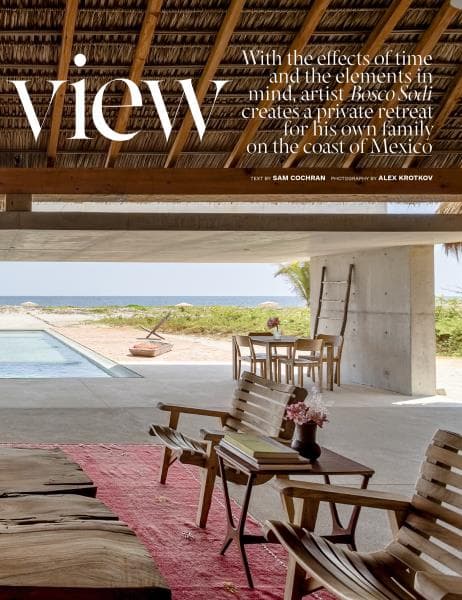
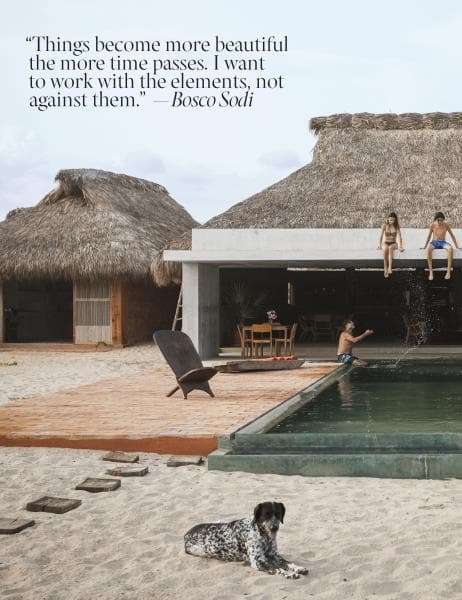
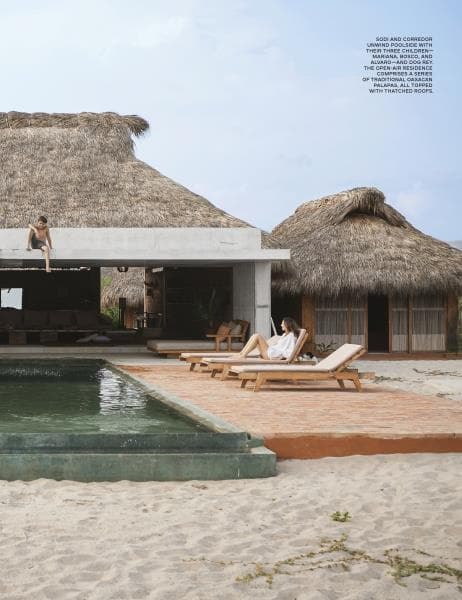
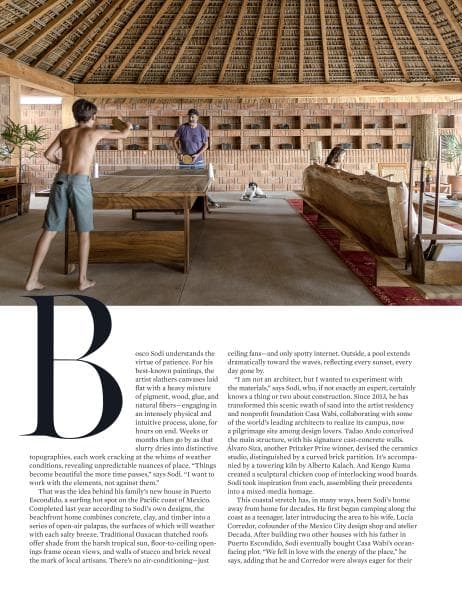
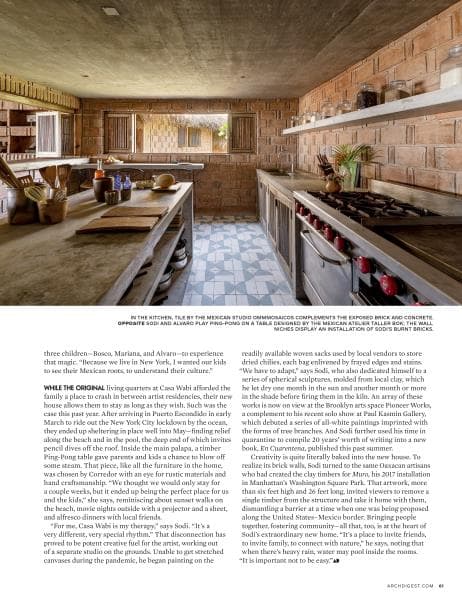
A raw concrete and thatch compound where an artist's philosophy of entropy becomes architecture — Sodi built a home that wants to be weathered by salt air and time rather than preserved against them. The Pacific Ocean is treated as the primary design element, with every open wall framing it and sand drifting in as welcome texture. It's genuinely anti-precious: children cannonball off the roof, a spotted dog claims the beach, and ceramic spheres sit on the floor like geological formations rather than art objects.
Feature Pages
 p.56
p.56 p.57
p.57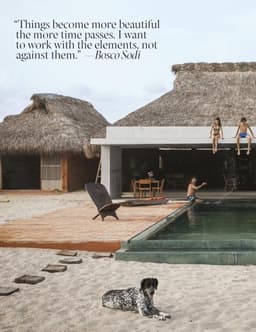 p.58
p.58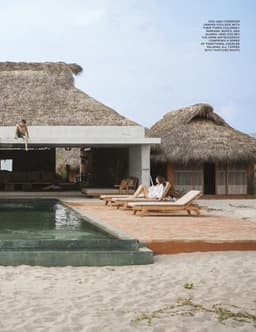 p.59
p.59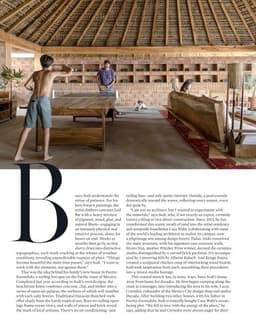 p.60
p.60 p.61
p.61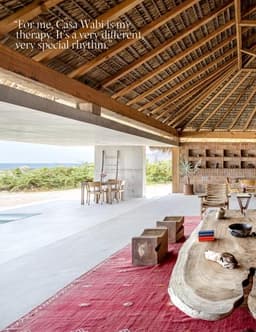 p.62
p.62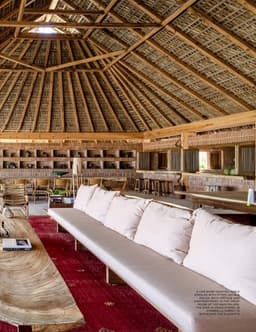 p.63
p.63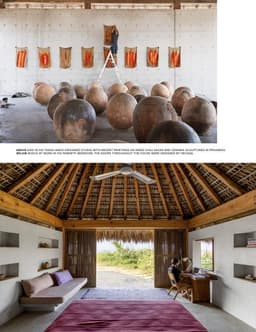 p.64
p.64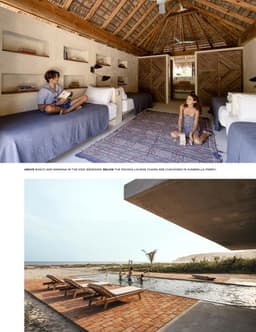 p.65
p.65Home Score
Radial Graph
The Space group's material authenticity (driven by high Material Warmth and Grandeur) dominates the aesthetic profile, while Stage is substantially suppressed by minimal Formality and Theatricality, leaving Story as a secondary anchor in Provenance and Hospitality that bridges the artist's lived philosophy with deliberate restraint against curatorial display.
Scoring Explanations
Massive open-air palapas with soaring thatched roofs, concrete structural elements, and dramatic floor-to-ceiling openings framing the Pacific Ocean create impressive architectural volume, though the raw materials keep it from feeling palatial.
Every surface radiates warmth — live-edge timber tables, thatched palm roofs, terracotta brick pavers, linen cushions, woven textiles, red rugs, and sand literally flowing into the living spaces create an entirely tactile, natural material palette.
The spaces are deliberately sparse with few objects — a bowl here, some stones there, scattered cushions — breathing room dominates, and the ocean view is the primary decorative element.
The traditional Oaxacan palapa construction with thatched roofs references regional vernacular building traditions, but the concrete structure and contemporary furniture create an intentional dialogue between indigenous craft and modern architecture.
Sodi's own ceramic sculptures, paintings on dried chili sacks, locally sourced materials, handcrafted doors by Decada, and the artist's quote about wanting things to weather and age convey genuine accumulated meaning — this is an artist's working environment, not a decorated retreat.
The article describes Casa Wabi as an artist residency and foundation space, the house is designed for family gatherings with three children, and Sodi explicitly says 'It's a place to invite friends, to invite family' — the open-plan pool-facing entertaining spaces and multiple guest palapas confirm social intent.
Children jump into the pool from the roof, a dog lounges on the sand, there are no doors between inside and outside, floor cushions replace formal seating, and sand drifts freely into living areas — the house actively resists any behavioral rules.
Decada designed and decorated the house with Sodi's own design, creating composed but not overly styled spaces — the live-edge tables and Sunbrella-cushioned loungers are professionally selected, but the artist's own ceramics and paintings give it genuine personal authorship.
Despite the Tadao Ando-designed studio and name-dropping of Pritzker winners Alvaro Siza and Kengo Kuma at adjacent Casa Wabi, the home itself is anti-performative — raw concrete, weathering surfaces, and the explicit philosophy of working with the elements rather than displaying wealth.