Homeowner Name
Jorge Pardo
About (information sourced from public biographical records)
Jorge Pardo is a contemporary artist known for architectural installations who operates from a self-designed studio in Mérida, Mexico. His December 2018 AD feature showcased this home/studio he created. Born in Havana and raised in Chicago after immigrating as a refugee at age 6, his working-class parents labored in a staple factory and as a bookkeeper while he became the first to attend college and built an international art practice.
Epstein Connection?
 DETECTIVE
 RESEARCHER
 EDITOR
Property Details
Wealth Score
9.0
/ 10
Wealth Source
SELF MADE
Contemporary art career: gallery sales through top-tier galleries (Petzel, Victo…
Professional Category
ART
Fame Score
5
3,704 wiki views
Board Memberships
—
Influence Score
—
Architectural Digest Issue:
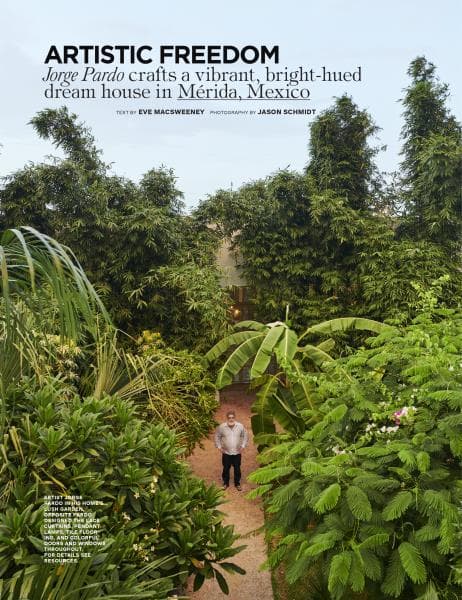
“artistic freedom”
by Eve MacSweeney
Connection Summary (Created by Opus 4.5 based on all evidence collected)
Investigation identified Jorge Pardo in DOJ documents solely as an artist and homeowner featured in architectural documentation related to a contemporary home in Mérida, Mexico, with no connection to Epstein activities. No confirmed connection between Pardo and Jeffrey Epstein was established.
DOJ Documents
13
results in Epstein Library
Evidence Sources
1
DOJ Library
Evidence Entries
0
distinct pieces
Confidence
0%
pipeline certainty
Connection Evidence
The following documents were used as direct evidence of a possible connection for the Researcher and Editor to make an assessment:
Agentic AI Reasoning Logic

Researcher’s Assessment: COINCIDENCE
Jorge Pardo appears in DOJ documents as an artist/homeowner featured in an Architectural Digest article about a contemporary home in Mérida, Mexico — not as a person connected to Epstein. The 'medium confidence' DOJ match reflects ambiguous context (name appears in art auction/property documentation), not evidence of association.
Reviewed 2/19/2026

Editor’s Final Judgement: REJECTED
Auto-rejected: triaged as COINCIDENCE — Jorge Pardo appears in DOJ documents as an artist/homeowner featured in an Architectural Digest article about a contemporary home in Mérida, Mexico — not as a person connected to Epstein. The 'medium confidence' DOJ match reflects ambiguous context (name appears in art auction/property documentation), not evidence of association.
Reviewed 2/19/2026
Home Score Summary (Custom Aesthetic Scoring Instrument v2.3)
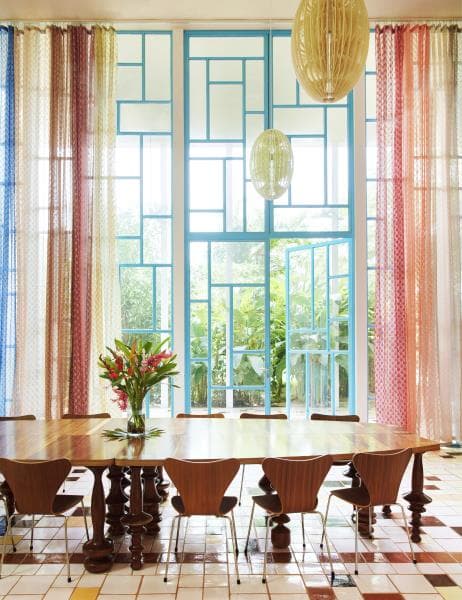
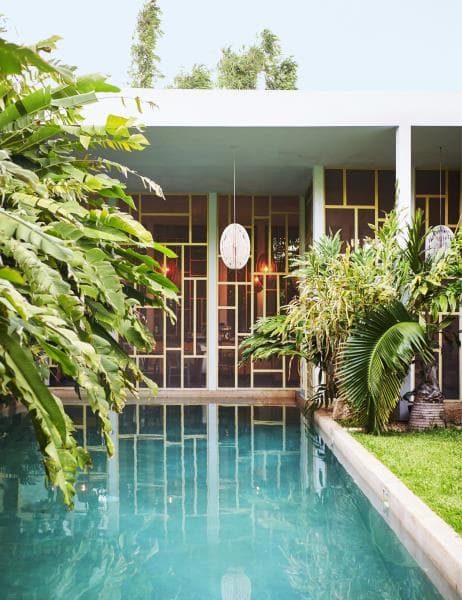
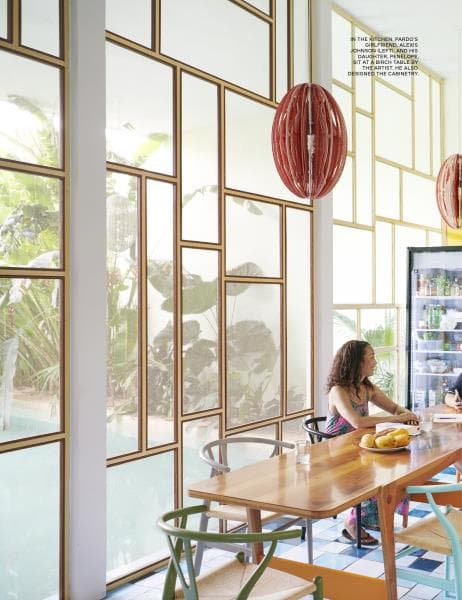
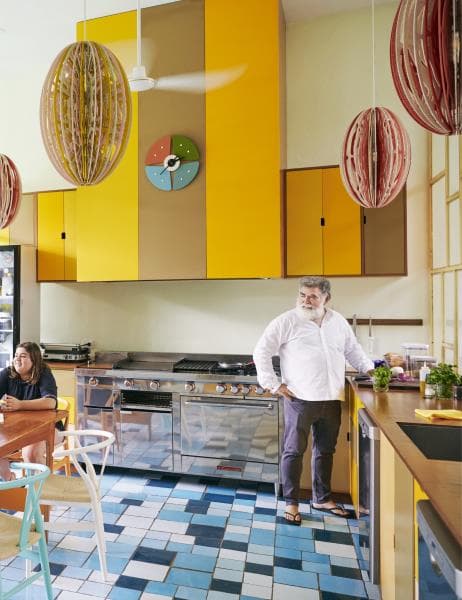
An artist's total environment where the house itself is the artwork — every tile, pendant, curtain, and mural designed by one hand to create a coherent tropical maximalism. The nearly 20-foot ceilings and 17th-century shell provide the stage, but Pardo fills it with a joyful, chromatic density that feels more like walking through a living painting than a decorated home. It's bold and unapologetic, but the sandals-by-the-door ease keeps it from tipping into performance.
Feature Pages
 p.106
p.106 p.107
p.107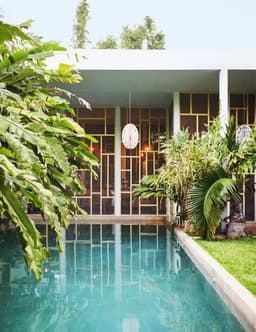 p.108
p.108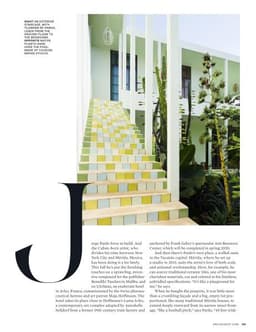 p.109
p.109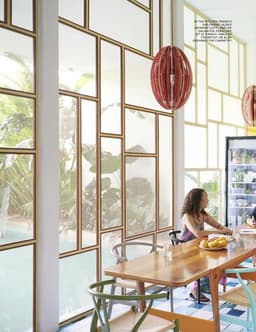 p.110
p.110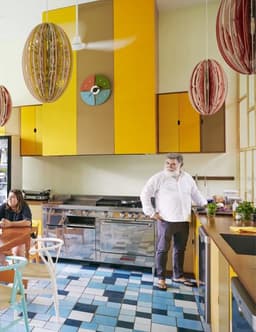 p.111
p.111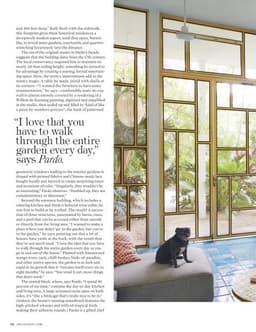 p.112
p.112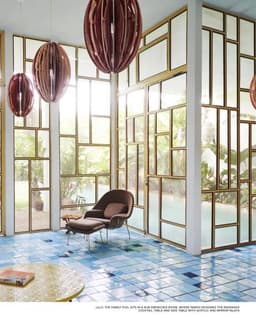 p.113
p.113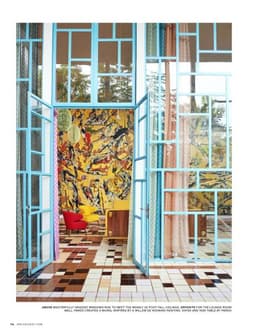 p.114
p.114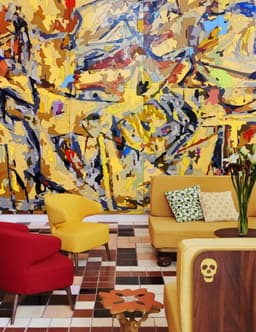 p.115
p.115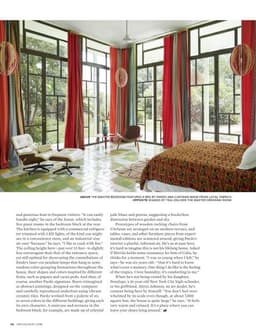 p.116
p.116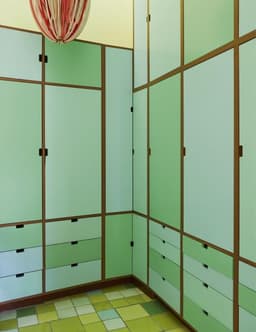 p.117
p.117Home Score
Radial Graph
Space dominates with maximalist saturation (5.0) offsetting moderate material warmth, while Stage remains suppressed across all axes (formality, curation, theatricality each at 2.0), creating a pattern where aesthetic density is achieved through accumulated material presence rather than deliberate compositional drama.
Scoring Explanations
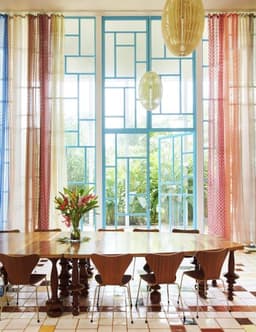
Nearly 20-foot ceilings throughout, soaring geometric window walls, and massive volume in the dining and living spaces create an architecture that impresses without gilded excess.
A balanced tension between cool ceramic tile floors and geometric metal window frames against warm wood furniture, layered textiles, and lush tropical garden views bleeding through every aperture.
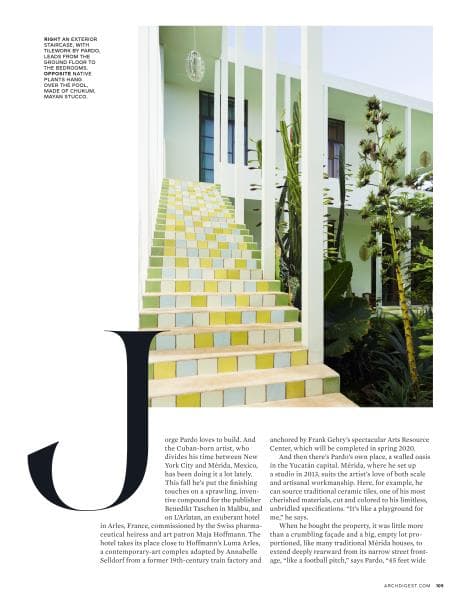
Every surface is activated — patterned tile floors in shifting palettes, wall-scale de Kooning-inspired murals, pendant lamps in varied colors, layered curtain fabrics, skull-inlaid furniture, and color-blocked cabinetry — all in rigorous dialogue as a single artist's unified vision.
The 17th-century building facade is preserved per local conservancy, but the interior is entirely contemporary and artist-designed with no period commitment beyond the inherited shell.
The building dates from the 17th century and Pardo mentions Mérida holds romantic resonance from his Cuban heritage, but everything inside is his own creation — convincingly rooted in place through local ceramics and artisanal craft rather than inherited objects.
The article explicitly states 'it can easily handle eight' guests, describes five guest rooms, a catering kitchen with commercial refrigerator, a pool, and multiple terraces — the house is designed as much for generous hosting as personal retreat.
Despite the grand scale, the article describes it as 'a place where you can leave your shoes lying around,' with barefoot sandal-wearing occupants, a family pug on the floor, and spaces that feel playful rather than disciplined.
Pardo designed every element himself — the furniture, tiles, pendants, murals, cabinetry, and curtains — as an extension of his art practice rather than editorial styling; this is a single artist's total environment, self-curated to an extreme degree.
The visual intensity serves Pardo's artistic vision rather than performing wealth for an audience — the de Kooning wall is his own reinterpretation, the furniture is his own design, and the maximalism reads as genuine creative compulsion rather than brand display.
Analysis
AD Appearance
CollapseIssue
12/2018
Notes
{"social_circle": "Connected to publisher Benedikt Taschen (compound in Malibu), Swiss pharmaceutical heiress and art patron Maja Hoffmann (hotel project in Arles), Annabelle Selldorf (architect), Frank Gehry (Arts Resource Center), and girlfriend Alexis Johnson"}
Location
Mérida, Yucatán
Design Style
Contemporary artist-designed tropical modernism with handcrafted ceramic tiles, bold color, and geometric window patterns
Article Title
Artistic Freedom
Key Findings
Expand