Homeowner Name
Anne and Edward Storm
About (information sourced from public biographical records)
Anne and Edward Storm are California real estate developers. Their Woodside modernist home was featured in Architectural Digest in February 2013. Edward built his fortune through commercial real estate development, with no evidence of inherited wealth.
Epstein Connection?
 DETECTIVE
 RESEARCHER
 EDITOR
Property Details
Wealth Score
7.0
/ 10
Wealth Source
SELF MADE
Commercial real estate development (Edward Storm)
Professional Category
REAL_ESTATE
Fame Score
7
133,571 wiki views
Board Memberships
—
Influence Score
—
Architectural Digest Issue:
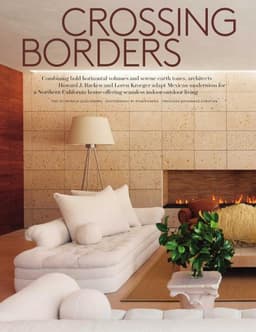
“crossing borders”
by Patricia Leigh Brown
Home Score Summary (Custom Aesthetic Scoring Instrument v2.3)
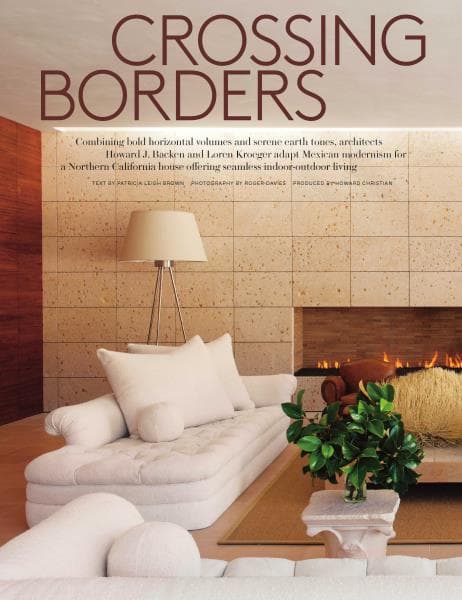
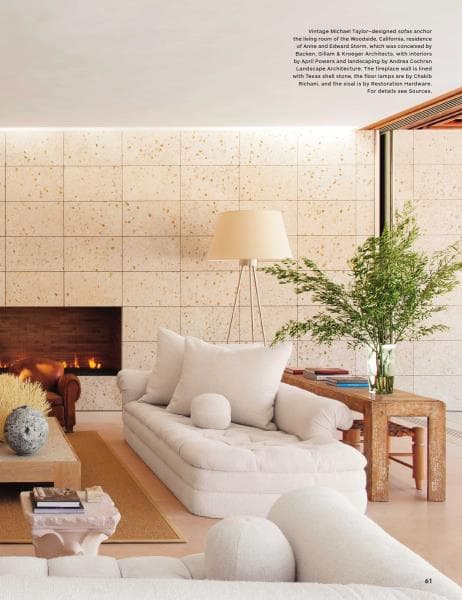
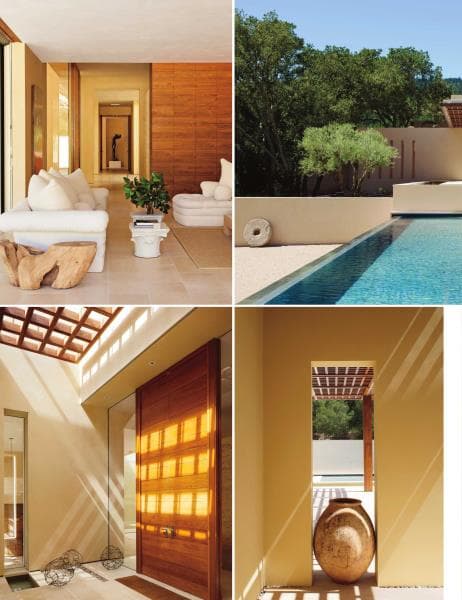
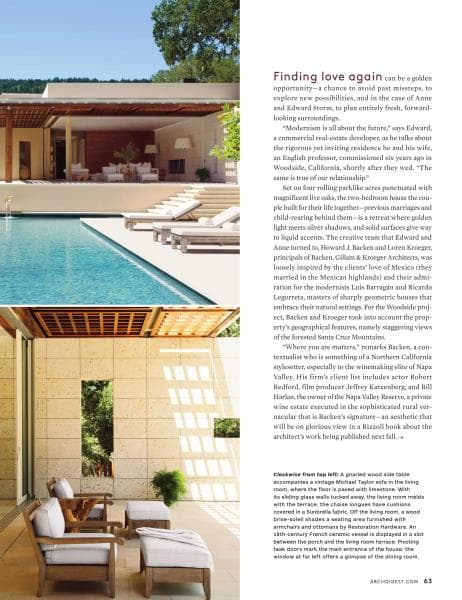
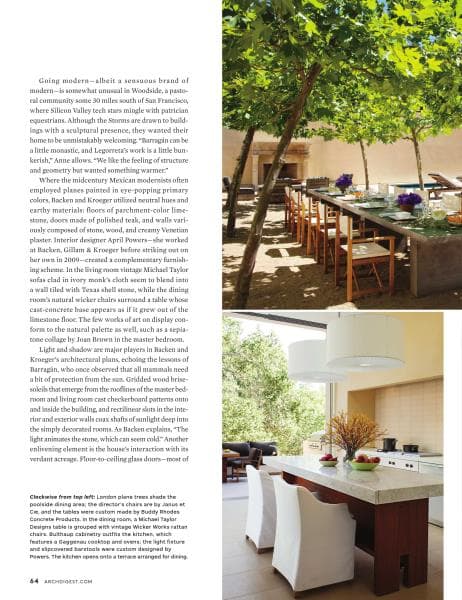
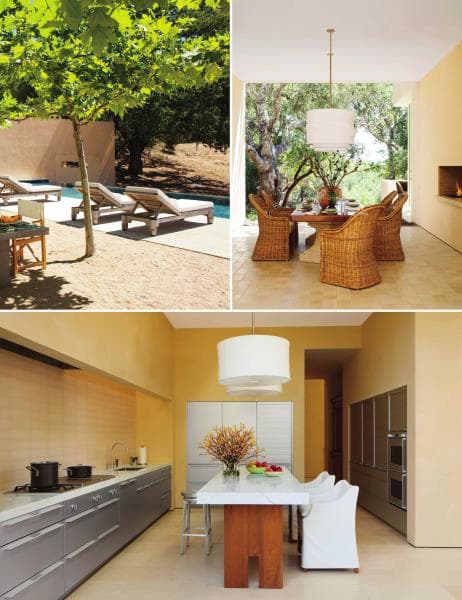
Mexican modernism transplanted to Northern California oak country — monumental stone walls and teak doors frame views of rolling hills while a disciplined earth-tone palette makes the indoors feel like an extension of the landscape. The restraint is almost monastic: vast warm surfaces, very few objects, and light doing most of the decorative work through gridded brise-soleil shadows. It's a house that performs serenity for its owners, not wealth for its visitors.
Feature Pages
 p.60
p.60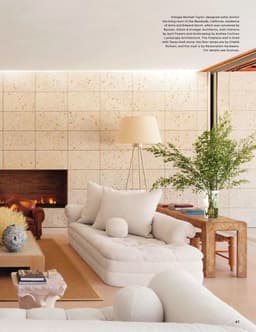 p.61
p.61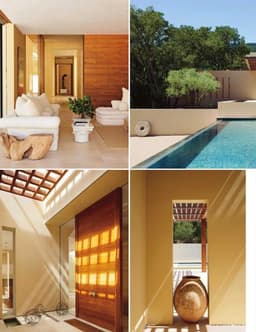 p.62
p.62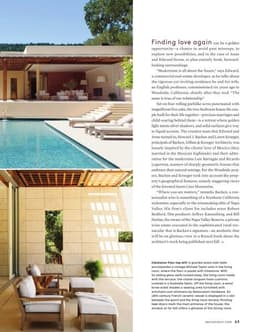 p.63
p.63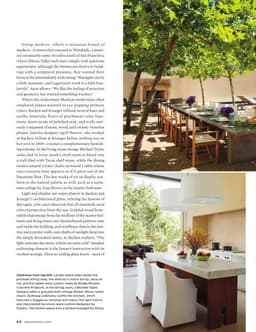 p.64
p.64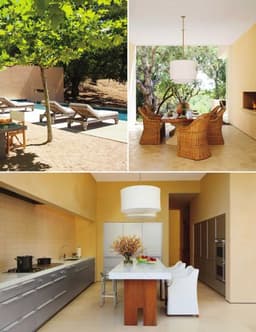 p.65
p.65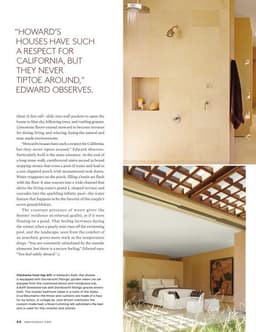 p.66
p.66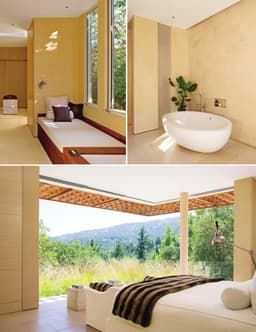 p.67
p.67Home Score
Radial Graph
The Storm home's score pattern shows Space dominance (3.7) anchored by Material Warmth (5) and Grandeur (4), while Story remains suppressed (2.3) across Historicism and Provenance, and Stage achieves middling balance (3.0) driven by Curation (4) but restrained Theatricality (2)—a configuration that privileges sensory and compositional restraint over narrative depth or performative display.
Scoring Explanations
Soaring ceilings with 11-foot floor-to-ceiling glass doors, monumental Texas shell stone fireplace wall, cantilevered stairs, and bold horizontal volumes give the architecture serious weight without tipping into palatial excess.
The palette is almost entirely warm naturals — parchment-color limestone floors, polished teak doors, Texas shell stone walls, creamy Venetian plaster, linen upholstery, wicker chairs, and wood side tables create an enveloping tactile warmth throughout.
Rooms are deliberately spare with few objects — the living room has low sofas, a single floor lamp, one plant, and a gnarled wood table; art is minimal and the article notes 'the few works of art on display conform to the natural palette.'
The design is loosely inspired by Mexican modernists Barragán and Legorreta — bold geometric volumes, brise-soleil grids, and earth tones reference midcentury Mexican modernism — but the execution is contemporary with no commitment to a specific historical period.
This is new construction commissioned six years prior, with vintage Michael Taylor sofas and an 18th-century French ceramic vessel providing some patina, but the overall impression is of a freshly realized design vision rather than accumulated life.
The two-bedroom house was built for the couple's life together, with the article emphasizing personal retreat and the relationship, but the grand L-shaped terrace, pool, outdoor dining under London plane trees, and multiple terraces suggest comfortable entertaining capacity.
The spaces are carefully composed and respect-commanding — you wouldn't put your feet up on the limestone floors — but the deep, pillowy white sofas, organic wood tables, and seamless indoor-outdoor flow keep the mood relaxed rather than rigid.
Interior designer April Powers created a tightly controlled complementary furnishing scheme with styled vignettes — the monochromatic ivory palette, perfectly placed floor lamps by Chakib Richani, vintage Michael Taylor sofas, and deliberate restraint all signal professional editorial direction.
The wealth is substantial but whispered rather than broadcast — no brand-name art, no recognizable statement pieces, no gilding; the luxury is in the architecture itself, the land, and the quality of natural materials rather than in anything that demands recognition.