Homeowner Name
Joy de Rohan-Chabot
About (information sourced from public biographical records)
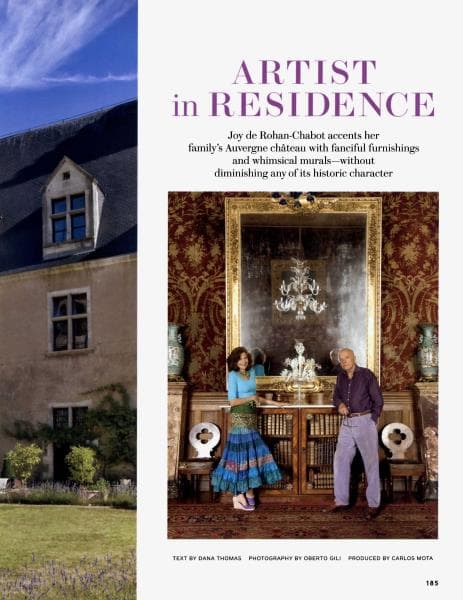
Joy de Rohan-Chabot is a decorative artist from the House of Rohan-Chabot, French nobility established in 1645. Architectural Digest featured her Auvergne property in November 2011, which she designed herself. She inherited aristocratic wealth spanning centuries and was raised surrounded by great decorative arts.
Epstein Connection?
 DETECTIVE
 RESEARCHER
 EDITOR
Property Details
Wealth Score
3.0
/ 10
Wealth Source
OLD MONEY
Inherited aristocratic and industrial wealth (Bourlon de Rouvre, Lebaudy sugar d…
Professional Category
ART
Fame Score
4
Board Memberships
—
Influence Score
—
Architectural Digest Issue:
“artist in residence”
by Dana Thomas
Home Score Summary (Custom Aesthetic Scoring Instrument v2.3)
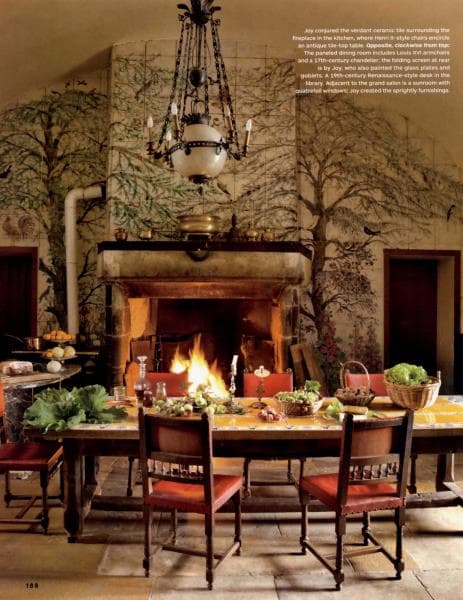
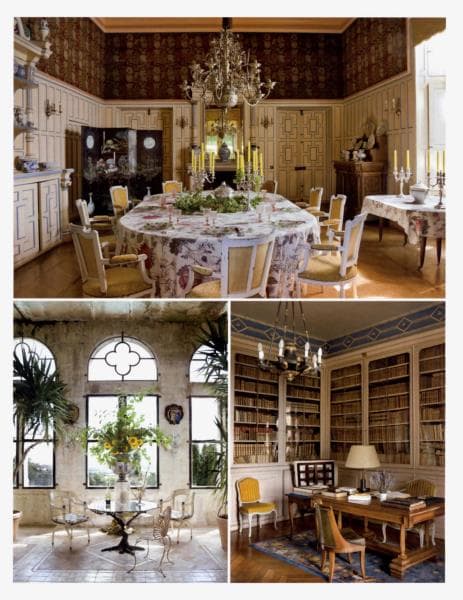
Generational aristocratic accumulation animated by an artist's restless hand. Joy de Rohan-Chabot treats a 15th-century château not as a museum but as a living canvas — her whimsical murals, bronze flower chairs, and painted ceramics layer over centuries of Rohan-Chabot provenance without a trace of self-consciousness. The result is maximalism with genuine soul: every object has either been inherited or personally made, and the patina on both is real.
Feature Pages
 p.184
p.184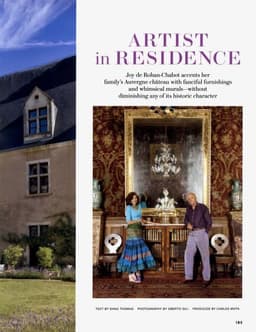 p.185
p.185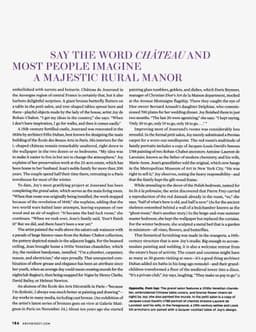 p.186
p.186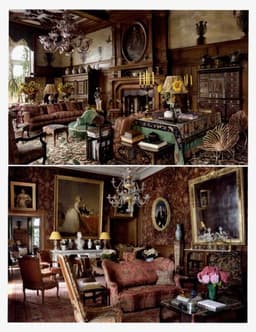 p.187
p.187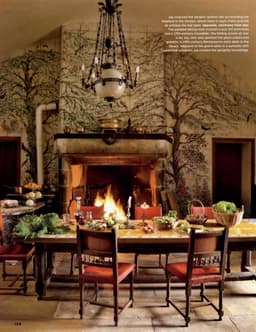 p.188
p.188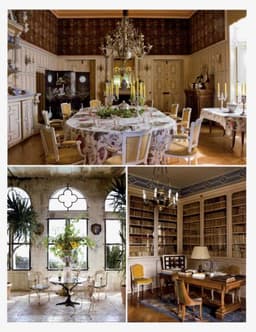 p.189
p.189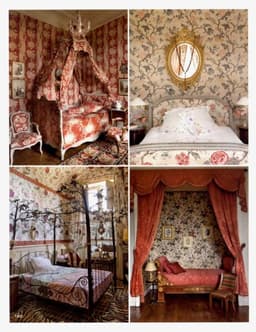 p.190
p.190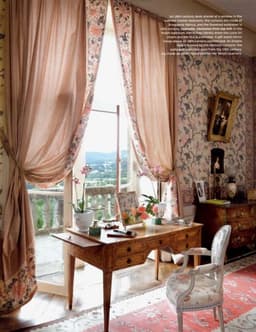 p.191
p.191Home Score
Radial Graph
The scoring pattern reveals a home dominated by authentic accumulation and historical depth (Space and Story both exceed 4.7) but actively suppressed theatrical presentation (Stage averages 2.0), driven by exceptionally low Theatricality and Curation scores that indicate a living, unselfconscious environment prioritizing genuine provenance and material presence over curated visual drama.
Scoring Explanations
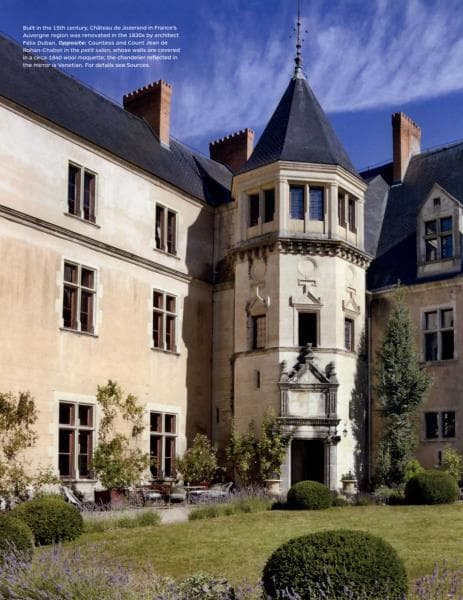
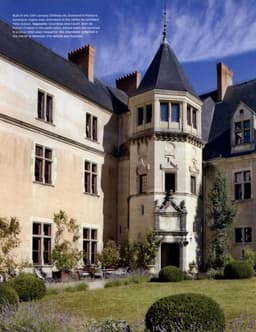
A 15th-century fortified castle with turrets, boiserie, triple-height tower, stone construction, gilded mirrors, Venetian chandeliers, and rooms of imposing volume — the architecture absolutely dominates its occupants.
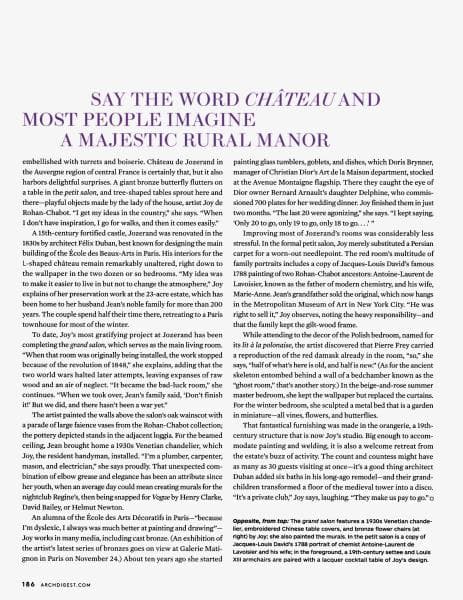
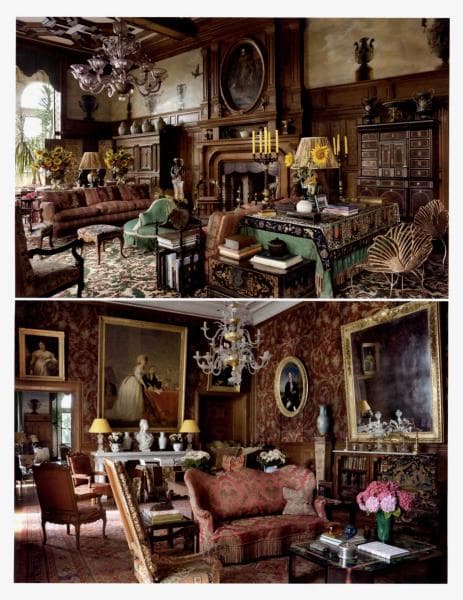
Oak paneling, tapestry-covered walls, wool moquette wallcoverings, heavy upholstery, Persian carpets, stone fireplaces with roaring fires, and layers of fabric create an enveloping tactile warmth throughout.
Every surface is activated — pattern-on-pattern wallpapers and fabrics, dense collections of porcelain, paintings, family portraits, chandeliers, candelabras, and floral arrangements, all in coherent dialogue within each room's period vocabulary.
The château dates to the 15th century, was renovated in the 1830s by Félix Duban, and the interiors remain remarkably period-consistent with Louis XV chairs, 18th-century painted beds, Empire beds, 17th-century chandeliers, and no visible modern intrusions.
The article describes a family seat of the Rohan-Chabot family with a Jacques-Louis David 1788 family portrait, a Lavoisier grandfather's original painting now in the Met, and generations of accumulated furnishings — the 23-acre estate has been in the husband's family for more than 200 years.
The article explicitly states the château hosts 'as many as 30 guests visiting at once,' is used for weddings and painting, with multiple guest bedrooms visible, and Joy says 'It's a private club... They make us pay to go.'
Despite the grandeur, the family clearly lives in these rooms — the kitchen with its roaring fire and casual table setting, the worn fabrics, the artist's studio quality, and Joy's whimsical personal touches suggest comfort within magnificence rather than behavioral discipline.
Joy de Rohan-Chabot personally created the murals, painted the ceramic tiles, designed the bronze furniture, and chose furnishings for personal reasons — this is an artist's self-curated home where she says 'I get my ideas in the country,' not a designer-directed editorial space.
This is inherited aristocratic wealth accumulated over centuries with no intention to perform — the Old Masters, the David portrait, the Venetian chandeliers were all passed down, and Joy's additions are her own whimsical art pieces rather than status signifiers.