Homeowner Name
Joshua & Anat Kastiel
About (information sourced from public biographical records)
Joshua and Anat Kastiel owned a home in Ramat Hasharon, Israel featured in Architectural Digest in September 2006.
Epstein Connection?
 DETECTIVE
 RESEARCHER
 EDITOR
Property Details
Wealth Score
3.0
/ 10
Wealth Source
OLD MONEY
Part ownership of Kastiel Home Design, a luxury furniture manufacturing company …
Professional Category
BUSINESS
Fame Score
2
Board Memberships
—
Influence Score
—
Architectural Digest Issue:
“joshua & anat kastiel”
by Susan Sheehan
Home Score Summary (Custom Aesthetic Scoring Instrument v2.3)
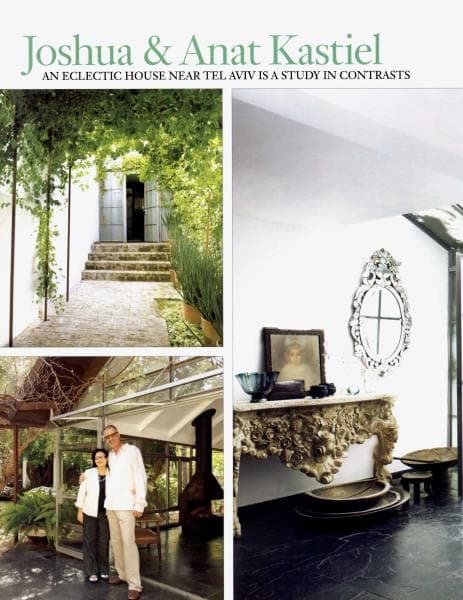
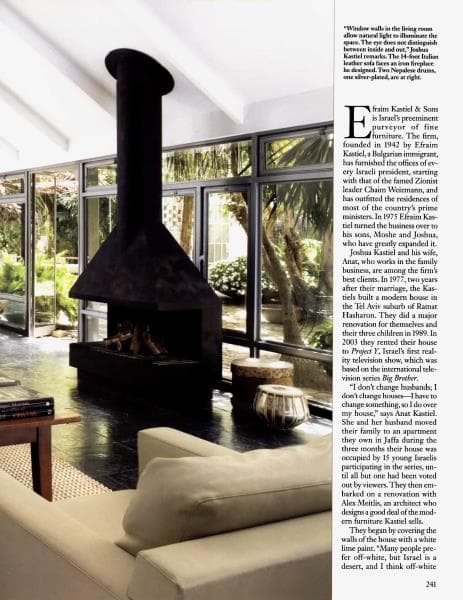
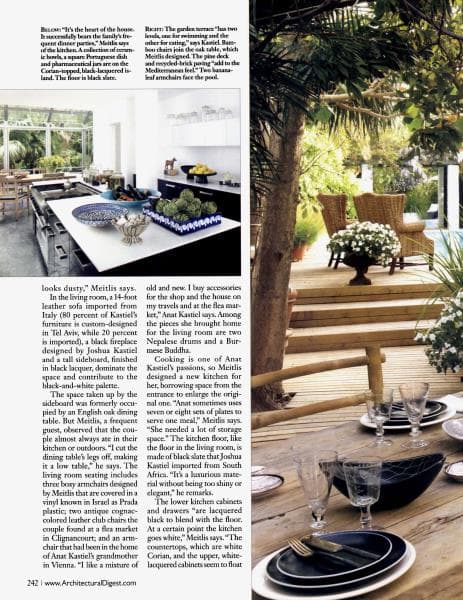
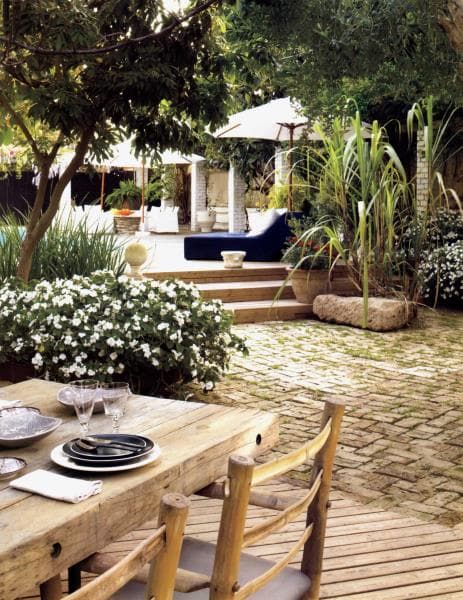
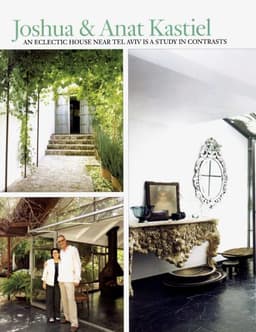
Indoor-outdoor Mediterranean modernism where industrial glass walls dissolve into lush garden, creating a home that feels simultaneously raw and refined. The Kastiels' family furniture business gives them connoisseur-level access without pretension — a Baroque stone mantel sits naturally beside a black iron fireplace and Burmese Buddha. This is a house built for gathering, where a 20-foot dining table under a vine-covered pergola is the spiritual center.
Feature Pages
 p.238
p.238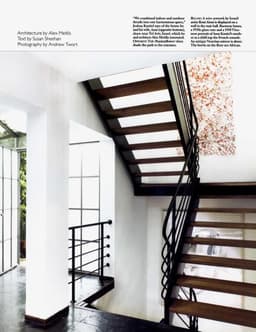 p.239
p.239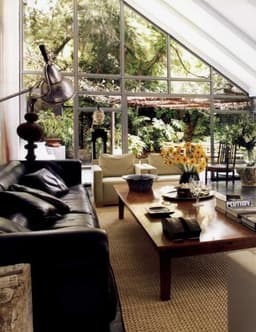 p.240
p.240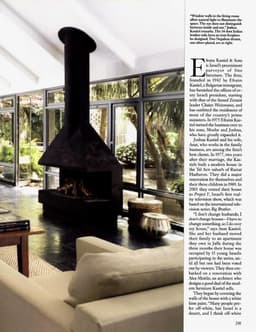 p.241
p.241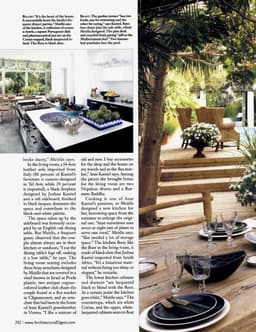 p.242
p.242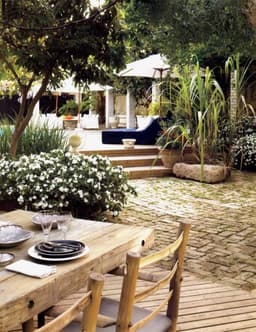 p.243
p.243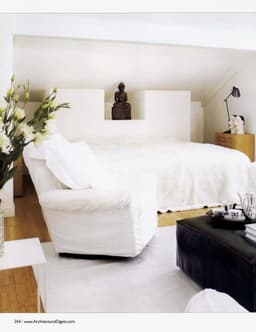 p.244
p.244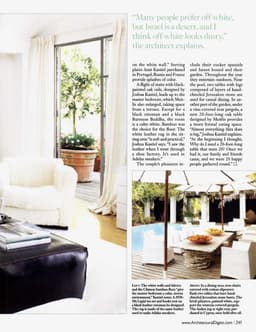 p.245
p.245Home Score
Radial Graph
Space and Story converge at moderate elevation (both 3.3) while Stage suppresses below (2.3), driven by high Provenance and Hospitality offsetting low Historicism, and Theatricality remaining muted despite adequate Curation.
Scoring Explanations
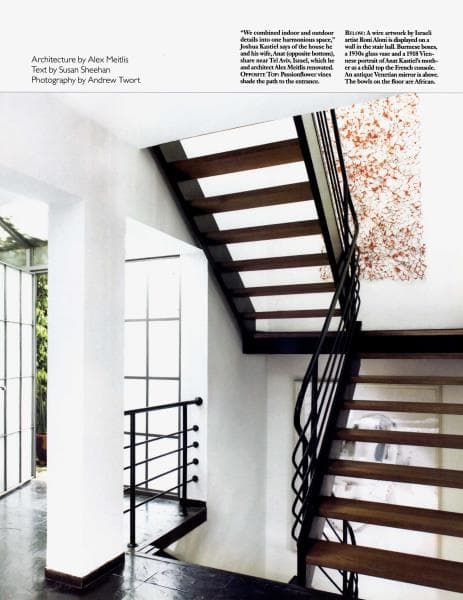
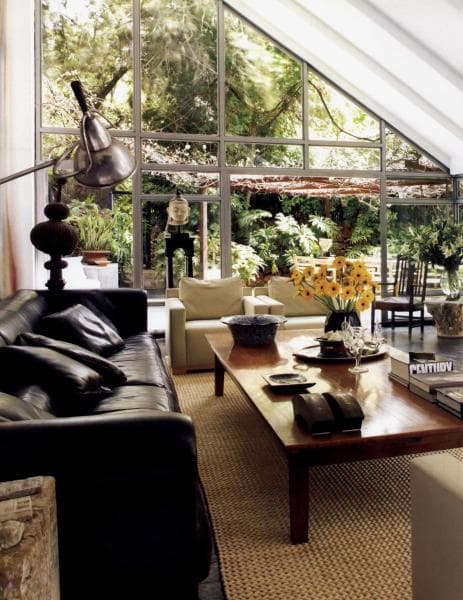
The double-height living room with floor-to-ceiling glass walls and open staircase creates generous volume, but the spaces remain human-scaled and livable rather than imposing, with the pitched roof and garden integration keeping things grounded.
Dominant warmth from wide oak tables, leather sofas, sisal rugs, bamboo flooring in the bedroom, brick pathways, and abundant greenery pressing against glass walls, balanced against black slate floors and white lime-painted walls.
Moderate layering of objects — Nepalese drums, Burmese Buddha, ornate stone fireplace mantel, African bowls, antique Venetian mirror — creating a curated eclecticism that fills the space without overwhelming it.
The space is fundamentally modern (open plan, steel staircase, industrial glass walls) with scattered period accents — a Baroque stone mantel, antique Venetian mirror, grandmother's armchair from Vienna — that serve as eclectic punctuation rather than period commitment.
The article describes an armchair from Anat's grandmother in Vienna, objects collected from flea markets in Clignancourt, plates purchased in Portugal, Russia and France, and the family furniture business dating to 1942 — genuine accumulation across decades and generations.
The article explicitly describes a 20-foot-long oak dining table that seats 20, two pool-side terraces for entertaining, and the quote 'our family and friends came, and we were 20 happy people gathered round' — the home is designed for large-scale social gatherings.
Despite impressive materials, the spaces read as deeply livable — curl-up leather sofas, bamboo bedroom floors, outdoor dining with rustic wooden chairs, and the family's cocker spaniels and basset hound roaming the garden signal comfort over ceremony.
Architect Alex Meitlis designed the renovation and much of the furniture, creating composed sight lines and the indoor-outdoor flow, but the owners' personal collecting history (flea markets, travel finds, family heirlooms) keeps the personality front and center.
The wealth is evident but understated — the family's furniture business provides insider access to quality pieces, the wire artwork by Israeli artist Roni Aloni is a knowing rather than brand-name choice, and the overall impression is of cultivated taste serving the residents rather than performing for visitors.