Homeowner Name
Anonymous
About (information sourced from public biographical records)
Epstein Connection?
 DETECTIVE
 RESEARCHER
 EDITOR
Property Details
Wealth Score
—
Wealth Source
—
Professional Category
Private
Fame Score
—
Board Memberships
—
Influence Score
—
Architectural Digest Issue:
“freedom from convention”
by Philip Nobel
Home Score Summary (Custom Aesthetic Scoring Instrument v2.3)
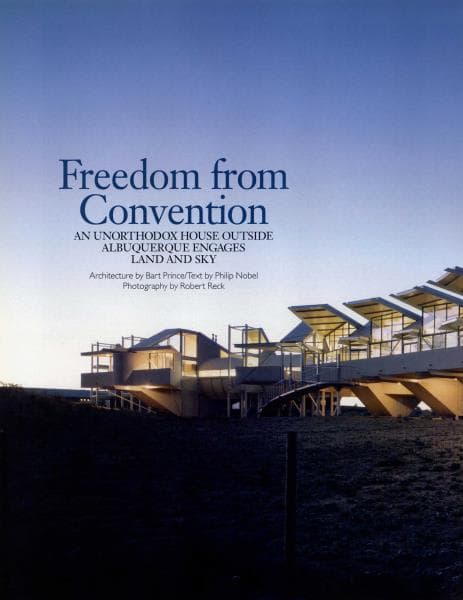
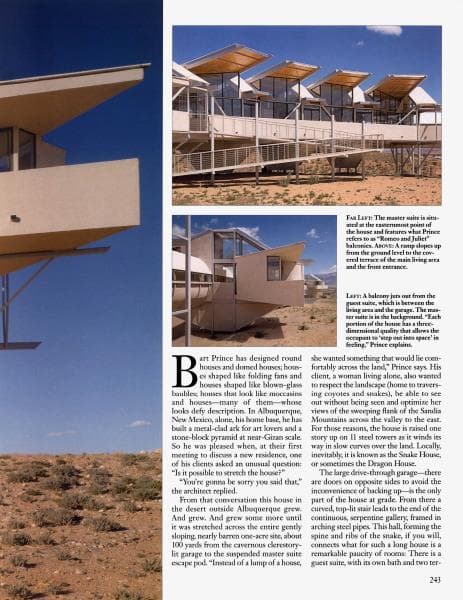
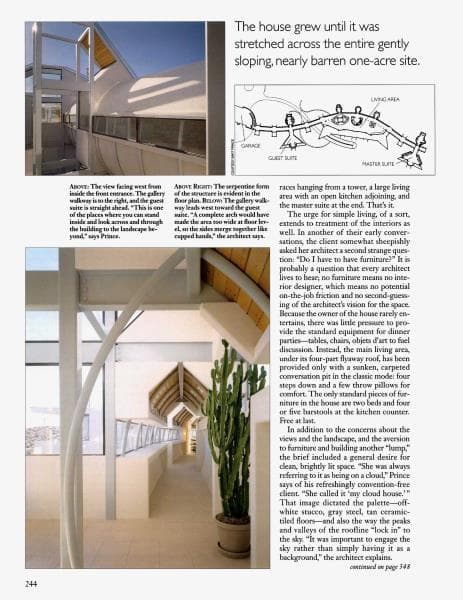
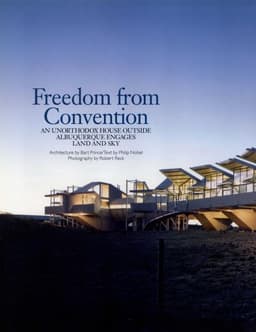
A desert spaceship for a recluse who wanted to live inside the sky. The architecture is total—there is no furniture, no decoration, no history, only steel towers, glass walls, and a serpentine form winding across barren land. It's the purest expression of architecture-as-lifestyle: the building isn't shelter, it's the entire experience.
Feature Pages
 p.242
p.242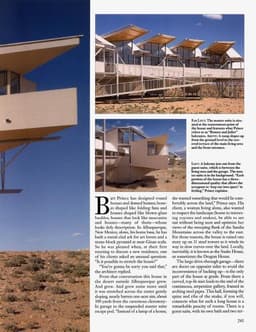 p.243
p.243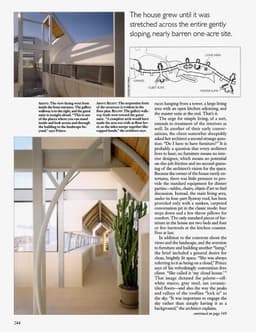 p.244
p.244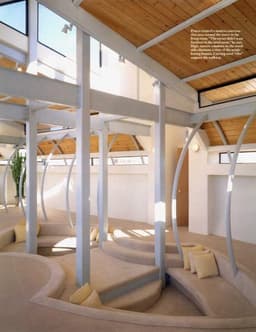 p.245
p.245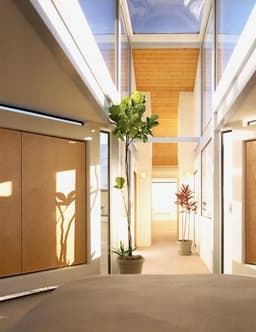 p.246
p.246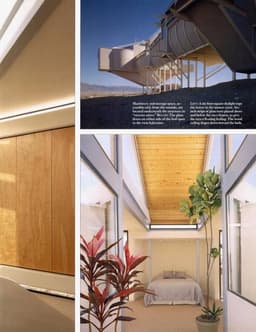 p.247
p.247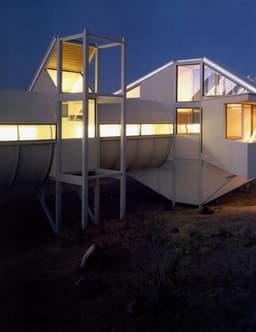 p.248
p.248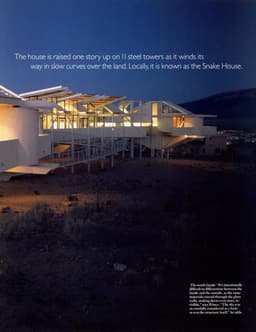 p.249
p.249Home Score
Radial Graph
The scoring pattern shows Stage dominance (3.0) driven by Curation, a suppressed Story group (1.0) across all axes, and a Space group (2.3) where Grandeur isolates at the top while Material Warmth and Maximalism collapse, reflecting a design that prioritizes curated architectural form over temporal narrative and tactile inhabitation.
Scoring Explanations
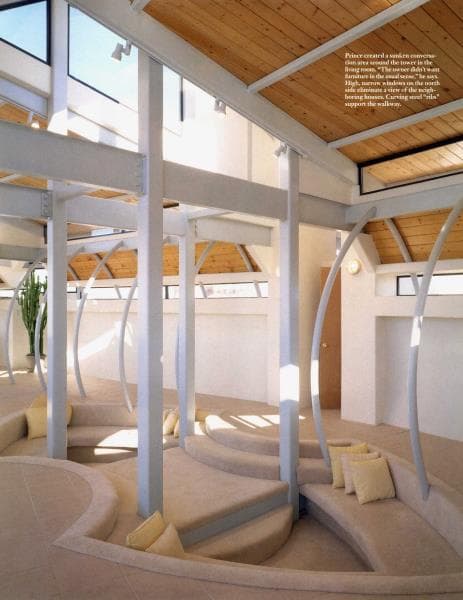
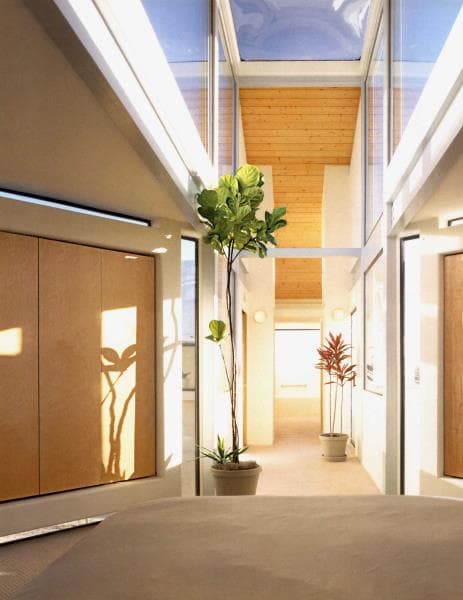
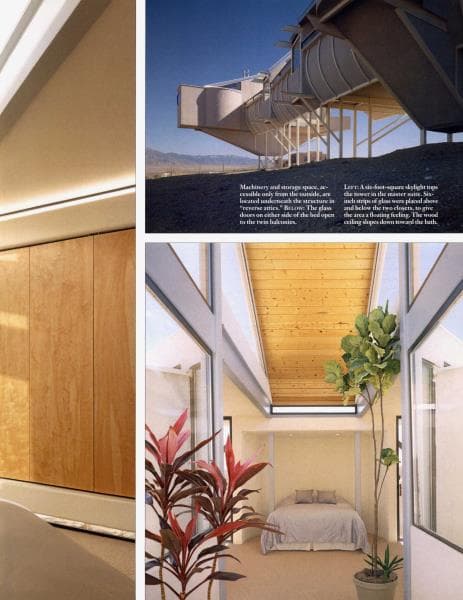
The house is raised one story on 11 steel towers with dramatic multi-part flyaway roofs, clerestory windows, and soaring interior volumes—the sunken conversation pit beneath the tower features double-height space with exposed steel structure and wood ceilings that dominate the occupant.
The palette is overwhelmingly cool—off-white stucco, gray steel, tan ceramic-tiled floors, glass walls, and steel 'ribs'—with only the wood ceiling panels and a few throw pillows providing any warmth.
The client explicitly asked 'Do I have to have furniture?' and the house was provided with almost none—only a sunken carpeted conversation pit, two beds, and four or five barstools; the spaces are radically spare.
There is zero historical reference; the house is a completely original, futuristic steel-and-glass serpentine structure with no period allusions whatsoever.
Everything is new construction, pristine, and deliberately empty—there are no inherited objects, no patina, no evidence of accumulated life; the client called it her 'cloud house.'
The article states the owner is a woman living alone who 'rarely entertains' and there was 'little pressure to provide the standard equipment for dinner parties'; the house has a remarkable paucity of rooms and is designed for solitary contemplation of landscape and sky.
The spaces are architecturally commanding and you'd feel the need to respect them, yet the sunken conversation pit with throw pillows and the absence of precious furnishings or delicate surfaces creates an unusual tension between awe and informality.
Bart Prince controlled every aspect of this environment—the architecture IS the interior design, with built-in seating, custom curved steel ribs, and composed sight lines through glass walls; there is virtually nothing the owner added independently.
The architecture is wildly dramatic but it serves the owner's genuine desire for a personal 'cloud house' engaging land and sky—it's not performing wealth for visitors but rather expressing an authentic, if extreme, vision of solitary living in the desert.