Homeowner Name
Rémy Le Fur
About (information sourced from public biographical records)
Rémy Le Fur operates Auction Art Rémy Le Fur & Associés in Paris. His Paris residence was featured in Architectural Digest in March 1999.
Epstein Connection?
 DETECTIVE
 RESEARCHER
 EDITOR
Property Details
Wealth Score
7.0
/ 10
Wealth Source
SELF MADE
Career as auctioneer (commissaire-priseur) and founder of Auction Art – Rémy Le …
Professional Category
ART
Fame Score
2
Board Memberships
—
Influence Score
—
Architectural Digest Issue:
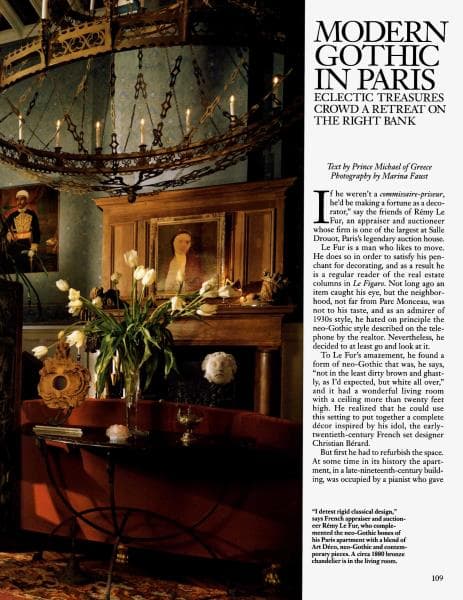
“modern gothic in paris”
by Prince Michael of Greece
Home Score Summary (Custom Aesthetic Scoring Instrument v2.3)
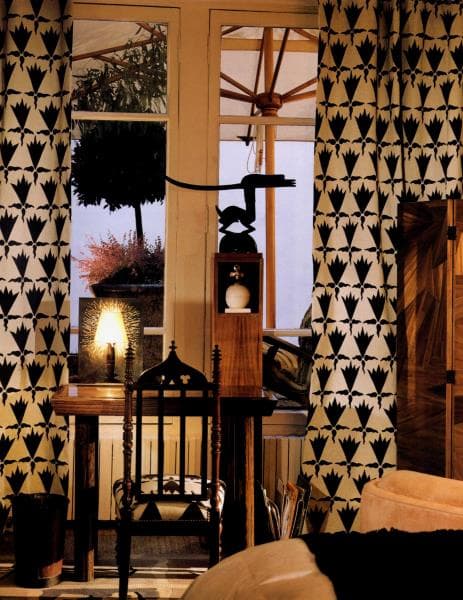
A professional treasure hunter's neo-Gothic lair where cathedral confessionals become bookcases and a duke's torchères light African masks. Le Fur treats his twenty-foot Parisian living room like a Bérard stage set — maximalist, deeply personal, and assembled at bankruptcy sales with the eye of an auctioneer who knows exactly what everything is worth and paid a fraction of it.
Feature Pages
 p.108
p.108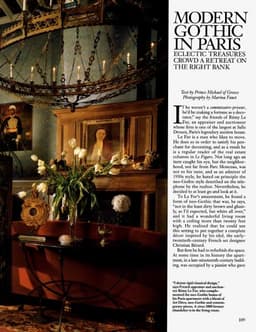 p.109
p.109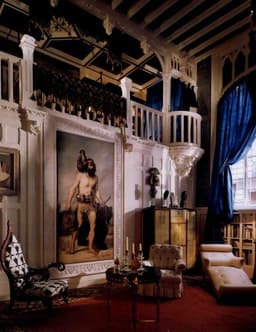 p.110
p.110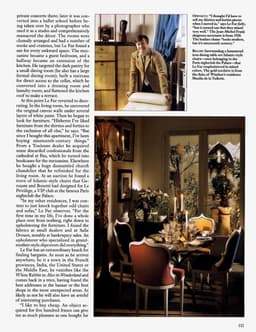 p.111
p.111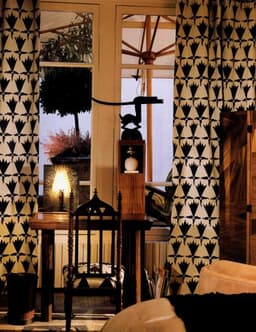 p.112
p.112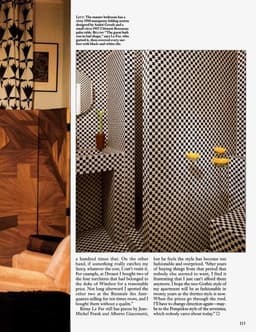 p.113
p.113Home Score
Radial Graph
Space dominates at 4.7 with Grandeur and Maximalism at full strength, while Story trails significantly at 3.3 despite solid Historicism and Provenance, then Stage collapses to 2.7 across all axes—a pattern driven by opulent accumulation that outpaces both narrative coherence and deliberate theatrical presentation.
Scoring Explanations
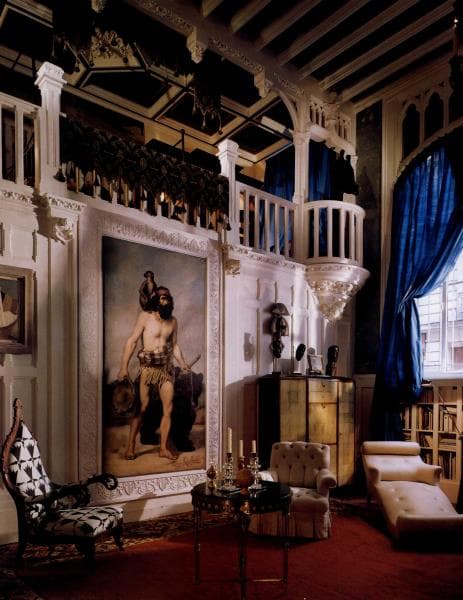
The living room has ceilings over twenty feet high with neo-Gothic architectural detailing, a mezzanine gallery with Gothic arches, and a monumental painting that dominates the wall — the architecture absolutely dominates its occupants.
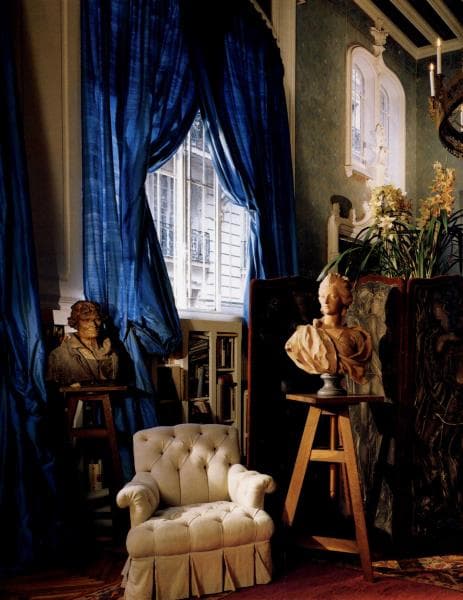
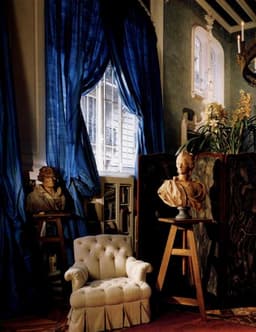
Rich blue silk curtains, tufted upholstered chairs, wooden stools, dark lacquered screens, and warm-toned busts create a predominantly warm atmosphere despite the white Gothic plasterwork and high stone-like walls.
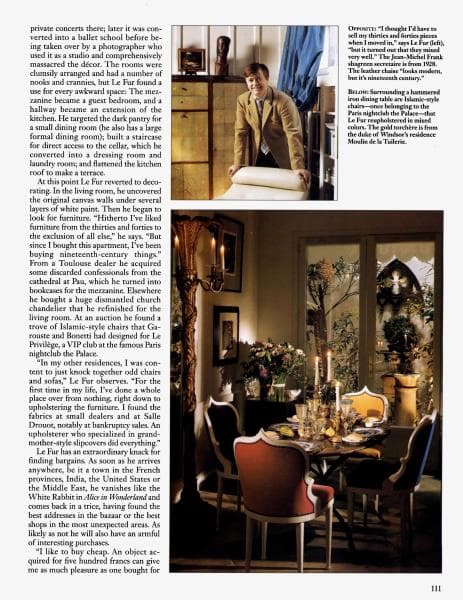
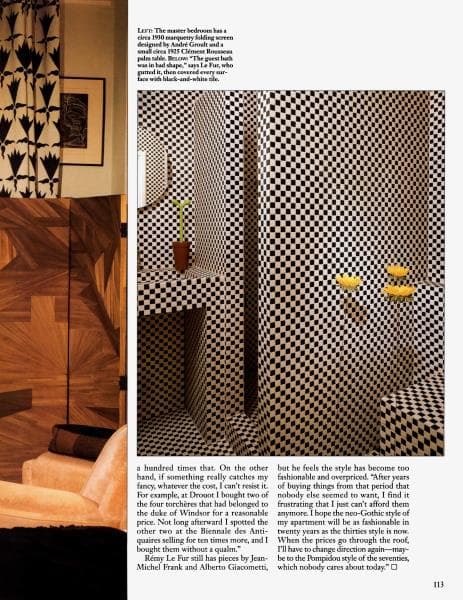
Every surface is activated — busts on pedestals, orchids, folding screens, African masks, Islamic-style chairs, Art Deco cabinets, a massive painting, a church chandelier, and black-and-white checkered tile bathroom — all in coherent dialogue across neo-Gothic, Art Deco, and 1930s French aesthetics.
Le Fur committed deeply to a neo-Gothic setting inspired by Christian Bérard's early-twentieth-century French set design, incorporating confessionals from a cathedral at Pau and period-appropriate furnishings, though the eclectic mix of Art Deco, Islamic, and African pieces creates intentional cross-period dialogue rather than strict period purity.
The late-nineteenth-century building itself has genuine age, the confessionals came from an actual cathedral, torchères belonged to the Duke of Windsor, and Le Fur's collecting habit — described as compulsive bargain hunting at Drouot and small dealers — gives the objects authentic accumulated-life character rather than decorator-showroom perfection.
The article describes Le Fur as a personal collector whose apartment is a retreat crowded with eclectic treasures; the spaces feel designed for one person's immersive aesthetic world rather than entertaining, with no mention of dinner parties or guest accommodation beyond the mezzanine guest bedroom.
The tufted slipper chairs and lived-in arrangement of objects suggest comfort, but the twenty-foot ceilings, monumental painting, and carefully arranged vignettes enforce a respect for the space — you wouldn't put your feet up, but you could sit and read.
Le Fur personally assembled everything — he's described as doing the decorating himself, finding fabrics at bankruptcy sales, having an upholsterer do grandmother-style slipcovers — yet his professional eye as an appraiser at Salle Drouot gives the arrangements a designer's compositional sensibility.
Despite the dramatic scale and density, this is a deeply personal collection assembled by a man who 'likes to buy cheap' and finds bargains at flea markets and small dealers — the Duke of Windsor torchères and Jean-Michel Frank pieces serve the collector's passion, not an audience's recognition.