Homeowner Name
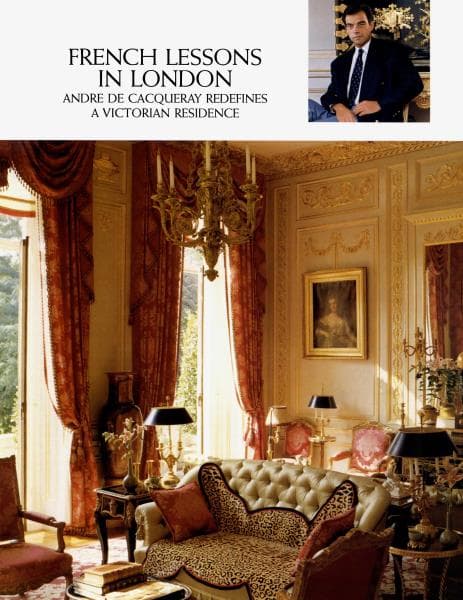
André de Cacqueray
About (information sourced from public biographical records)
André de Cacqueray featured his London residence in Architectural Digest's October 1995 issue.
Epstein Connection?
 DETECTIVE
 RESEARCHER
 EDITOR
Property Details
Wealth Score
3.0
/ 10
Wealth Source
OLD MONEY
Likely inherited wealth from ancient French noble family (de Cacqueray)
Professional Category
UNKNOWN
Fame Score
3
Board Memberships
—
Influence Score
—
Architectural Digest Issue:
“french lessons in london”
by Elizabeth Lambert
Connection Summary (Created by Opus 4.5 based on all evidence collected)
Investigation identified André de Cacqueray as the owner of a London residence featured in an architectural retrospective documenting 19th-century French design elements from 1861. No confirmed connection between de Cacqueray and Jeffrey Epstein exists.
Connection Evidence
The following documents were used as direct evidence of a possible connection for the Researcher and Editor to make an assessment:
Agentic AI Reasoning Logic

Researcher’s Assessment: COINCIDENCE
Historic retrospective: AD article describes a London residence from 1861 with French design elements. André de Cacqueray is identified as the homeowner of this 19th-century property. This is a clear case of historic property documentation, not evidence of Epstein connection.
Reviewed 2/23/2026

Editor’s Final Judgement: REJECTED
Auto-rejected: triaged as COINCIDENCE — Historic retrospective: AD article describes a London residence from 1861 with French design elements. André de Cacqueray is identified as the homeowner of this 19th-century property. This is a clear case of historic property documentation, not evidence of Epstein connection.
Reviewed 2/23/2026
Home Score Summary (Custom Aesthetic Scoring Instrument v2.3)
A French antiques dealer's Victorian London residence transformed into a miniature Versailles with total period conviction. The gilded living room and Empire library are museum-dense yet personally inhabited — every ormolu clock and Riesener chair reflects genuine expertise rather than display. The small rooms 'worked to the millimeter' reveal a man who understands that grandeur and intimacy were always two sides of the same French coin.
Feature Pages
 p.150
p.150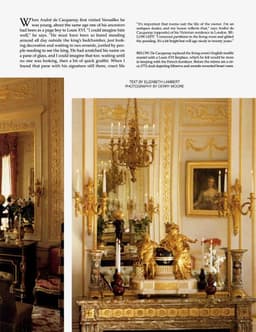 p.151
p.151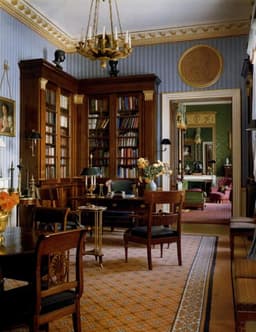 p.152
p.152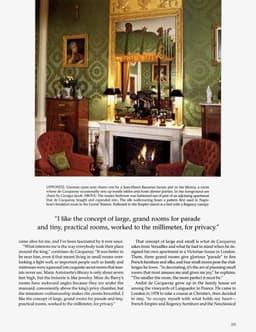 p.153
p.153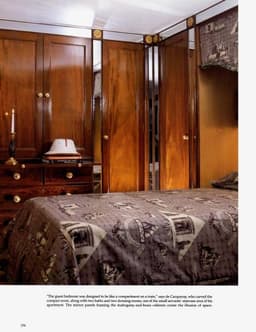 p.154
p.154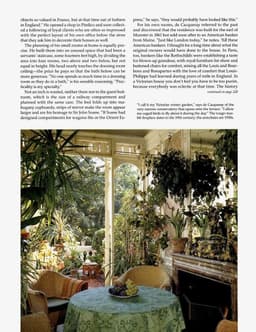 p.155
p.155Home Score
Radial Graph
Space dominates this profile with a high-conviction average of 4.7 driven by maximal Grandeur and Maximalism, while Story moderates at 4.0 through strong Historicism tempered by lower Hospitality, and Stage recedes to 3.3 where Formality and Curation suppress the notably low Theatricality, creating a pattern of authentic material density that prioritizes knowledge-based accumulation over performative drama.
Scoring Explanations
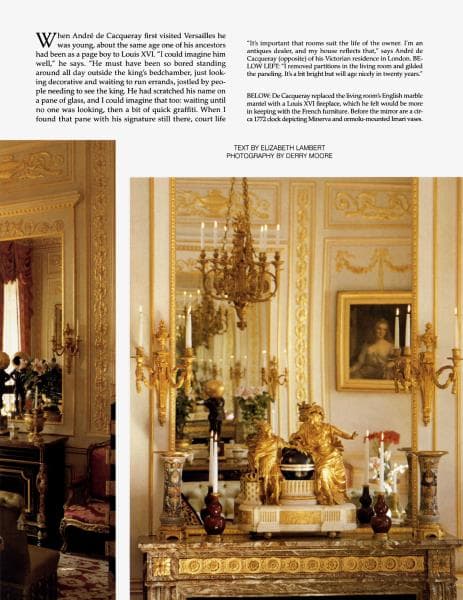
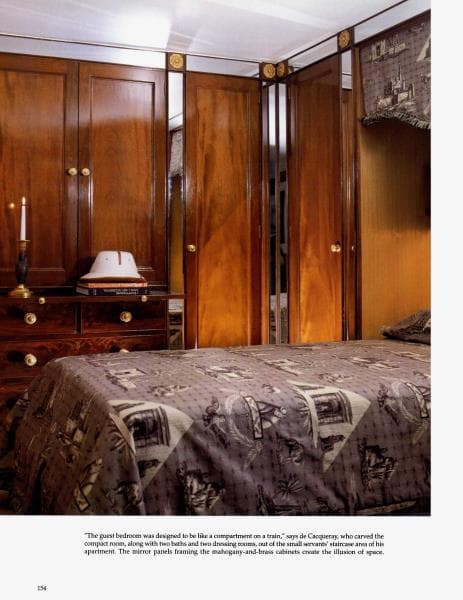
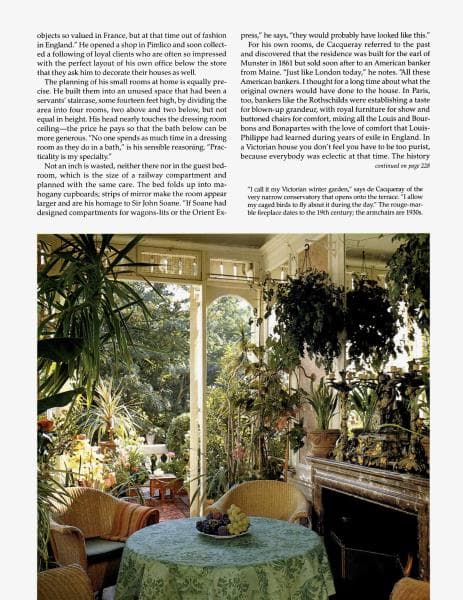
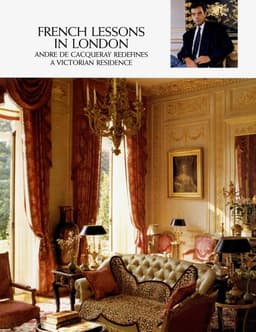
The living room features soaring ceilings, gilded paneling, elaborate gold chandeliers, and Louis XVI marble mantelpieces — full palace-register architecture that dominates its occupants.
Rich red silk draperies, tufted leather settees, deep mahogany furniture, layered rugs, and heavy upholstery create predominantly warm rooms despite the gilded and mirrored surfaces.
Every surface is activated — ormolu clocks, bronze busts, pattern-on-pattern fabrics, layered paintings, candelabra, books, and plants — all in tight dialogue within a coherent French decorative vocabulary.
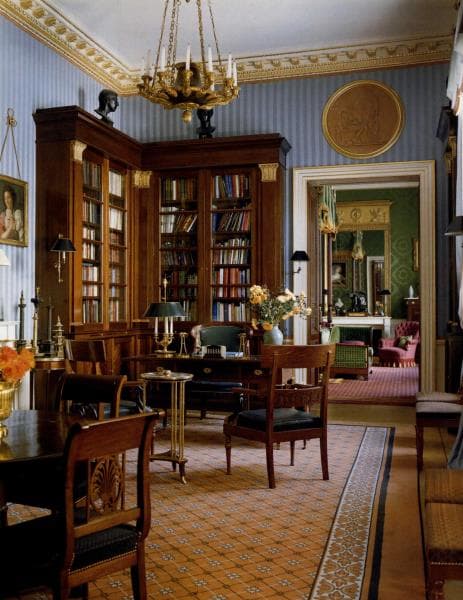
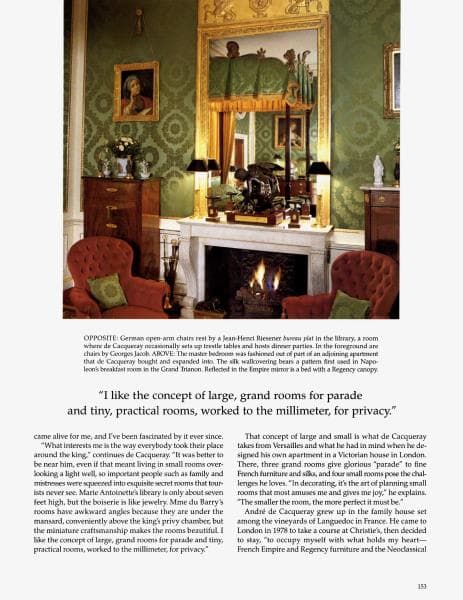
De Cacqueray commits fully to 18th-century French and Empire periods across every room — the Louis XVI fireplace replacement, Riesener chairs, Georges Jacob seating, Regency canopy bed, and Napoleonic wallcovering pattern show zero anachronisms.
As an antiques dealer whose ancestor was a page to Louis XVI, de Cacqueray fills his home with genuine period pieces — the circa-1772 Minerva clock, Jean-Henri Riesener chairs, and Victorian house itself carry real age, though the ensemble was assembled rather than inherited in situ.
The article mentions hosting dinner parties on trestle tables in the library and the guest bedroom carved from servants' quarters, but de Cacqueray also emphasizes small private rooms 'worked to the millimeter, for privacy,' balancing public and personal use.
The gilded living room with its silk draperies, museum-quality ormolu, and carefully arranged furniture enforces clear behavioral rules — these are rooms where you sit carefully and don't put your feet up.
De Cacqueray is a professional antiques dealer who designed his own home with composed sight lines, symmetrical arrangements, and period-consistent vignettes — the fireplace mantel composition with flanking candelabra and centered clock is designer-level styling.
Despite the visual opulence, the wealth here is deeply personal and specialist — an antiques dealer living inside his own expertise, referencing Versailles from genuine family connection rather than performing for an audience; the pieces are connoisseurial, not brand-name.
Analysis
AD Appearance
CollapseIssue
10/1995
Notes
{"previous_owners": ["Earl of Munster", "American banker from Maine", "Rothschilds (referenced as comparable Paris owners)"], "spread_pages": [150, 151, 152, 153, 154, 155], "spread_page_count": 6}
Location
London, None
Year Built
1861
Design Style
French 18th-century (Louis XVI, Empire, Directoire) within a Victorian London residence
Article Title
FRENCH LESSONS IN LONDON
Key Findings
Expand