Homeowner Name
Jun Gi and Eul Sun Hong
About (information sourced from public biographical records)
Jun Gi and Eul Sun Hong are international traders who own Sankyo Tsusho Co. in Tokyo. Their Diamond Head villa was featured in Architectural Digest in August 1995. They built their trading company as Zainichi Koreans in Japan, then leveraged profits during the 1980s bubble economy to acquire 2,900 acres of Dillingham Ranch for $15 million and a $6 million Hawaii villa.
Epstein Connection?
 DETECTIVE
 RESEARCHER
 EDITOR
Property Details
Wealth Score
7.0
/ 10
Wealth Source
SELF MADE
International trading (Sankyo Tsusho Co., Ltd.) and real estate investment in Ha…
Professional Category
BUSINESS
Fame Score
3
Board Memberships
Member, St. Andrews Golf Club (Scotland); Unknown (legacy text), St. Andrews Golf Club (Scotland) membership noted; no formal institutional board positions found
Influence Score
—
Architectural Digest Issue:
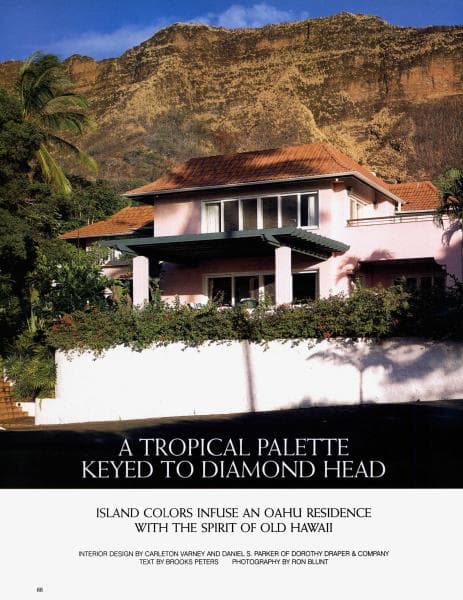
“a tropical palette keyed to diamond head”
by Brooks Peters
Home Score Summary (Custom Aesthetic Scoring Instrument v2.3)
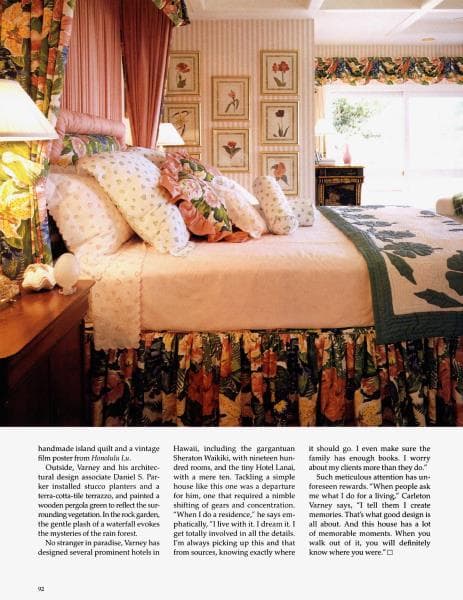
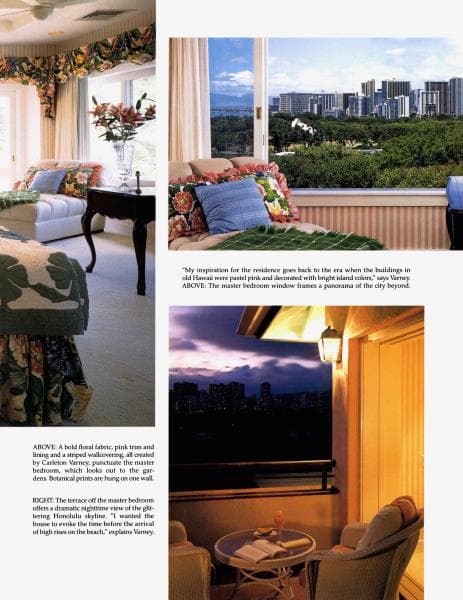
A designer's love letter to pre-tourism Hawaii, executed in hot pinks, melon greens, and floral chintz with the confidence of Dorothy Draper's spiritual heir. The rooms are lush and deliberate — Varney's signature 'happy environments' layered onto a genuine 1940s Mediterranean shell beneath Diamond Head. It's joyful maximalism that performs for its owners' pleasure rather than social status, though every polka-dot pillow knows exactly where it belongs.
Feature Pages
 p.88
p.88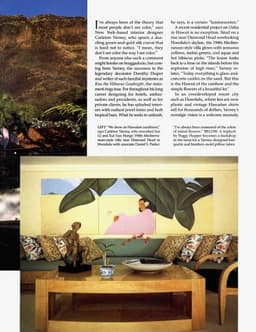 p.89
p.89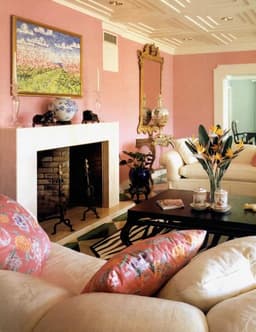 p.90
p.90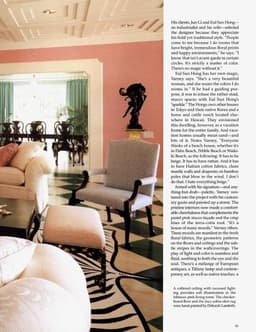 p.91
p.91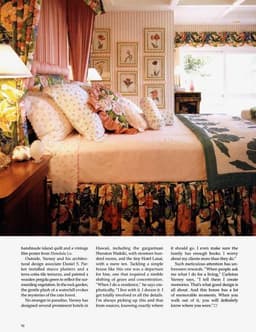 p.92
p.92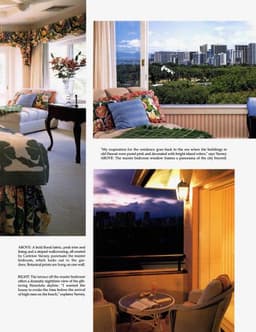 p.93
p.93Home Score
Radial Graph
Space's Material Warmth and Maximalism (4.0 each) dominate the profile while Grandeur remains restrained (3.0), with Story suppressed by weak Provenance (2.0) despite strong Hospitality (4.0), and Stage balanced across Formality and Theatricality (both 3.0) but elevated by high Curation (4.0)—a pattern driven by tactile abundance and intentional arrangement that prioritizes felt experience and curated joy over historical narrative or spatial grandeur.
Scoring Explanations
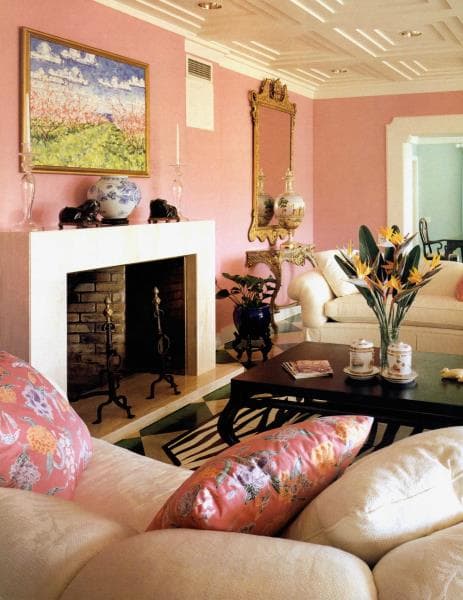
The 1940s Mediterranean-style villa has generous proportions with coffered ceilings in the living room and multi-level terraces, but the rooms remain human-scaled and residential rather than monumental.
Predominantly warm palette of hibiscus pinks, bamboo furniture, floral fabrics, upholstered sofas, and terra-cotta tile terrazzo floors create an enveloping tactile warmth throughout.
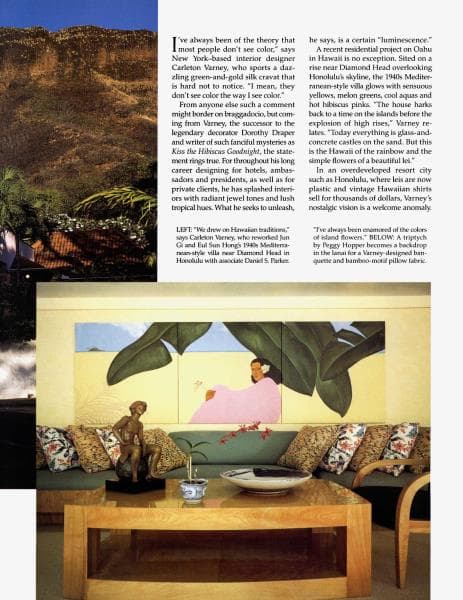
Dense layering of floral prints, patterned pillows, botanical prints, Peggy Hopper triptych, European antiques, Tiffany lamp, and striped wallcoverings all cohere within the tropical island color story — every surface is activated but harmonious.
The 1940s Mediterranean shell is genuine, and Varney deliberately evokes 'old Hawaii before the explosion of high rises,' but modern recessed lighting, contemporary art, and the overall designer-directed approach reveal this as nostalgic interpretation rather than strict period commitment.
Despite the 1940s house, the interiors were freshly designed by Varney for new owners — the article describes the Hongs renovating the Jun Gi and Eul Sun Hong's villa, and everything from fabrics to wallcoverings was newly installed, giving a pristine, just-completed feel.
The article describes this as a 'vacation home for the entire family,' with the lanai for entertaining, generous public rooms, master bedroom with panoramic city views, and multiple gathering spaces — it's designed for hosting family and guests rather than solitary retreat.
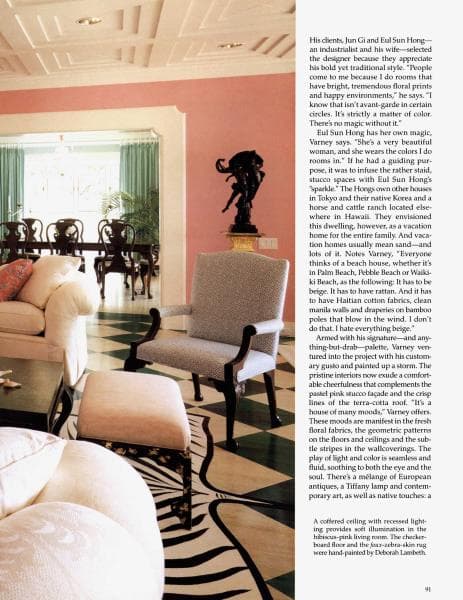
The coffered ceiling living room with its careful symmetry and hand-painted faux-zebra rug commands respect, but the abundant florals, rattan touches, and casual lanai seating keep the mood approachable rather than intimidating.
Varney and associate Daniel S. Parker directed every detail — from custom fabrics and wallcoverings to the hand-painted checkerboard floor and carefully composed vignettes with Peggy Hopper art backdrop, Tiffany lamp placement, and coordinated color stories room to room.
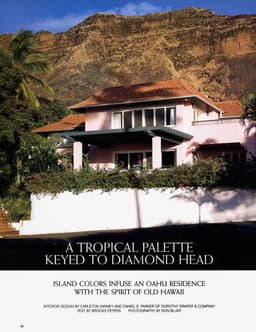
The bold pink stucco exterior against Diamond Head, the designer-name-dropping throughout the article, and the recognizable Peggy Hopper triptych signal taste and aspiration, but the overall mood serves island fantasy rather than aggressive wealth display.