Homeowner Name
Anonymous
About (information sourced from public biographical records)
Epstein Connection?
 DETECTIVE
 RESEARCHER
 EDITOR
Property Details
Wealth Score
—
Wealth Source
—
Professional Category
Art
Fame Score
—
Board Memberships
—
Influence Score
—
Architectural Digest Issue:
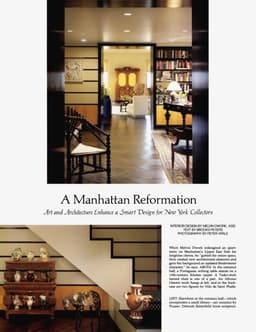
“a manhattan reformation”
by Brooks Peters
Home Score Summary (Custom Aesthetic Scoring Instrument v2.3)
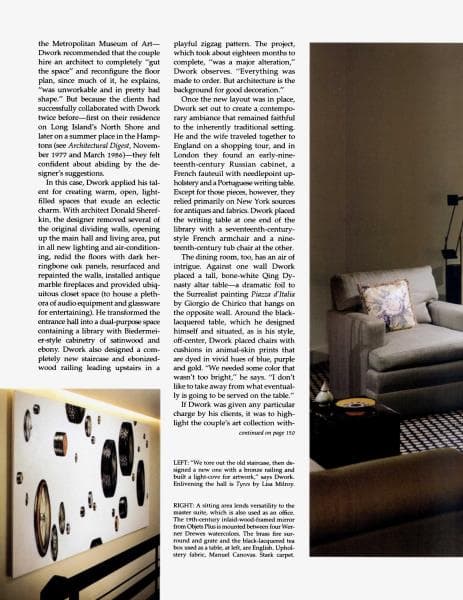
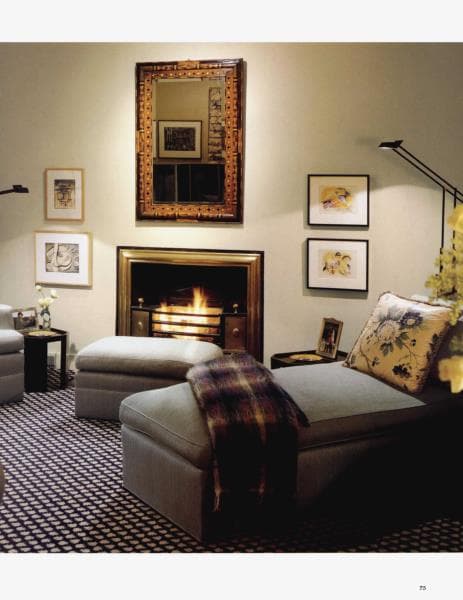
A serious collector's duplex where Surrealist masterworks and Asian antiques coexist in dark, Biedermeier-inflected rooms designed to feel both theatrical and intimate. Dwork's controlled palette of ebony, satinwood, and deep upholstery creates a stage for the art without competing with it. The formality is real but tempered by two decades of genuine accumulation — this is a home that earned its density.
Feature Pages
 p.70
p.70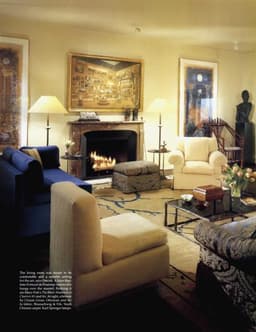 p.71
p.71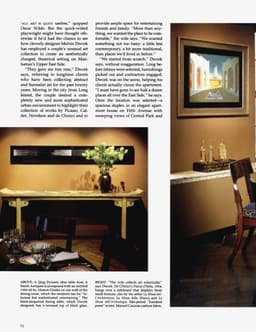 p.72
p.72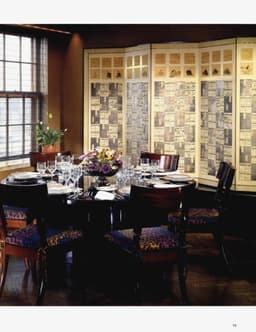 p.73
p.73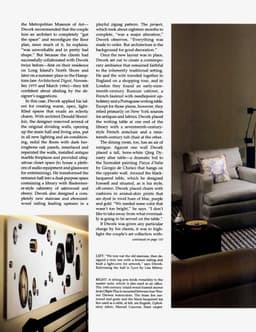 p.74
p.74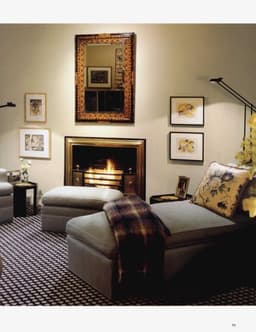 p.75
p.75Home Score
Radial Graph
Space and Stage cluster at 3.7 with balanced high Curation and Formality, while Story lags at 3.3, suppressed by moderate Historicism and Provenance despite elevated Hospitality, suggesting a home whose theatrical presentation and material density outpace its narrative or contextual depth.
Scoring Explanations
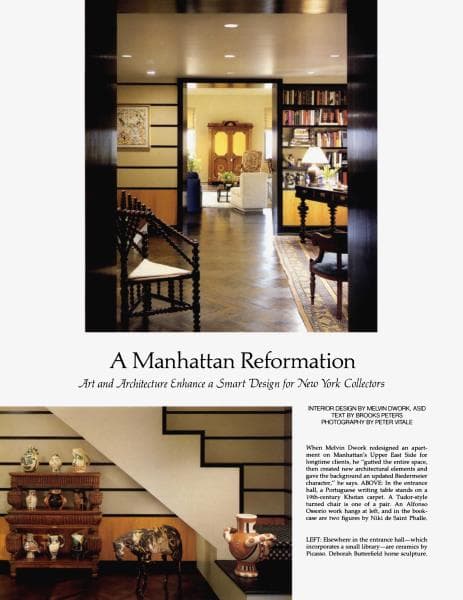
The Fifth Avenue duplex has generous proportions with comfortable ceiling heights and quality architectural details like the ebonized staircase and Biedermeier-style cabinetry, but the rooms are human-scaled and don't overwhelm.
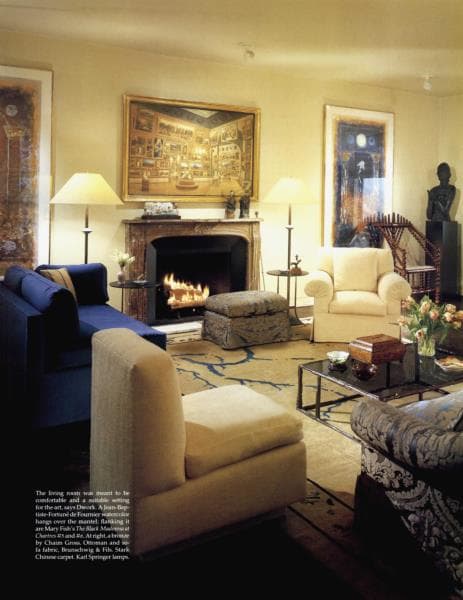
Dark herringbone oak floors, rich ebony and satinwood paneling, upholstered furniture, antique rugs, and multiple fireplaces create a predominantly warm, enveloping material palette with just enough cool structure from marble fireplaces and glass surfaces.
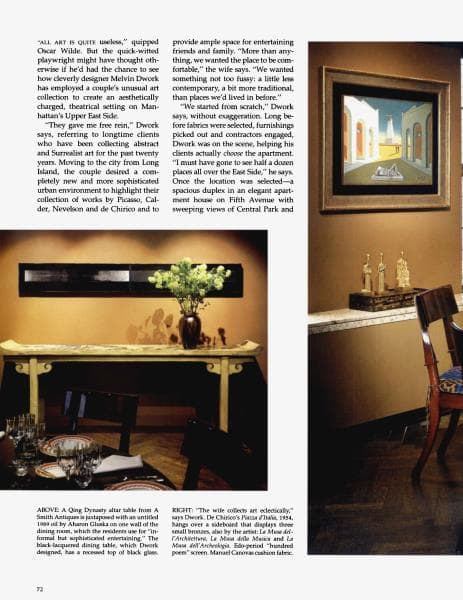
Every room is densely layered with art by Picasso, de Chirico, Calder, and Nevelson alongside Qing Dynasty altar tables, a Portuguese writing table, and Tudor-style chairs, all in coherent dialogue within Dwork's controlled dark-toned framework.
The space references multiple periods — Biedermeier cabinetry, 17th-century French armchairs, a 19th-century Khotan carpet, Qing Dynasty pieces — but mixes them eclectically with Surrealist art and modern lighting, creating a curated anachronism rather than period commitment.
The couple collected abstract and Surrealist art for twenty years, lending genuine accumulation, but the apartment itself was gutted and redesigned from scratch by Dwork, so the provenance is convincing but fabricated within new architecture.
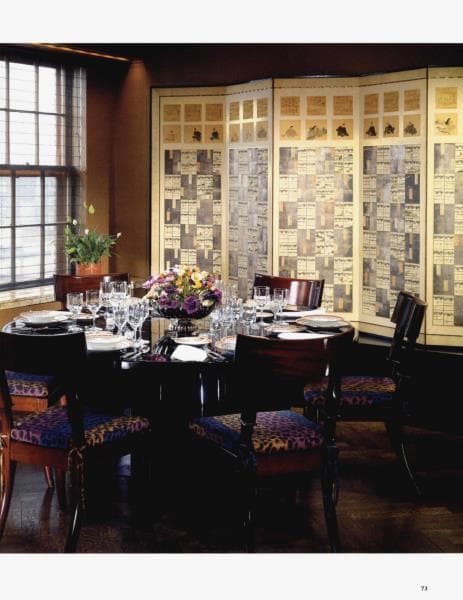
The article quotes the wife saying 'more than anything, we wanted the place to be comfortable' for 'entertaining friends and family,' and the formal round dining table set for eight, the library, and multiple public rooms confirm a home designed for social life.
The black-lacquered dining table Dwork designed, the carefully composed art arrangements, the dark formal entrance hall, and the deliberate placement of museum-quality works all enforce a sense of careful behavior — these are rooms you respect.
Dwork was given 'free rein' and designed custom furniture like the black-lacquered dining table, selected animal-skin print chair fabrics in 'hues of blue, purple and gold,' and composed deliberate sight lines between art and architecture throughout.
The collection includes globally recognizable names — Picasso ceramics, de Chirico paintings, Calder, Nevelson — and the article frames the art prominently, but the twenty-year collecting history and eclectic mix suggest genuine passion rather than pure performance.