Homeowner Name
Anonymous
About (information sourced from public biographical records)
Epstein Connection?
 DETECTIVE
 RESEARCHER
 EDITOR
Property Details
Wealth Score
—
Wealth Source
—
Professional Category
Business
Fame Score
—
Board Memberships
—
Influence Score
—
Architectural Digest Issue:
“manhattan rhythms”
by Steven M.L. Aronson
Home Score Summary (Custom Aesthetic Scoring Instrument v2.3)
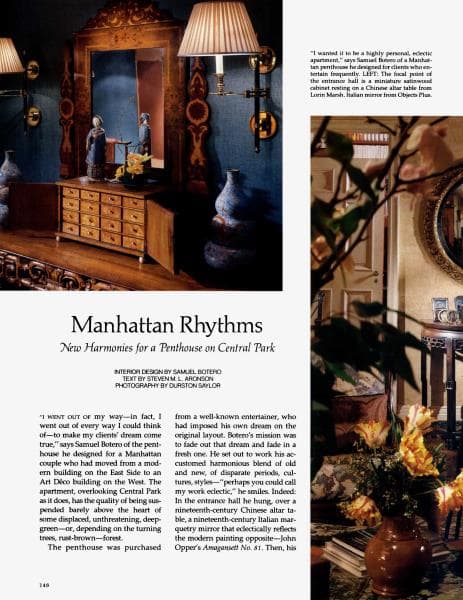
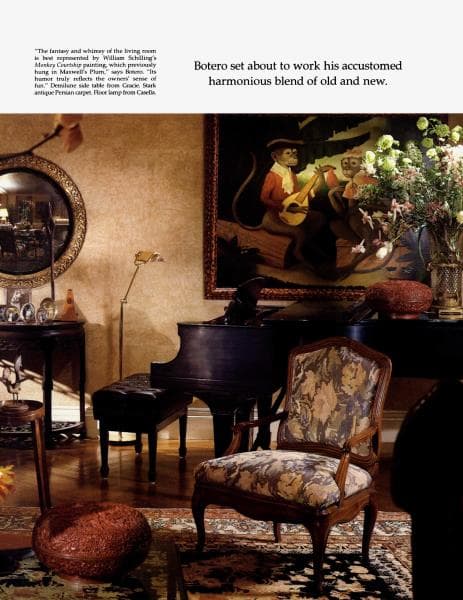
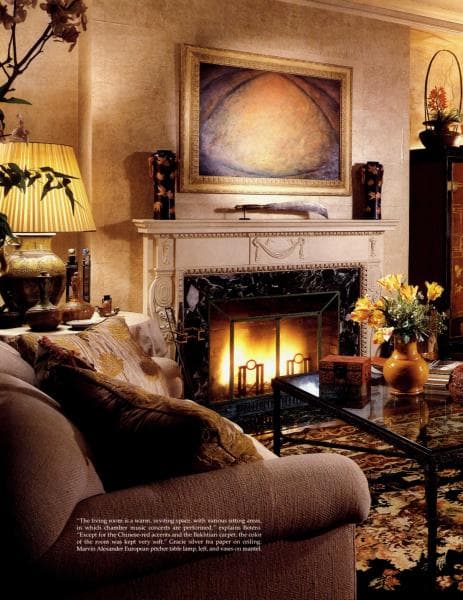
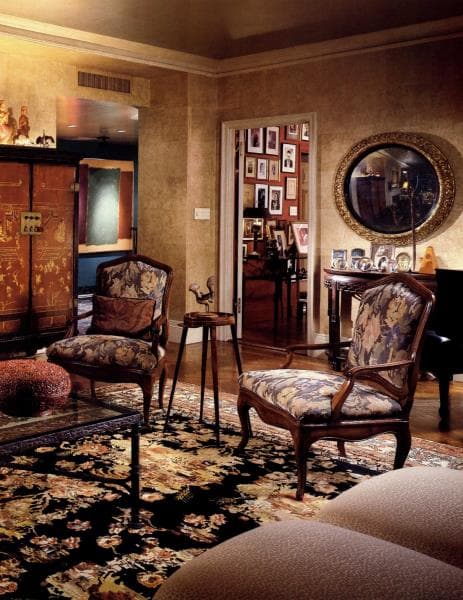
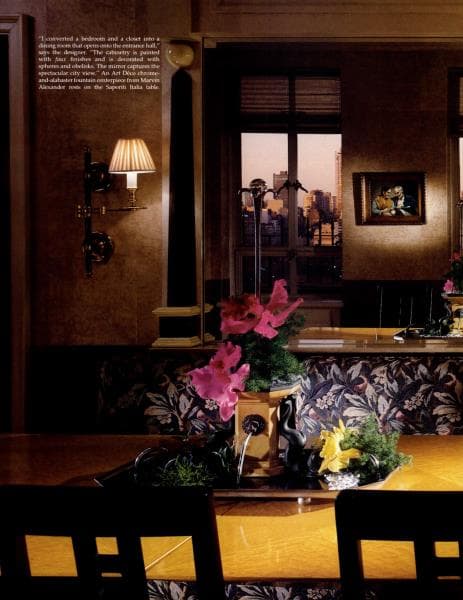
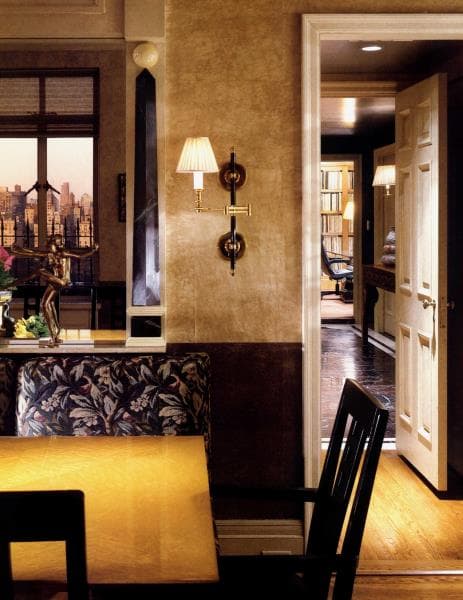
A richly orchestrated Manhattan penthouse where a designer's hand transforms eclectic global acquisitions into a single amber-toned composition. The chamber-music salon ambition is real — Steinway, thirty thousand records, autographed conductor portraits — but the density of objects owes more to Botero's editorial eye than to organic accumulation. It's a warm, layered stage set for cultured entertaining, convincing enough that you almost believe it grew this way.
Feature Pages
 p.148
p.148 p.149
p.149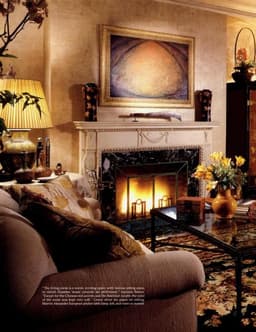 p.150
p.150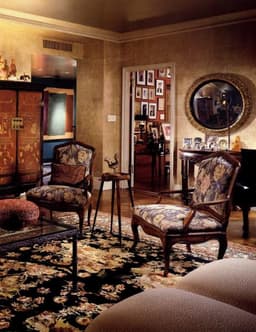 p.151
p.151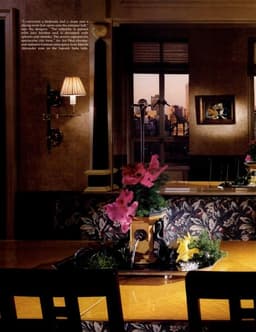 p.152
p.152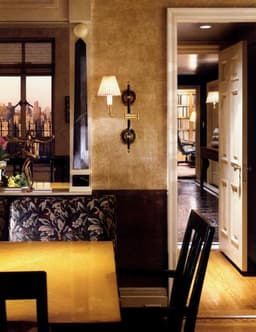 p.153
p.153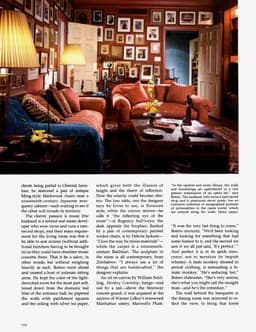 p.154
p.154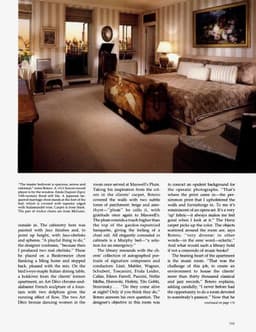 p.155
p.155Home Score
Radial Graph
Space dominates with Material Warmth and Maximalism driving the profile, while Story remains suppressed across all axes and Stage achieves modest cohesion through Formality and Curation that fails to elevate the overall composition.
Scoring Explanations
A Manhattan penthouse overlooking Central Park with Art Deco bones and decent ceiling height, but the rooms are human-scaled and intimate rather than imposing — the architecture serves as backdrop, not spectacle.
Every surface radiates warmth: silver tea paper on ceilings, parchment-squared walls, antique wood cabinets, tapestry-upholstered chairs, Persian and Bakhtiari carpets, leather, and the pervasive amber-gold tonality throughout.
Every surface is activated — Chinese altar tables, Japanese lacquer cabinets, Etruscan-style mirrors, Art Deco bronzes, contemporary wicker, nineteenth-century marquetry — yet all objects are in dialogue through a consistent warm palette and Botero's deliberate 'harmonious blend of old and new.'
The space deliberately mixes disparate periods — Chinese altar tables, Art Deco bronzes, nineteenth-century Bakhtiari carpets, contemporary Dakota Jackson chairs — into an eclectic whole rather than committing to any single era, with the Art Deco building providing structural bones.
Botero convincingly creates the illusion of accumulated life through objects sourced from Lorin Marsh, Maxwell's Plum auctions, and Zimbabwe, but the article makes clear this was a designed-from-scratch penthouse transformation — purchased antiques rather than inherited ones.
The article explicitly states the clients 'entertain frequently,' wanted seating for sixteen for chamber music concerts, and the designer created 'a host of intimate sitting areas' — the Steinway grand piano and converted dining room confirm this is a social venue.
The carefully arranged Ming-style chairs, styled vignettes on every surface, precious objects, and the formal dining room with banquette all enforce a sense of behavioral discipline — these are rooms where you watch where you set your drink.
Samuel Botero's hand is everywhere — composed sight lines from entrance hall through to the library, the flanking wicker chairs by the Regency bull's-eye desk, symmetrical Ming chairs near the marquetry cabinet — these are designer-directed vignettes, not organic accumulation.
The William Schilling painting from Maxwell's Plum, the Steinway, the autographed portraits of composers, and the Central Park views are displayed with pride, but the collection feels personal to the clients' passions (music, record shops) rather than brand-broadcasting for visitors.