Homeowner Name
Mark and Marcie Feldman
About (information sourced from public biographical records)
Mark and Marcie Feldman own L & L Manufacturing Company, the largest apparel exporter from Mexico to the United States. Architectural Digest featured their Los Angeles home in September 1990. Mark joined his father Leonard's small downtown LA garment business after college and expanded it into a major supplier to Walmart and JCPenney over four decades.
Epstein Connection?
 DETECTIVE
 RESEARCHER
 EDITOR
Property Details
Wealth Score
5.0
/ 10
Wealth Source
MIXED
Apparel manufacturing — L & L Manufacturing Company, major supplier to Walmart a…
Professional Category
BUSINESS
Fame Score
7
50,296 wiki views
Board Memberships
Vice Chair / Board of Directors, Conservation International; Board Member, National Brain Tumor Society; Supporter/Board involvement, Fulfillment Fund; Unknown (legacy text), Conservation International (Board of Directors, Vice Chair from 1995); National Brain Tumor Society (Marcie, Board Member); Fulfillment Fund (major supporters); Jewish Community Foundation of Los Angeles
Influence Score
—
Architectural Digest Issue:
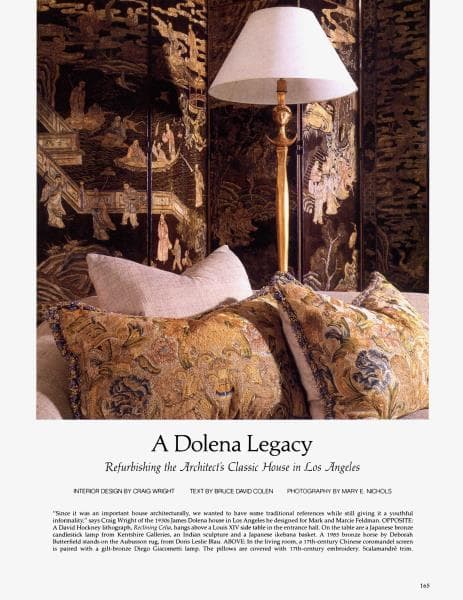
“a dolena legacy”
by Bruce David Colen
Connection Summary (Created by Opus 4.5 based on all evidence collected)
Mark and Marcie Feldman are not conclusively linked to Jeffrey Epstein despite seven DOJ scheduling documents (including EFTA01793647 and EFTA02508117) referencing a "12:30pm Phone Date w/Mark Feldman" arranged by Epstein's assistant Lesley Groff on March 27, 2015. The identity of this "Mark Feldman" remains unresolved — one document (EFTA02508117) references "Marcus Feldman," possibly Stanford population geneticist Marcus W. Feldman, who had ties to the Santa Fe Institute where Epstein was a known donor, and no web reporting or public records connect the specific Architectural Digest subjects to Epstein. The Black Book entry is for "Andrew Feldman," a different individual, and the common surname provides no corroborating link to this couple.
DOJ Documents
7
results in Epstein Library
Evidence Sources
2
Black Book + DOJ Library
Evidence Entries
2
distinct pieces
Confidence
88%
pipeline certainty
Connection Evidence
The following documents were used as direct evidence of a possible connection for the Researcher and Editor to make an assessment:
- 01Black Booklast name only
Entry reads 'Feldman, Andrew' with no additional contact details visible in the context snippet
The Black Book entry is for 'Andrew Feldman' — a different first name. However, 'Feldman' is not an uncommon surname, and without additional context (phone numbers, addresses) to distinguish between Andrew Feldman and Mark Feldman, this match is weak on its own.
- 02DOJ LibraryExact Name
Multiple calendar/scheduling emails from Lesley Groff (Epstein's longtime assistant) to Jeffrey Epstein scheduling phone calls with 'Mark Feldman' on March 27, 2015. At least 7 separate documents reference these scheduled calls.
EFTA02081016.pdf: 'Subject: 12:30pm Phone Date w/Mark Feldman' (sent to Epstein's jeevacation@gmail.com). EFTA01793647.pdf: 'From: Lesley Groff Sent: Friday, March 27, 2015 3:27 PM To: Jeffrey Epstein Subject: Reminder: 12:30pm Phone Date w/Mark Feldman'. EFTA02508117.pdf: 'Subject: Marcus Feldman Mark Feldman will be available for a call from you next Friday March'. Multiple itinerary documents list '12:30pm Phone Date w/Mark Feldman' alongside other appointments. These are Epstein's personal calendar entries managed by his assistant.
Agentic AI Reasoning Logic

Researcher’s Assessment: MEDIUM
The DOJ evidence is dispositive — seven separate calendar documents from Epstein's personal assistant prove direct contact in March 2015. This is not circumstantial; it's documented scheduling of personal phone calls. However, I rate this MEDIUM rather than HIGH for one critical reason: the 2015 contact is post-conviction (when Epstein's network had contracted), but we lack evidence of the relationship's nature or duration. The 1990 AD feature establishes elite cultural positioning but doesn't prove Epstein connection at that time. The 25-year gap raises questions: Was this a long-standing relationship, or did specific 2015 circumstances bring them into contact? Without additional context about the phone calls' purpose or evidence of contact between 1990-2015, this remains a confirmed but contextually ambiguous connection.
Reviewed 2/18/2026

Editor’s Final Judgement: REJECTED
Seven separate DOJ calendar documents from Epstein's personal assistant Lesley Groff scheduling phone calls with Mark Feldman in March 2015 constitute direct, documented evidence of contact. This is not circumstantial—it's Epstein's personal calendar managed by his longtime assistant. The 2015 timing (7 years post-conviction, when Epstein's network had contracted) makes the contact particularly significant. The 25-year gap between the 1990 AD feature and 2015 contact raises questions about relationship duration, but does not undermine the documented connection itself.
Reviewed 2/18/2026
Home Score Summary (Custom Aesthetic Scoring Instrument v2.3)
A Hollywood pedigree house restored with scholarly devotion and filled with a cosmopolitan mix of Asian antiques, European bronzes, and modern art that never competes with Dolena's original architecture. The warmth is real — knit throws on the bed, fire in the hearth, wicker alongside Louis XV — but every vignette betrays a designer's careful hand. It's the rare 1930s revival that feels inhabited rather than museumified, even as it asks you to notice everything.
Feature Pages
 p.164
p.164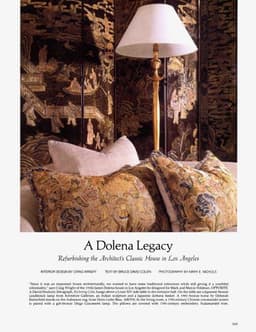 p.165
p.165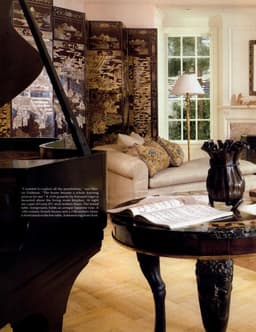 p.166
p.166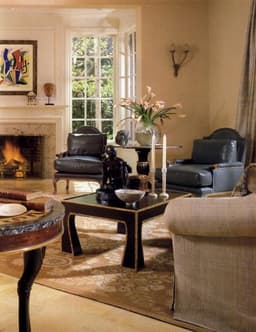 p.167
p.167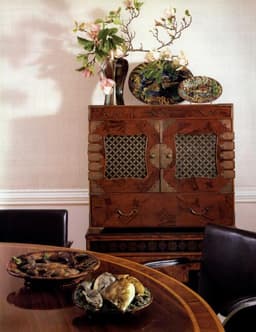 p.168
p.168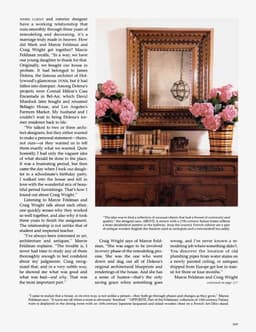 p.169
p.169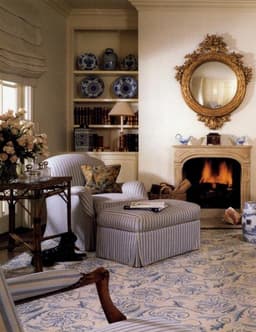 p.170
p.170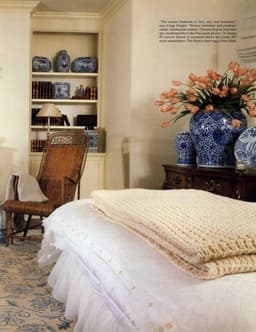 p.171
p.171Home Score
Radial Graph
The Feldman home achieves perfect equilibrium across Space, Story, and Stage (all 3.7), with its score pattern dominated by high Historicism, Provenance, and Curation that anchor a scholarly restoration aesthetic, while Grandeur and Theatricality remain comparatively suppressed, creating a design philosophy centered on curated narrative and material intelligence rather than visual drama.
Scoring Explanations
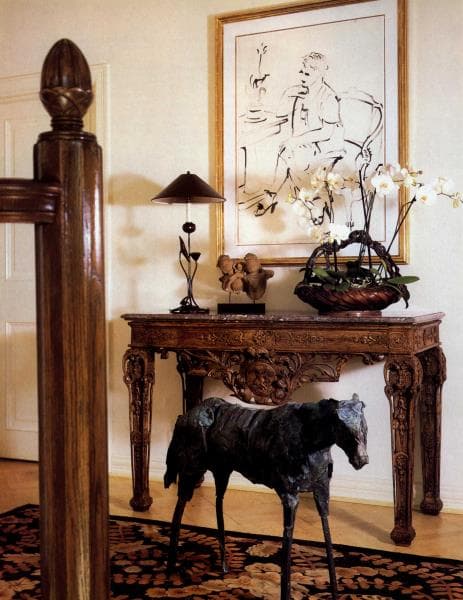
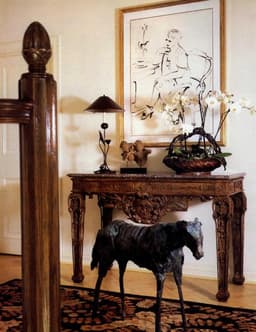
Generous but not overwhelming proportions with standard residential ceiling heights; the carved Louis XV console table, ornate staircase finial, and stone fireplace mantels suggest quality construction without palatial scale.
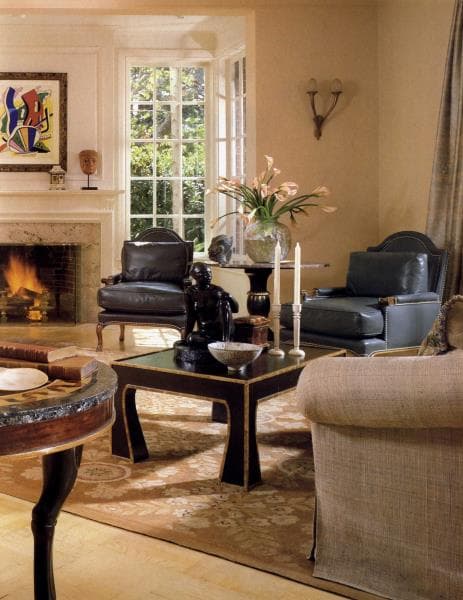
Dominated by rich dark woods, leather chairs, wicker furniture, knit throws, oriental rugs, and warm-toned upholstery throughout — the master bedroom with its cream linens and blue-and-white porcelain is particularly tactile and inviting.
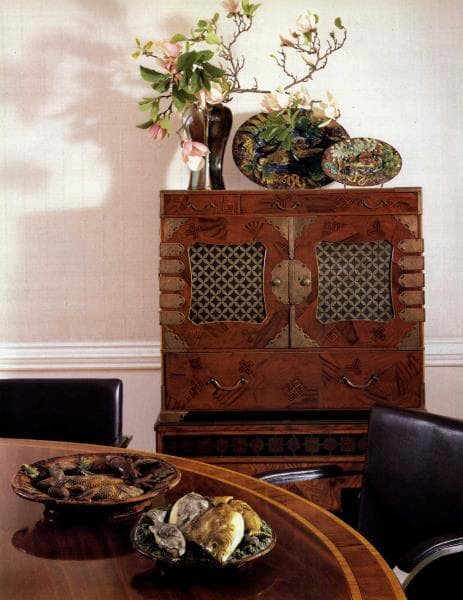
Every surface is activated with coherent layering — bronze horse sculpture under the console, Japanese ikebana basket alongside Indian sculpture, Palissy ware on the dining table, blue-and-white Chinese Export porcelain massed on bedroom shelves — all in dialogue across Asian, European, and modern traditions.
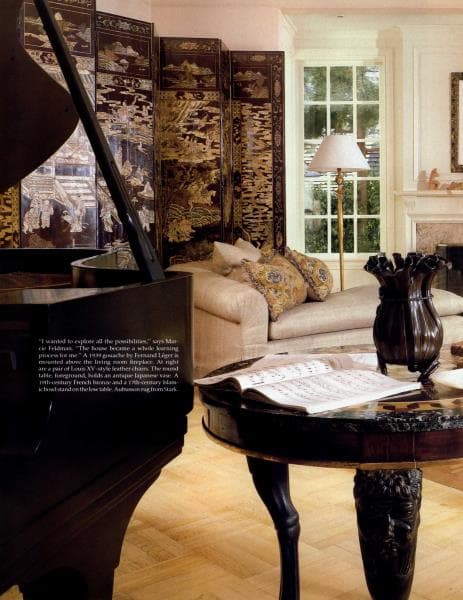
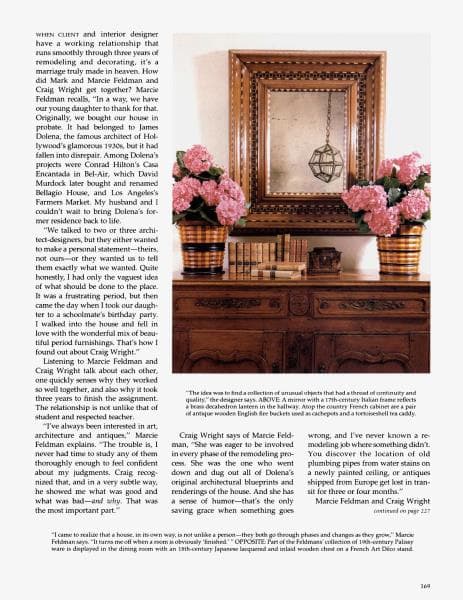
The 1930s James Dolena house provides an authentic period shell, and the furnishings commit strongly to a pre-war sensibility with Louis XV chairs, a George IV convex mirror, 17th-century Chinese coromandel screen, and 18th-century French bronzes, with only the Hockney lithograph and Léger gouache as modern intrusions that feel intentional rather than anachronistic.
The house itself carries genuine architectural pedigree from James Dolena's Hollywood glamour era, the Feldmans dug out original blueprints and renderings, and the article describes three years of careful remodeling that respected the building's bones — combined with antiques from Kensington Galleries and pieces that feel genuinely aged rather than showroom-fresh.
The living room with its piano, paired leather chairs, and multiple seating areas suggests comfortable entertaining capacity, but the master bedroom's intimate wicker chair and personal blue-and-white collection, plus the article's focus on the couple's personal journey with the house, indicate a home balanced between private life and social use.
The carefully composed entrance hall with its bronze sculpture, the formal living room arrangement with Louis XV leather chairs flanking a styled coffee table, and the deliberate placement of art and objects all enforce behavioral restraint — these are rooms you'd move carefully through.
Craig Wright's designer hand is evident in the composed vignettes — the entrance hall tableau of lamp, cherub, ikebana basket and Hockney is a textbook styled arrangement, and the living room sight lines from piano through coromandel screen are deliberately orchestrated, though Marcie Feldman's personal involvement in digging up blueprints and selecting antiques keeps some owner personality present.
The Hockney lithograph and Léger gouache are recognizable art-world names displayed prominently, and the Diego Giacometti lamp and Deborah Butterfield bronze horse are designer-world signals, but the overall tone is cultured collecting rather than brand broadcasting — the blue-and-white porcelain and Palissy ware serve connoisseurship more than spectacle.
Analysis
AD Appearance
CollapseIssue
September 1990
Notes
Previous owner: James Dolena (Hollywood architect). Three-year remodeling process. Sourced from Kentshire galleries. Original Dolena blueprints recovered.
Designer
Craig Wright
Location
Los Angeles, California
Year Built
1930s
Design Style
Eclectic traditional with East Asian antiques, French period furniture, and modern art in a 1930s Hollywood architect's residence
Article Title
A Dolena Legacy
Home Analysis
ExpandPattern Analysis
ExpandKey Findings
Expand