Homeowner Name
Phyllis Hobbs Rowan
About (information sourced from public biographical records)
Phyllis Hobbs Rowan was a Fort Worth socialite featured in Architectural Digest in March 1990.
Epstein Connection?
 DETECTIVE
 RESEARCHER
 EDITOR
Property Details
Wealth Score
2.0
/ 10
Wealth Source
MARRIED INTO
Likely marriage to William Albert Rowan, potentially connected to the Rowan Comp…
Professional Category
SOCIALITE
Fame Score
2
Board Memberships
—
Influence Score
—
Architectural Digest Issue:
“variation on a theme”
by Michael Ennis
Home Score Summary (Custom Aesthetic Scoring Instrument v2.3)
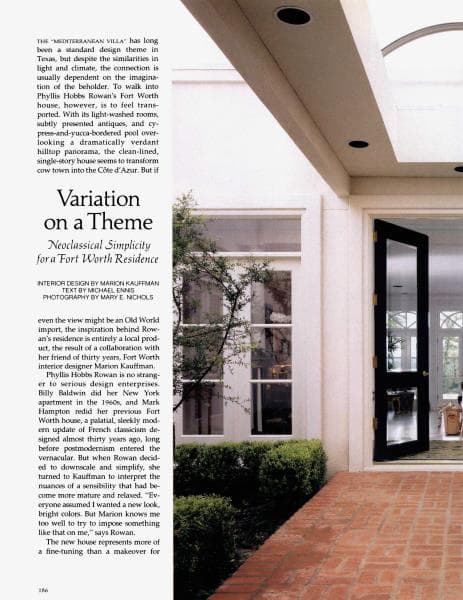
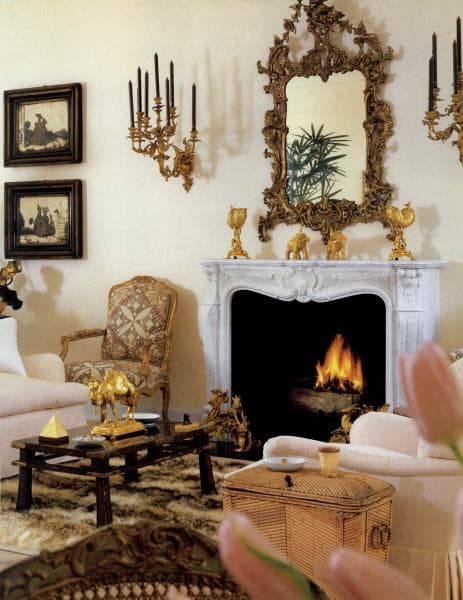
A Texan's genuine Mediterranean fantasy executed with restraint: thirty years of serious Parisian antique collecting housed in a Kauffman-designed Neoclassical shell that's all light-washed oak and glass. The gilt-bronze menagerie on the Louis XV mantel is the tell—eccentric, personal, accumulated rather than decorated. Rowan downsized not to diminish but to distill.
Feature Pages
 p.186
p.186 p.187
p.187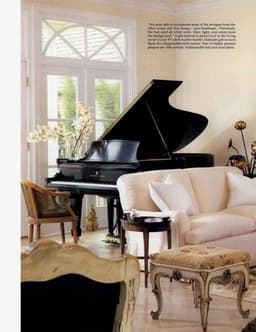 p.188
p.188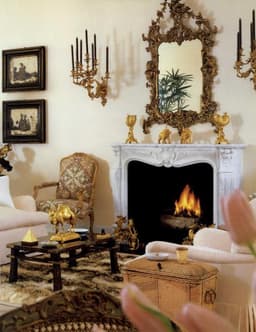 p.189
p.189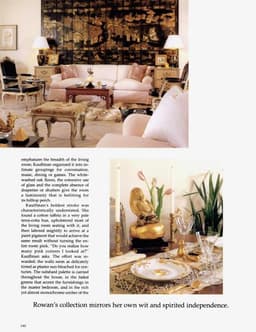 p.190
p.190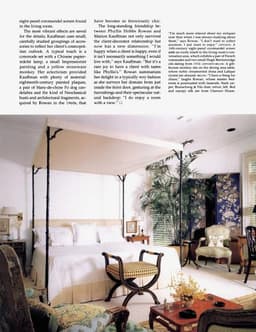 p.191
p.191Home Score
Radial Graph
The Phyllis Hobbs Rowan scoring pattern balances Material Warmth and Maximalism in Space with strong Historicism and Provenance in Story, but is suppressed across Stage by low Theatricality despite elevated Curation, suggesting a home where accumulated authenticity and personal collecting narrative dominate over dramatic presentation.
Scoring Explanations
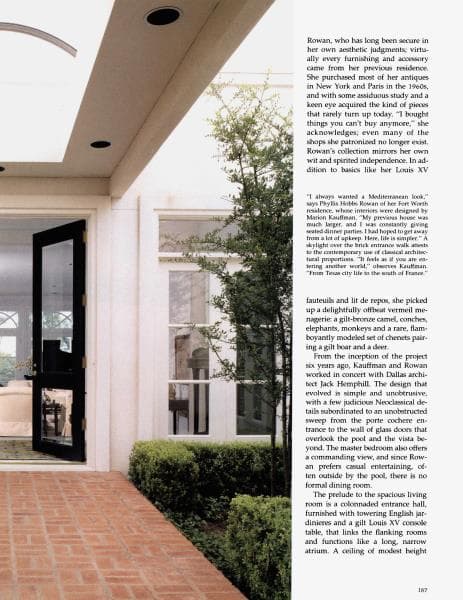
A single-story house with generous but not towering proportions; the colonnaded entrance hall and porte cochère entrance suggest architectural ambition, but the clean-lined, modest-height ceilings keep it grounded rather than palatial.
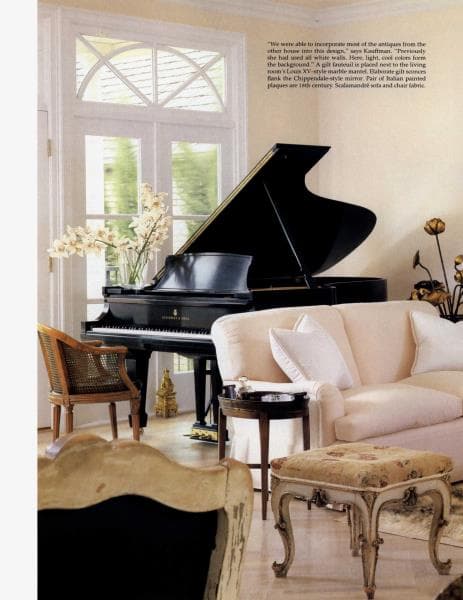
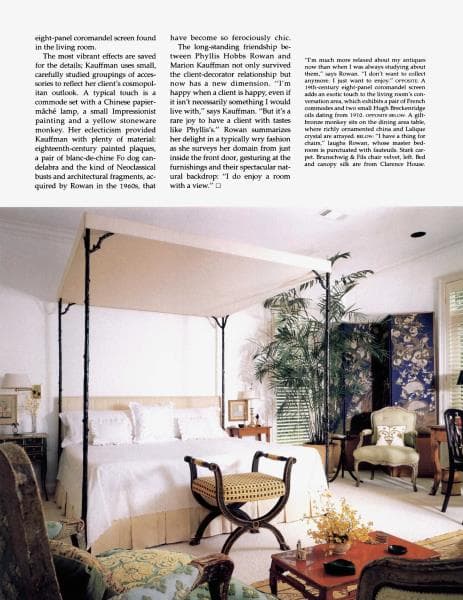
White-washed oak floors, linen and taffeta upholstery, brick entry walkways, and warm-toned walls create a predominantly warm palette, balanced by the white walls and glass doors that provide cool counterpoint.
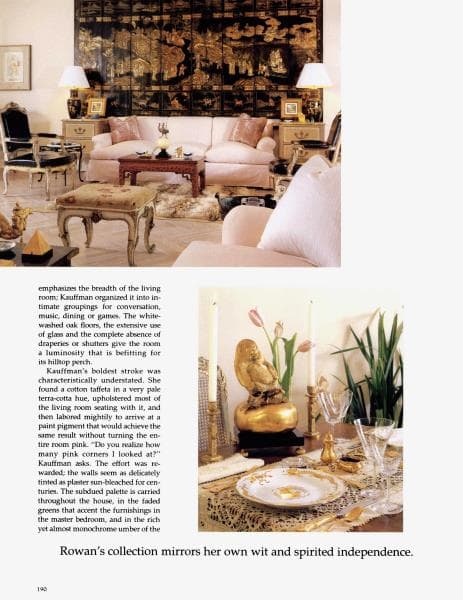
The fireplace wall is densely layered with gilt-bronze camels, elephants, elaborate candelabra, a Chippendale-style mirror, and painted plaques all in coherent dialogue; the living room features multiple seating groupings, a Coromandel screen, and layered antiques throughout.
Strong commitment to French Neoclassical vocabulary—Louis XV console, Louis XV-style marble mantel, period fauteuils, gilt sconces—within a clean contemporary shell, with the architecture designed by Jack Hemphill as a deliberate Neoclassical Mediterranean framework.
Rowan purchased most antiques in New York and Paris in the 1960s, the article notes she acquired pieces 'you can't buy anymore' from shops that no longer exist, and virtually every furnishing came from her previous residence—this is genuine three-decade accumulation, not staged purchasing.
The article explicitly states Rowan downsized from a larger house where she gave 'seated dinner parties,' now prefers casual entertaining by the pool with no formal dining room, suggesting a balanced home that can host but prioritizes personal comfort.
The Louis XV antiques and gilt-bronze menagerie command respect, but the whitewashed floors, absence of draperies, and casual pool-side entertaining ethic described in the text soften the formality considerably.
Marion Kauffman organized the living room into 'intimate groupings for conversation, music, dining or games,' labored to match wall paint to upholstery taffeta, and composed styled vignettes like the fireplace mantel arrangement—professional design direction with the owner's collection as raw material.
The gilt-bronze animal collection and elaborate mirror are visually dramatic but deeply personal—Rowan collected these pieces over decades for her own pleasure, and the article emphasizes her 'wit and spirited independence' rather than brand signaling or status display.