Homeowner Name
Tristram Jellinek
About (information sourced from public biographical records)
Tristram Jellinek was a British character actor and antiques dealer who owned Lindsay Antiques on Kensington Church Street. His London home appeared in Architectural Digest in December 1989. Son of a Czech antiques dealer in Knightsbridge, he won a RADA scholarship, acted in films like Out of Africa, then built Lindsay Antiques into a destination for top decorators.
Epstein Connection?
 DETECTIVE
 RESEARCHER
 EDITOR
Property Details
Wealth Score
5.0
/ 10
Wealth Source
MIXED
Antiques dealing (Lindsay Antiques, Kensington) and character acting career
Professional Category
ART
Fame Score
3
Board Memberships
—
Influence Score
—
Architectural Digest Issue:
“theatrical menagerie”
by Elizabeth Lambert
Home Score Summary (Custom Aesthetic Scoring Instrument v2.3)
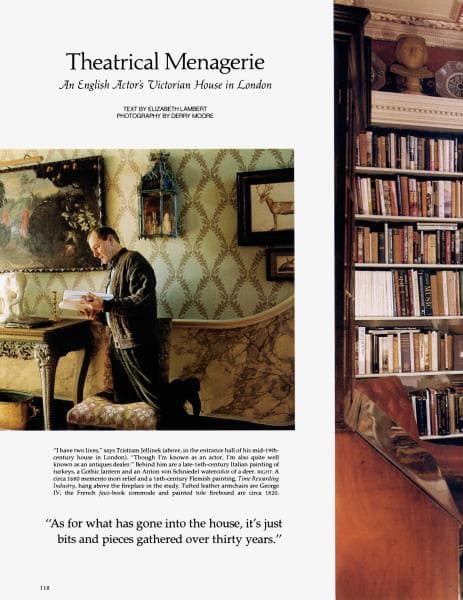
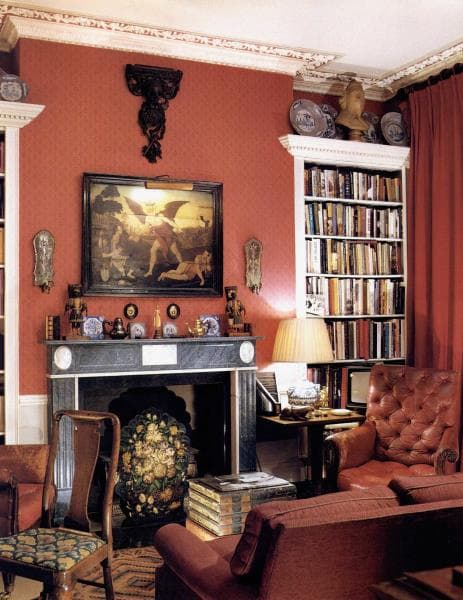
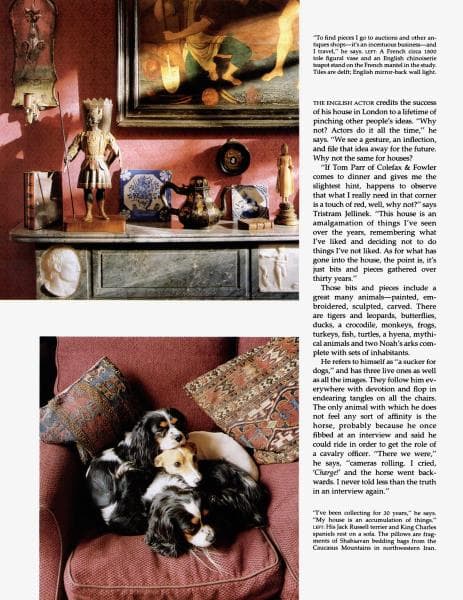
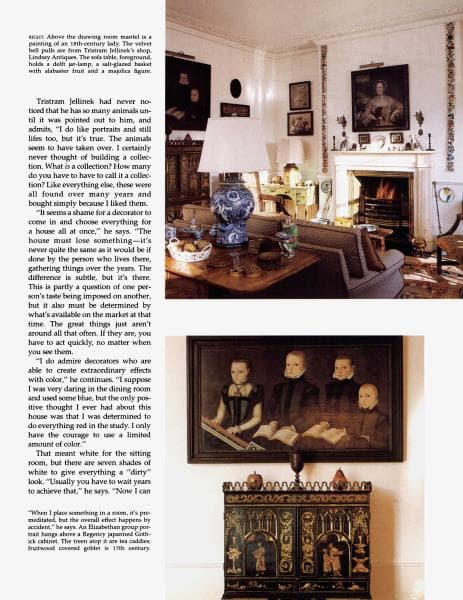
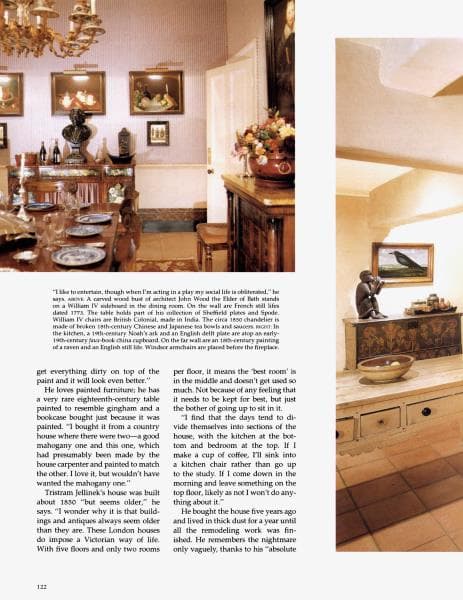
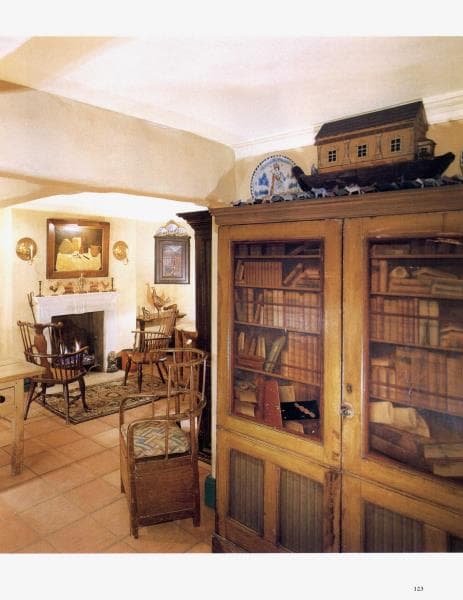
A Victorian actor's den where thirty years of auction-house finds have accreted into a deeply personal menagerie — painted turkeys, Noah's arks, a stuffed lion, and three live dogs all cohabiting in red-walled rooms of genuine warmth. Nothing was chosen to impress; everything was chosen because it delighted one man. The anti-decorator's decorator house: maximalist, coherent, and utterly unpretentious.
Feature Pages
 p.118
p.118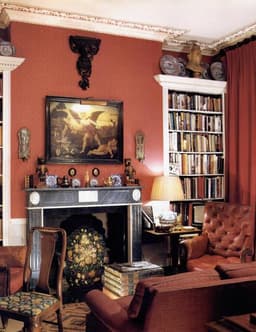 p.119
p.119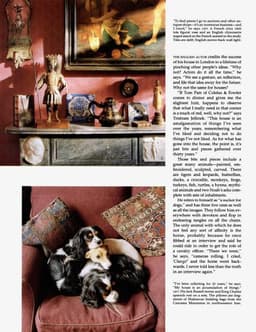 p.120
p.120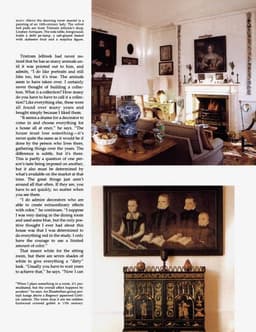 p.121
p.121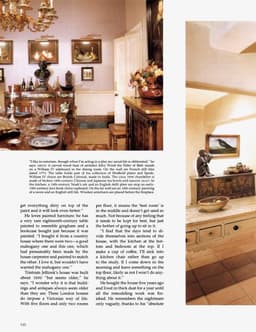 p.122
p.122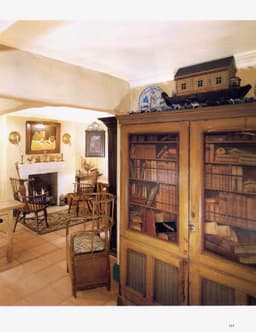 p.123
p.123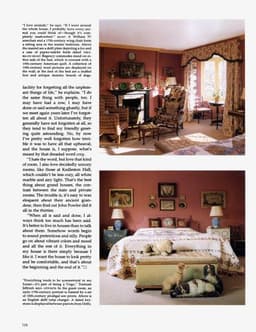 p.124
p.124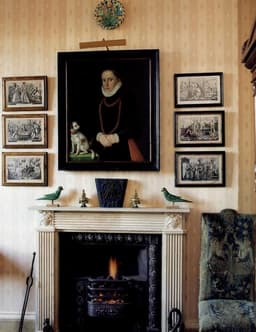 p.125
p.125Home Score
Radial Graph
Space's Material Warmth and Maximalism dominates the aesthetic profile while Stage remains suppressed across all axes, creating a pattern where accumulated personal abundance overwhelms any impulse toward formal presentation or curatorial control.
Scoring Explanations
A mid-19th-century London townhouse with five floors but only two rooms per floor — intimate, human-scale rooms with moderate ceiling heights, not imposing architecture.
Tufted leather armchairs, terracotta tile floors, rich red wallpaper, worn oriental rugs, linen, wood Windsor chairs, and dogs on upholstered sofas create maximum tactile warmth throughout.
Every surface is activated — paintings, sculptures, delft tiles, Noah's arks, animal figures, stacked books, blue-and-white china — yet everything coheres around a Victorian collector's sensibility with consistent warm tones and animal motifs in dialogue.
Strong Victorian commitment with George IV leather armchairs, French faux-book commodes circa 1820, 18th-century paintings, Gothic lanterns, and period-appropriate wallpapers, with only minor modern intrusions visible.
Jellinek explicitly states 'bits and pieces gathered over thirty years' from auctions and antique shops; the worn leather, layered collections, stuffed lion at the foot of the bed, and dogs draped everywhere convey genuine accumulated life, not staged antiquarianism.
Jellinek describes his social life being 'obliterated' when acting, the house divides into private sections with kitchen below and bedroom at top, and the best spaces — the study, the sitting room — feel designed for one person reading with dogs.
Dogs flop on every chair and sofa, books are stacked on floors, the kitchen has Windsor chairs for casual sitting — Jellinek says he wants the house to 'look pretty and be comfortable, and that's about the beginning and the end of it.'
Entirely self-curated by Jellinek over 30 years from auctions and his own antiques dealing; he explicitly rejects decorators, saying 'it seems a shame for a decorator to come in and choose everything for a house all at once.'
Nothing here performs for an audience — the animal collection was 'completely inadvertent,' the painted bookcase fools no one on purpose, and the entire house serves a private, eccentric collector-actor who says 'everything in my house is there simply because I like it.'