Homeowner Name
Anonymous
About (information sourced from public biographical records)
Epstein Connection?
 DETECTIVE
 RESEARCHER
 EDITOR
Property Details
Wealth Score
—
Wealth Source
—
Professional Category
Business
Fame Score
—
Board Memberships
—
Influence Score
—
Architectural Digest Issue:
“lyrical interlude on nob hill”
by Joan Chatfield-Taylor
Home Score Summary (Custom Aesthetic Scoring Instrument v2.3)
A lighthand Europhile pied-à-terre where Biedermeier honey tones and faded silk float inside Beaux-Arts plasterwork. Hodgins achieved the rare trick of making a professionally designed apartment feel like a decade of romantic weekends rather than a decorator's set piece. The restraint is the luxury — every surface could hold more, but the emptiness reads as confidence.
Feature Pages
 p.182
p.182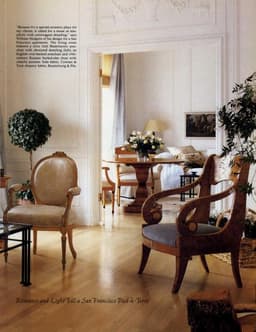 p.183
p.183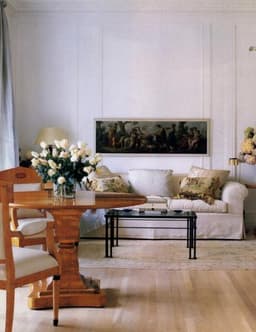 p.184
p.184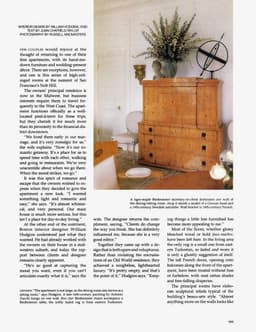 p.185
p.185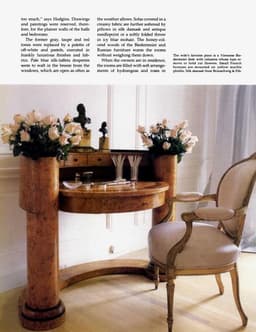 p.186
p.186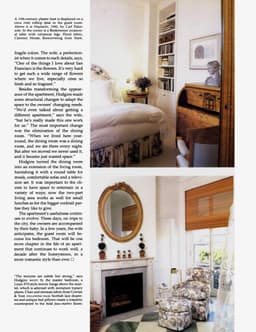 p.187
p.187Home Score
Radial Graph
The score pattern is dominated by Space's material assertiveness (3.7) and Story's historical anchor (3.3), while Stage remains suppressed (3.0), driven by a sharp divergence between high Curation (4) and low Theatricality (2) that reflects a restraint-based aesthetic where compositional control outweighs performative display.
Scoring Explanations
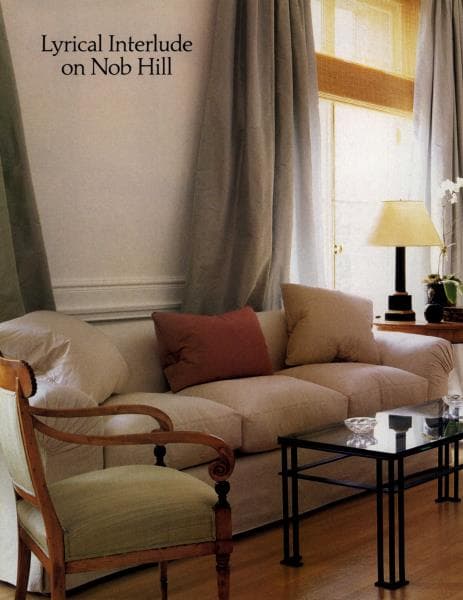
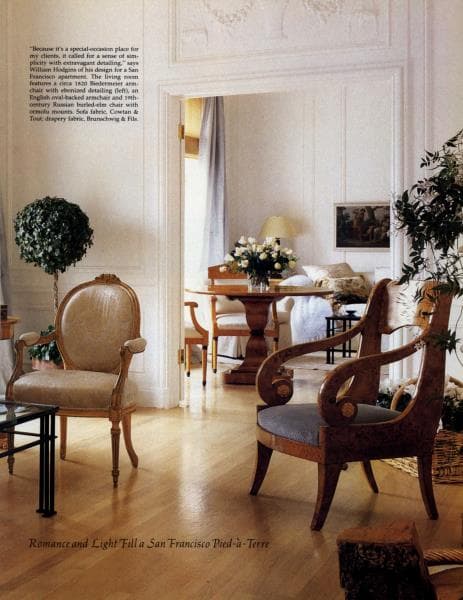
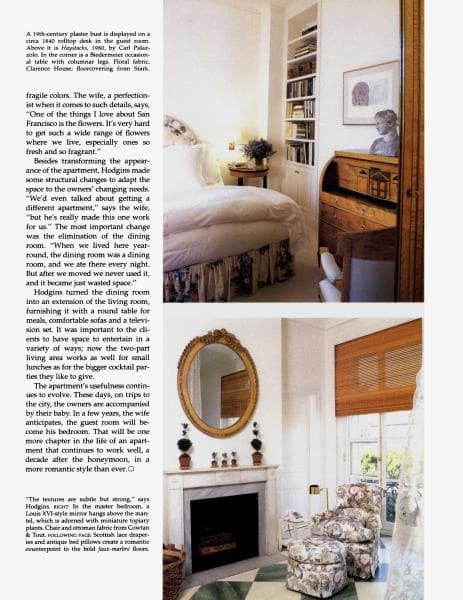
High ceilings with elaborate plaster moldings and boiserie detailing in the principal rooms, tall French doors opening to balconies, and generous proportions typical of a Nob Hill summit apartment give the space architectural weight without crossing into palatial territory.
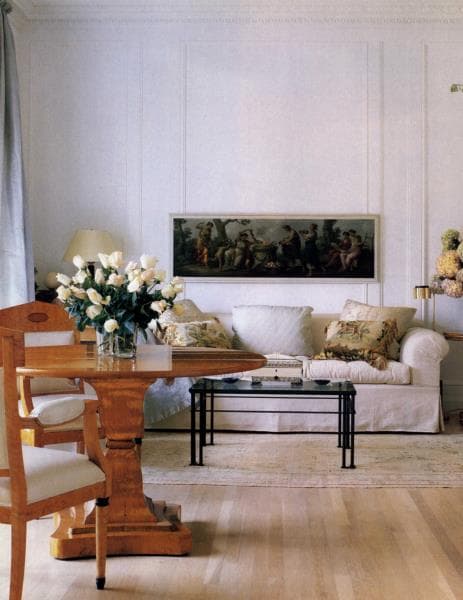
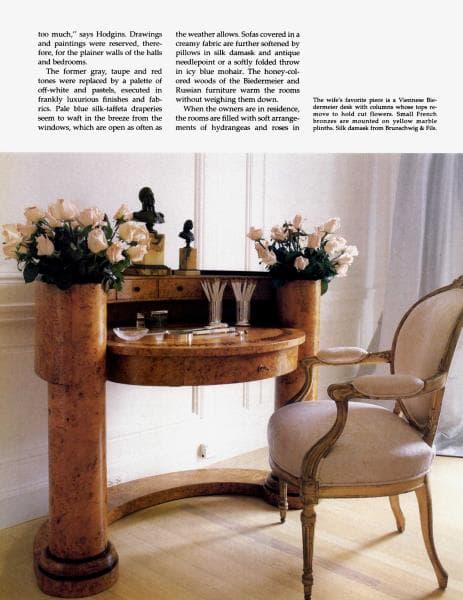
Honey-colored Biedermeier and Russian furniture, warm oak floors, linen and cream upholstery, silk damask pillows, and softly faded Turkestan rugs create a predominantly warm tactile palette with just enough cool white walls and pale blue silk-taffeta draperies to provide structure.
The rooms are layered with antique chairs, fresh flowers, small bronzes, and decorative pillows but maintain generous breathing room between objects — Hodgins deliberately kept things 'pretty empty' and reserved drawings and paintings for plainer walls.
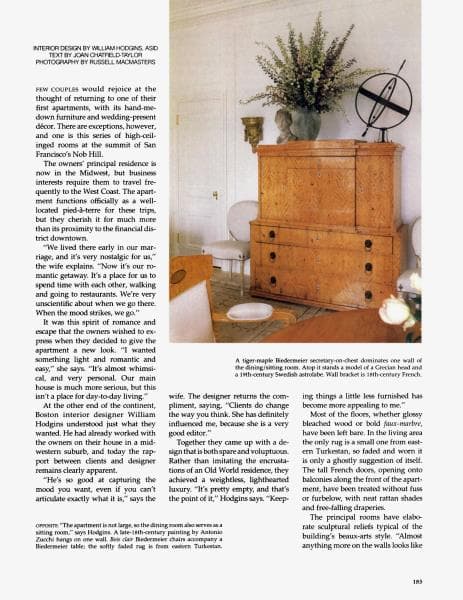
A strong commitment to European period furniture — Biedermeier secretary-on-chest, 19th-century Swedish armchairs, Russian birch-leg chairs, Louis XVI-style mirror, and a late-18th-century painting by Antonio Zucchi — with only minor modern intrusions like the iron-and-glass coffee table and television set.
The article describes this as a 'hand-me-down furniture and wedding-present' apartment that the couple has returned to over a decade, and while pieces like the faded Turkestan rug and antique needlepoint pillows suggest real life, the overall redesign by Hodgins is a convincing fabrication of accumulated warmth rather than genuine generational patina.
The text describes it as a 'special-occasion place' used for romantic getaways and small lunches as well as 'bigger cocktail parties,' with the dining room converted to an extension of the living room to serve both intimate and social needs — balanced between private retreat and entertaining.
The rooms are refined and considered — silk damask, antique chairs, careful arrangements — but the slipcovered sofas, Scottish lace draperies, and the article's emphasis on comfort ('light and romantic and easy') prevent the space from feeling disciplinary or intimidating.
William Hodgins clearly directed the aesthetic program — composed sight lines through doorways, symmetrical flower arrangements, styled vignettes of bronzes on marble plinths, and a deliberate palette of off-white and pastels — though the owners' personality (wedding gifts, hand-me-downs, nostalgic attachment) still registers.
The space communicates quiet, knowing taste rather than performing wealth — the Biedermeier furniture, faded rugs, and 'subtle but strong' textures are legible to connoisseurs but wouldn't register as expensive to a casual visitor, and the article emphasizes personal romance over display.