Homeowner Name
Diana Phipps
About (information sourced from public biographical records)
Diana Phipps was Countess Diana Sternberg, interior designer and author. Her Oxfordshire home featured in Architectural Digest's June 1988 issue. Born to ancient Bohemian nobility, fled Czechoslovakia in 1948, married into Phipps steel fortune, regained ancestral properties in 1992.
Epstein Connection?
 DETECTIVE
 RESEARCHER
 EDITOR
Property Details
Wealth Score
3.0
/ 10
Wealth Source
MIXED
Interior design career, bestselling book (Affordable Splendour), marriage into P…
Professional Category
ARCHITECTURE_DESIGN
Fame Score
5
2,137 wiki views
Board Memberships
Unknown (legacy text), Steward of the Sternberg art collection at Častolovice Castle, which she restored and opened to the public as a museum. Family historically instrumental in founding the National Museum and National Gallery in Prague.; Co-founder / Board Member, Committee of Goodwill (Výbor dobré vůle) / Olga Havel Foundation; Unknown (legacy text), Co-founder, Committee of Goodwill (Výbor dobré vůle) with Olga Havlová; board member, Olga Havel Foundation; advisory role to the Czech President's Office on restoration of state historical residences.
Influence Score
—
Architectural Digest Issue:
“ringing in the old”
by Elizabeth Lambert
Home Score Summary (Custom Aesthetic Scoring Instrument v2.3)
A 16th-century Oxfordshire barn resurrected through sheer ingenuity and a refusal to spend where cleverness would do. Phipps built this world with a screwdriver, spray paint, and her mother's paintbrush — every faux-stone surface and junk-shop bargain serves a genuine life, not an audience. The double-height stone-and-timber volume is magnificent, but the magnificence belongs to the barn itself; its inhabitant just had the taste to let it speak.
Feature Pages
 p.158
p.158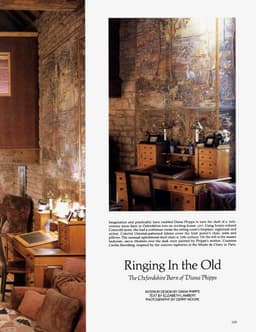 p.159
p.159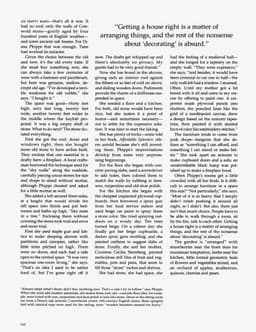 p.160
p.160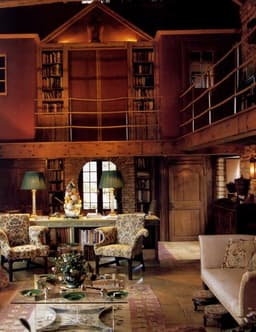 p.161
p.161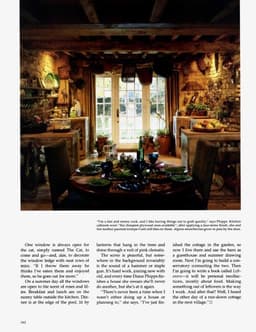 p.162
p.162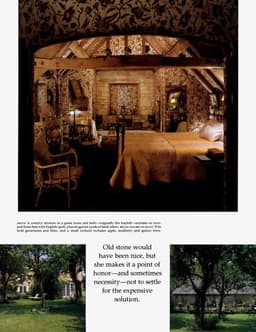 p.163
p.163Home Score
Radial Graph
The score pattern is dominated by Space's Material Warmth and Maximalism (both 5.0), sustained by Story's strong Provenance (5.0), but radically suppressed across Stage's performative axes (all ≤2.0), creating a divergence driven by lived authenticity over curatorial display.
Scoring Explanations
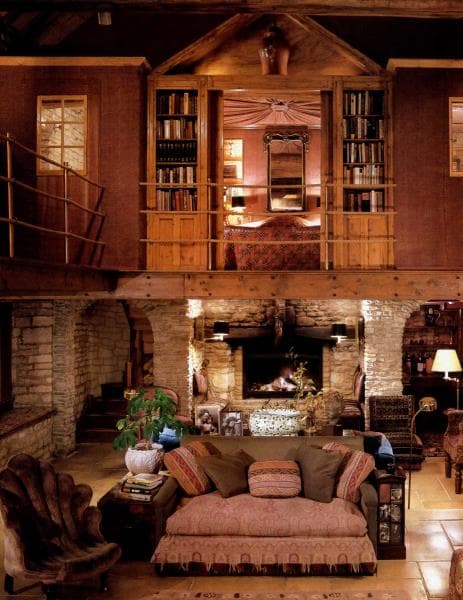
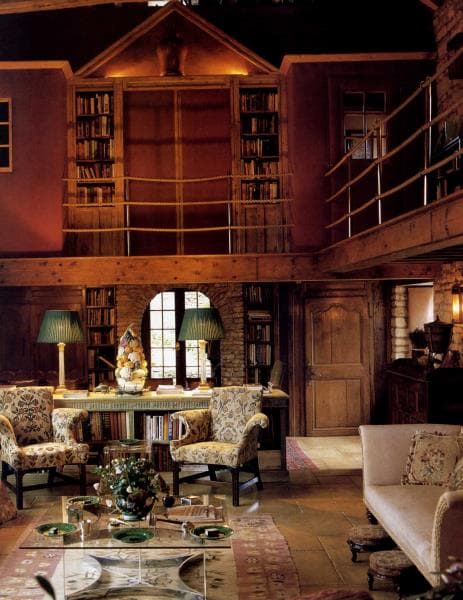
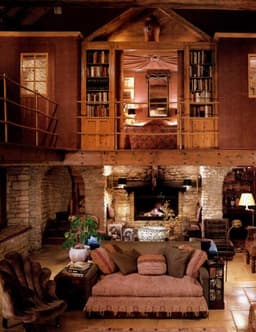
The double-height barn space with exposed oak beams, stone fireplace wall with arched openings, and a mezzanine library/bedroom loft creates impressive architectural volume that dominates without gilded excess.
Every surface radiates warmth — honey-colored Cotswold stone, ancient oak beams, terracotta tile floors, linen and tapestry fabrics, leather, and a live fire in the stone hearth; there is virtually no cold material anywhere.
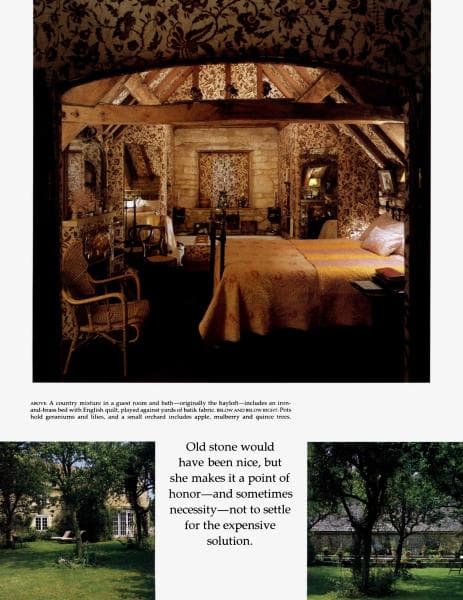
Every surface is activated with coherent layering: Oriental-patterned fabrics on chairs and pillows, stacked books, potted plants, collected objects on every table, pattern-on-pattern in the bedroom with batik and quilts, yet all united by a warm autumnal palette.
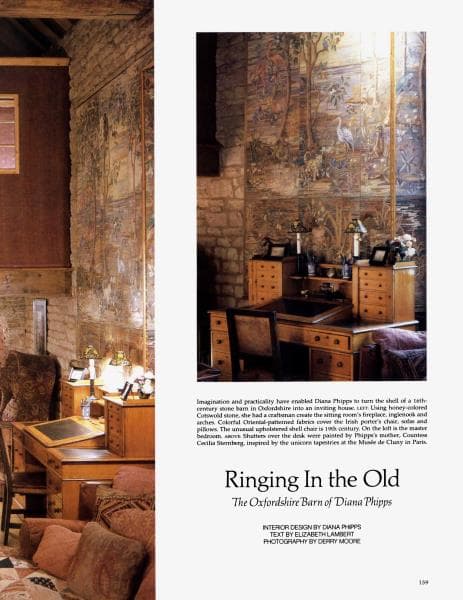
The 16th-century stone barn shell with its oak structure is authentic, furnished with a 19th-century shell chair, Irish porter's chair, Crewelwork covers, and brass uprights with nautical rope railings — the only modern intrusions are concealed lighting and practical kitchen updates.
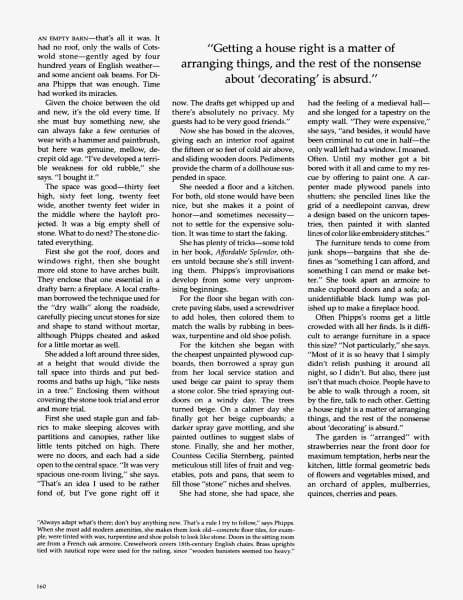
The article explicitly describes Phipps scavenging junk shops, her mother Countess Cecilia Sternberg painting shutters inspired by Musée de Cluny tapestries, hand-painted plywood panels scored to look like tiles, and furniture described as 'something I can mend or make better' — nothing arrived pristine or pre-packaged.
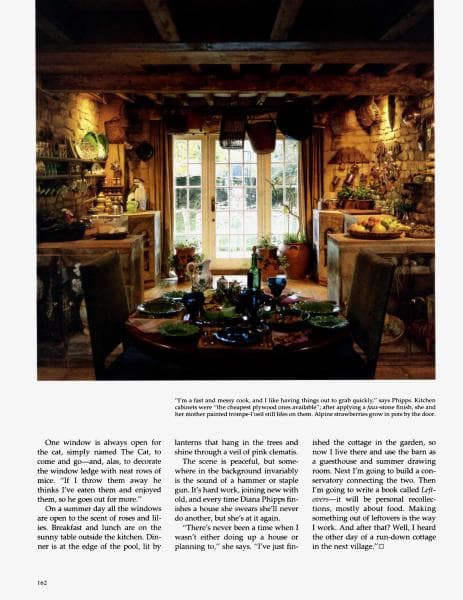
The article mentions breakfast and lunch on a sunny table outside, dinner by the pool lit by lanterns, a guest room in the former hayloft, and a cat named 'The Cat' who comes and goes — it's designed for comfortable living with room for guests, but not primarily as an entertaining venue.
Phipps herself says 'Getting a house right is a matter of arranging things, and the rest of the nonsense about decorating is absurd' — the plywood kitchen cabinets, fur throws tossed on chairs, stacked books as side tables, and overall curl-up-with-a-book atmosphere enforce zero behavioral rules.
Diana Phipps designed everything herself with screwdriver and paint, making cupboard doors from concrete floor tiles disguised with faux-stone finish, and her mother painted the murals — this is entirely self-curated resourcefulness, not professional styling.
The entire project is an exercise in anti-performance: plywood made to look like stone, the cheapest cabinets available painted with faux finishes, junk-shop bargains, and a quote dismissing 'the nonsense about decorating' — wealth here is invisible because it was never the point.