Homeowner Name
Adam Pendleton
About (information sourced from public biographical records)
Adam Pendleton is a conceptual artist whose work is held by MoMA, the Guggenheim, and Tate London. His New York home was featured in Architectural Digest in December 2022. Born in Richmond, Virginia in 1984, he left home at 16 to study art in Italy and built his career independently.
Epstein Connection?
 DETECTIVE
 RESEARCHER
 EDITOR
Property Details
Wealth Score
8.0
/ 10
Wealth Source
SELF MADE
Sales of conceptual artwork through major galleries (Pace Gallery, David Kordans…
Professional Category
ART
Fame Score
7
69,518 wiki views
Board Memberships
Board of Directors, The Drawing Center; Board of Trustees (2017-2020, resigned), Baltimore Museum of Art; Advisory Board, Institute for Contemporary Art at VCU
Influence Score
—
Architectural Digest Issue:
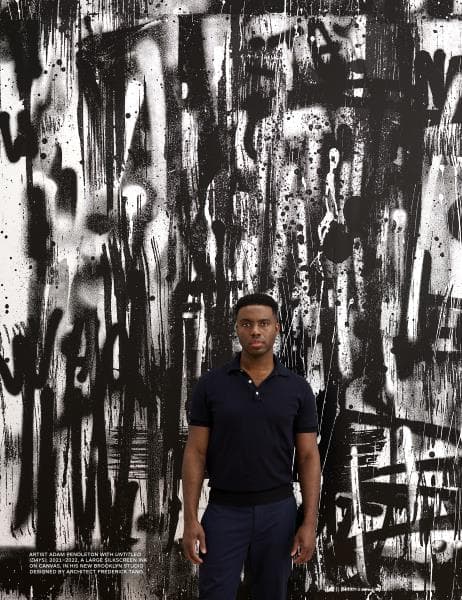
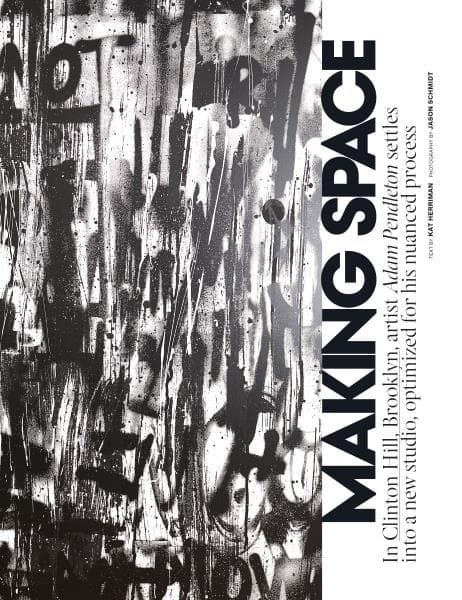
“making space”
by Kat Herriman
Connection Summary (Created by Opus 4.5 based on all evidence collected)
DOJ records contain only tangential references to "Pendleton" as a surname in business contexts and property discussions, with no evidence directly linking Adam Pendleton to Jeffrey Epstein. No confirmed connection between Pendleton and Jeffrey Epstein exists.
DOJ Documents
38
results in Epstein Library
Evidence Sources
1
DOJ Library
Evidence Entries
0
distinct pieces
Confidence
0%
pipeline certainty
Connection Evidence
The following documents were used as direct evidence of a possible connection for the Researcher and Editor to make an assessment:
Agentic AI Reasoning Logic

Researcher’s Assessment: COINCIDENCE
DOJ results contain only tangential references (fabric samples for 'Yurt', email metadata mentioning 'Pendleton' as surname in business context, furniture discussions) with no direct evidence linking Adam Pendleton to Epstein. The AD feature is a contemporary minimalist artist's studio in Brooklyn — a non-person property entity. No Black Book match exists.
Reviewed 2/20/2026

Editor’s Final Judgement: REJECTED
Auto-rejected: triaged as COINCIDENCE — DOJ results contain only tangential references (fabric samples for 'Yurt', email metadata mentioning 'Pendleton' as surname in business context, furniture discussions) with no direct evidence linking Adam Pendleton to Epstein. The AD feature is a contemporary minimalist artist's studio in Brooklyn — a non-person property entity. No Black Book match exists.
Reviewed 2/20/2026
Home Score Summary (Custom Aesthetic Scoring Instrument v2.3)
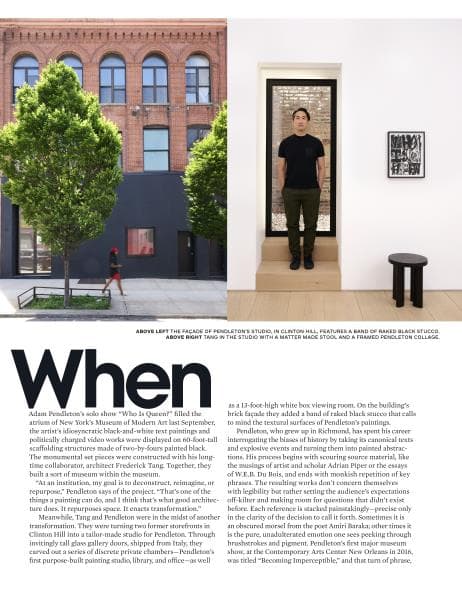
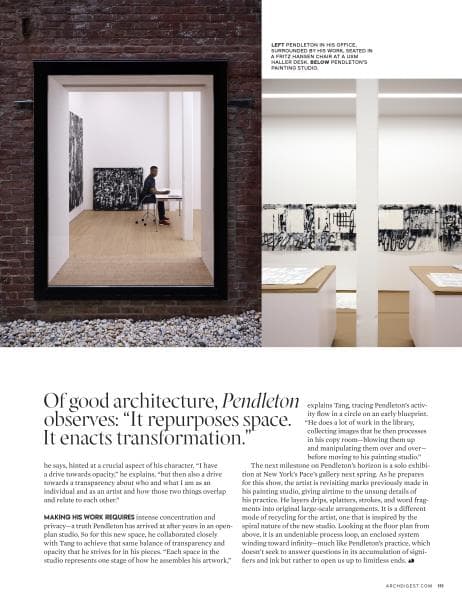
A purpose-built machine for art-making: spare, monochromatic, and architecturally rigorous. The studio mirrors Pendleton's black-and-white painting practice in its materiality — raked black stucco outside, white cube volumes inside — collapsing the boundary between the work and the space that produces it. Privacy and process trump spectacle at every turn.
Feature Pages
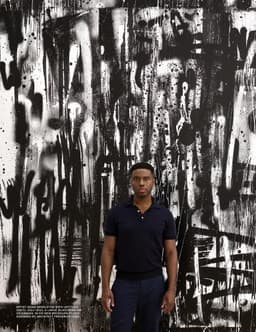 p.108
p.108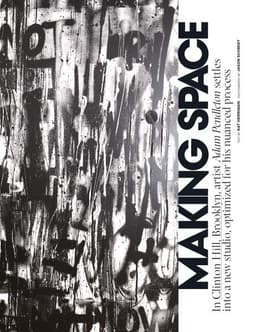 p.109
p.109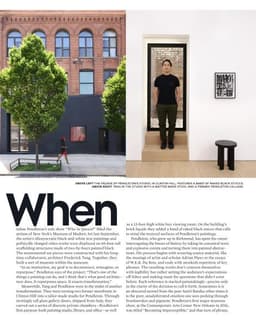 p.110
p.110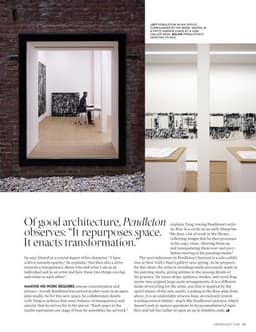 p.111
p.111Home Score
Radial Graph
The score pattern shows Stage (2.7) dominating across Formality and Curation while Story (1.0) remains entirely suppressed, with Space (2.0) moderately restrained by minimal Material Warmth and Maximalism—a configuration driven by high Theatricality and Curation axes that prioritize curated architectural presentation over narrative depth or sensory richness.
Scoring Explanations
The studio features generous proportions with high white-box viewing rooms (described as 13-foot-high ceilings), clean volumes, and quality construction, but it's a working artist's studio rather than a palatial residence.
Dominated by white walls, polished concrete floors, glass gallery doors shipped from Italy, and black stucco exterior — the palette is deliberately cool and industrial with minimal warm accents beyond some cardboard boxes and a wooden stool.
The spaces are intentionally spare and gallery-like, with open floors, minimal furniture, and Pendleton's large-scale black-and-white paintings providing the only visual density against otherwise empty white rooms.
The studio is a contemporary conversion of former storefronts with no historical references — tall glass doors, white cube gallery spaces, and raked black stucco are all resolutely modern.
Everything is newly built and purpose-designed; this is a tailor-made studio freshly converted from former storefronts in Clinton Hill, with no accumulated patina or inherited objects visible.
The article emphasizes 'intense concentration and privacy' as requirements for Pendleton's work, and the space is designed for solitary artistic process — library, copy room, painting studio — not entertaining.
The gallery-like white spaces and careful architectural proportions command respect, but the working studio context — with paint drips, process materials, and functional zones — prevents it from feeling oppressive or disciplinary.
Architect Frederick Tang collaborated closely with Pendleton to design each space as 'one stage of how he assembles his artwork,' making it professionally directed but deeply responsive to the artist's personal working process rather than editorial styling.
The USM Haller desk and Italian glass doors signal design awareness, but the space is fundamentally built to serve Pendleton's practice — the black stucco facade referencing his own paintings is self-expression, not wealth performance.
Analysis
AD Appearance
CollapseIssue
12/2022
Notes
{"social_circle": "Mentions collaboration with architect Frederick Tang and references to scholar Adrian Piper, W.E.B. Du Bois, and poet Amiri Baraka as intellectual influences; upcoming exhibition at Pace gallery mentioned", "spread_pages": [108, 109, 110, 111], "spread_page_count": 4}
Location
Brooklyn, New York
Design Style
Contemporary minimalist artist's studio with gallery-like white cube interiors and industrial black stucco exterior
Article Title
MAKING SPACE
Architecture Firm
Frederick Tang Architecture
Key Findings
Expand