Homeowner Name
Pierre Balmain
About (information sourced from public biographical records)
Pierre Balmain (1914-1982) founded his eponymous fashion house in 1945, becoming a leading Parisian couturier. Architectural Digest featured his Villa Balmain on Elba posthumously in October 1994. He built the Balmain luxury brand from scratch, establishing himself as a major figure in post-war haute couture.
Epstein Connection?
 DETECTIVE
 RESEARCHER
 EDITOR
Property Details
Wealth Score
7.0
/ 10
Wealth Source
SELF MADE
Founder of Maison Balmain fashion house, including haute couture, ready-to-wear,…
Professional Category
FASHION
Fame Score
8
889,816 wiki views
Board Memberships
—
Influence Score
—
Architectural Digest Issue:
“fashion legends: pierre balmain”
by Alan Jolis
Home Score Summary (Custom Aesthetic Scoring Instrument v2.3)
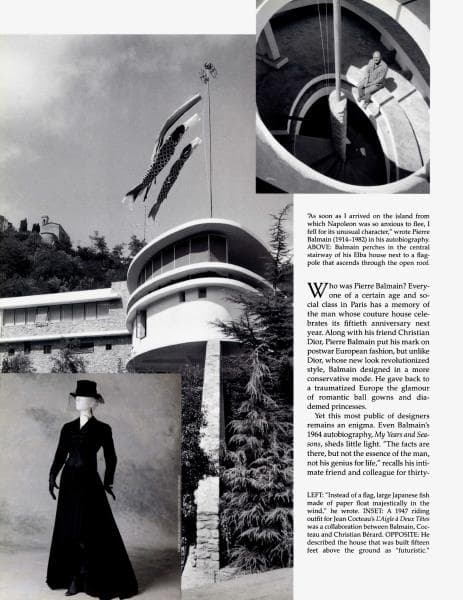
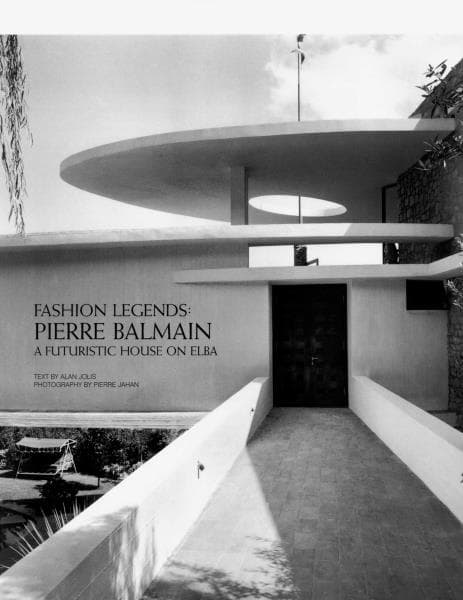
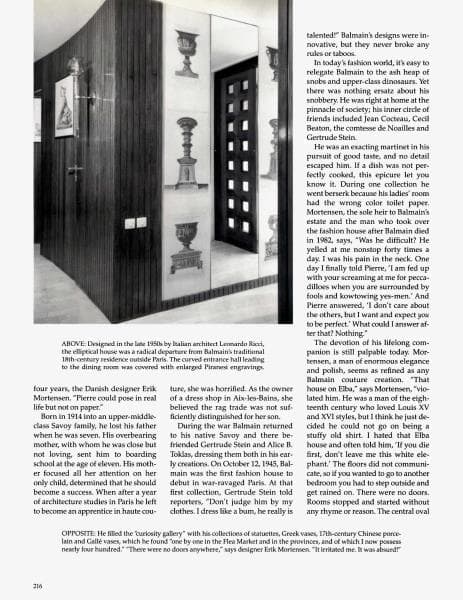
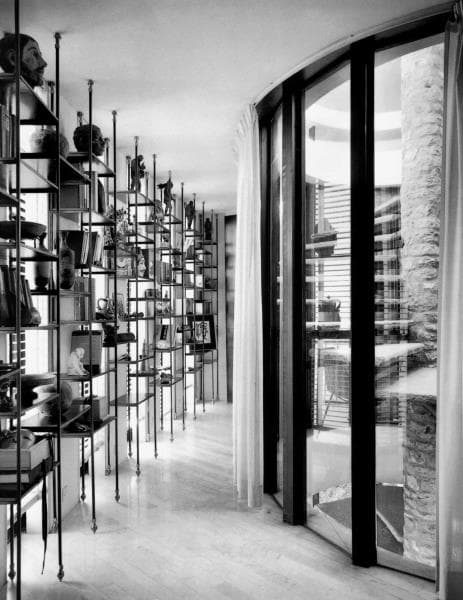
A fashion designer's paradox built in concrete: aggressively futuristic architecture stuffed with flea-market antiquities and dark suede cocoons. The house on Elba is Balmain's personality externalized — a man who designed conservative couture but lived in a spaceship, who loved Napoleon's exile island but filled it with Parisian salon warmth. The curiosity gallery alone, with four hundred collected objects on modernist steel shelving, is the autobiography his actual autobiography couldn't deliver.
Feature Pages
 p.214
p.214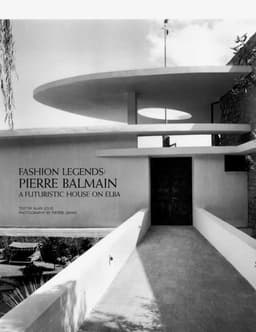 p.215
p.215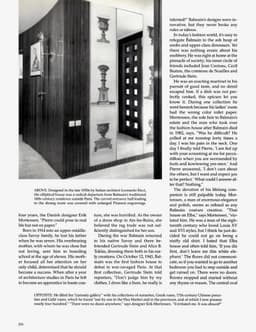 p.216
p.216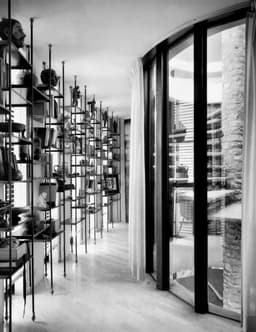 p.217
p.217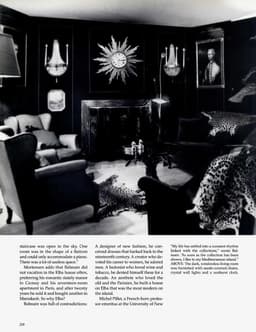 p.218
p.218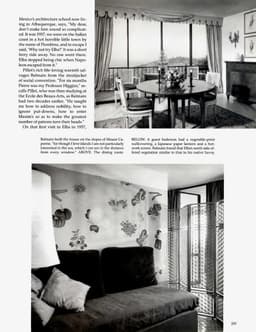 p.219
p.219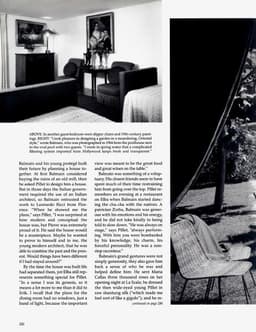 p.220
p.220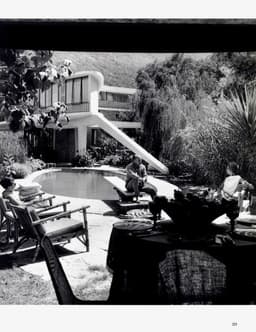 p.221
p.221Home Score
Radial Graph
Space dominates with Grandeur and Maximalism at 4.0, while Story and Stage suppress their potential through middling Formality and Curation scores, creating a pattern where architectural ambition and material abundance override narrative depth and theatrical precision.
Scoring Explanations
The futuristic cantilevered architecture with open-to-sky central staircase, the house built fifteen feet above ground, and dramatic sculptural volumes give this residence serious architectural weight despite its intimate island scale.
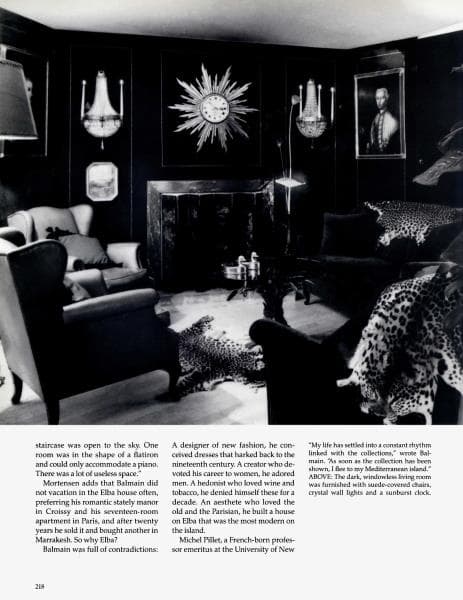
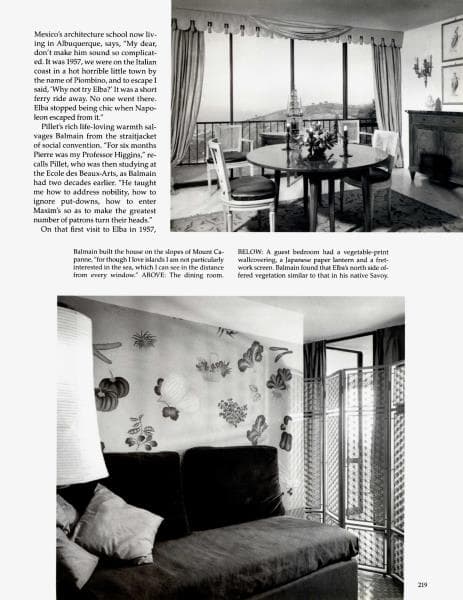
A balanced tension between the cool modernist concrete, marble floors, and glass walls against the dark suede-covered living room, leopard-print upholstery, and vegetable-print wallcoverings in guest bedrooms.
The 'curiosity gallery' with floor-to-ceiling open shelving packed with statuettes, Greek vases, Chinese porcelain, and Gallo vases — nearly four hundred pieces — plus the dense, dark living room with crystal wall lights, sunburst clock, and animal prints create coherent maximalist layering.
The architecture is emphatically mid-century modern and futuristic, yet filled with 17th-century Chinese porcelain, antique vases, and 19th-century paintings — a deliberate cross-era mixing that serves personal taste rather than period commitment.
Balmain personally collected nearly four hundred vases 'one by one in the Flea Market and in the provinces,' and the article describes decades of accumulation by a man whose collections were deeply personal and linked to his life rhythm.
The pool terrace with multiple guests, the dining room designed so 'the important view was meant to be the great food and great wines on the table,' guest bedrooms with distinct personalities, and descriptions of Balmain as a 'nonstop raconteur' who hosted friends all indicate a home designed for entertaining.
The dark, windowless living room with suede walls and crystal fixtures reads as refined but the poolside casualness, wicker furniture, and island setting temper the formality into something considered but not intimidating.
While architect Leonardo Ricci designed the structure, the interiors reflect Balmain's intensely personal collecting and aesthetic — the curiosity gallery is self-curated obsession, though the overall composition shows professional design sensibility.
The house itself is a statement — built futuristically on Elba where 'no one went there' — and the leopard prints, sunburst clock, and dramatic architecture perform somewhat, but this is a personal retreat for a man whose inner circle already knew his taste, not a showpiece for strangers.