Homeowner Name
The Duke and Duchess of Northumberland
About (information sourced from public biographical records)
Ralph Percy, 12th Duke of Northumberland, inherited Alnwick Castle and vast estates when his elder brother died in 1995. Architectural Digest featured the castle in January 2005 during renovations by Robert Kime. The Percy family has owned Alnwick since 1309, representing over 700 years of continuous aristocratic wealth.
Epstein Connection?
 DETECTIVE
 RESEARCHER
 EDITOR
Property Details
Wealth Score
2.0
/ 10
Wealth Source
OLD MONEY
Inherited multi-generational aristocratic estates (Northumberland Estates: ~100,…
Professional Category
ROYALTY
Fame Score
9
607,052 wiki views
Board Memberships
Sponsor, NCEA Duke's Secondary School; Trustee (Duchess), The Alnwick Garden Trust; Lord Lieutenant (Duchess, 2009-2024), Lord Lieutenant of Northumberland; Contributor (Duke), Centre for Rural Economy, Newcastle University
Influence Score
—
Architectural Digest Issue:
“pride and preservation”
by Elizabeth Lambert
Home Score Summary (Custom Aesthetic Scoring Instrument v2.3)
Generational stewardship made habitable. A family that inherited one of England's great medieval castles and, rather than museumify it, carved warm stone-walled family rooms behind the gilded state apartments — the gingham chairs in the kitchen exist in honest tension with the Montiroli ceilings upstairs. The provenance is beyond question: this is what centuries of unbroken aristocratic inhabitation actually looks like.
Feature Pages
 p.98
p.98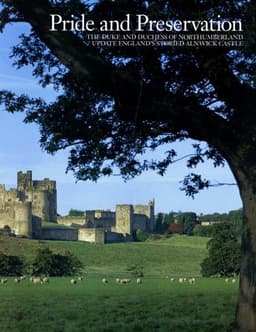 p.99
p.99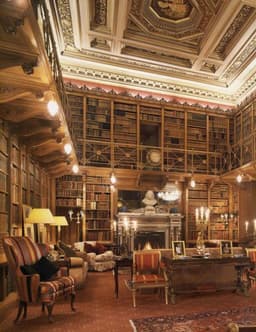 p.100
p.100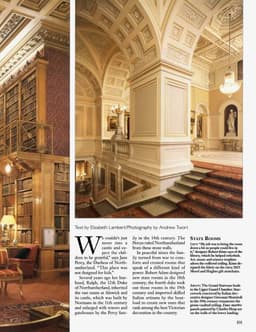 p.101
p.101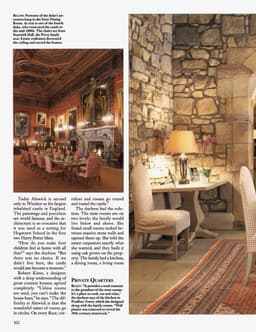 p.102
p.102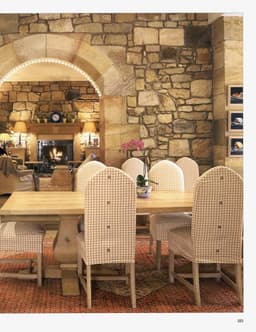 p.103
p.103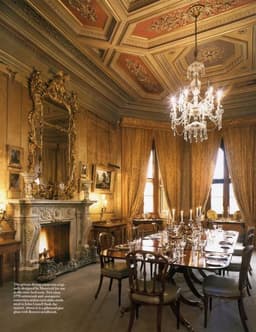 p.104
p.104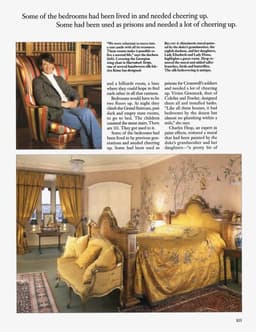 p.105
p.105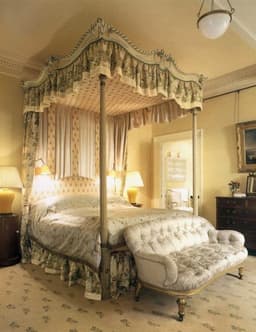 p.106
p.106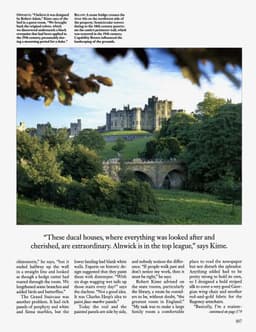 p.107
p.107Home Score
Radial Graph
The profile dominates in Space and Story through maximalist grandeur and unassailable historicism, but collapses in Stage due to suppressed theatricality and moderate curation, indicating a home where authentic generational stewardship resists performative display.
Scoring Explanations
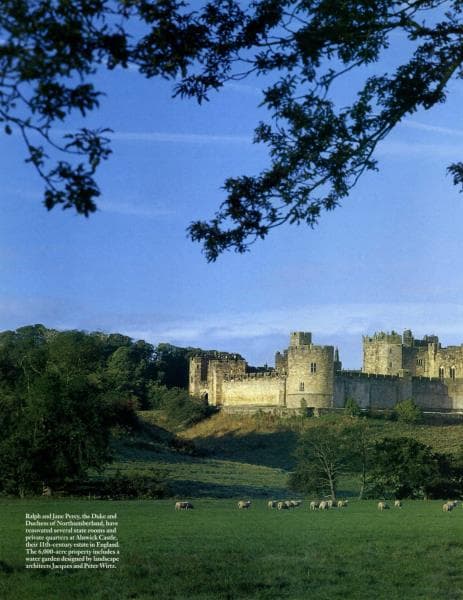
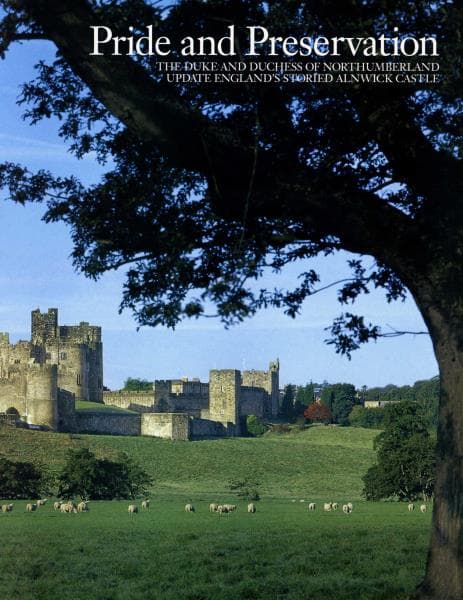
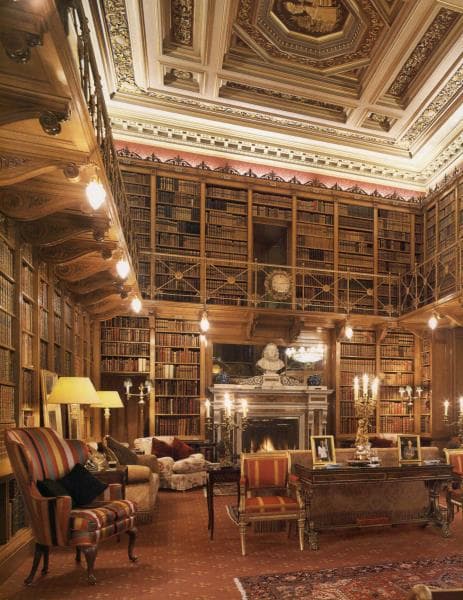
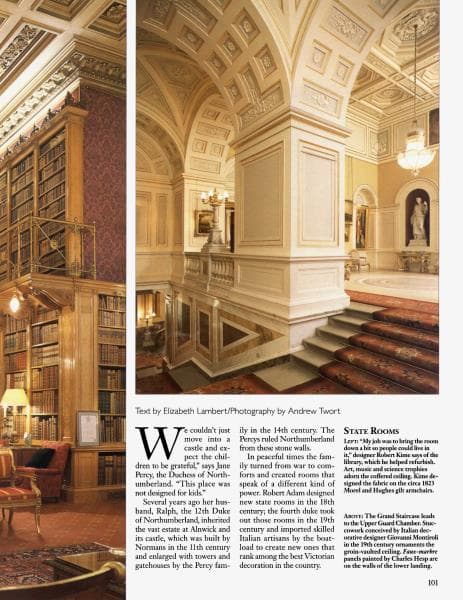
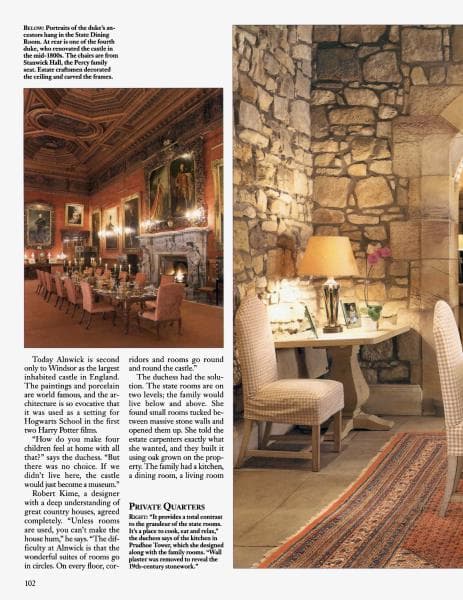
Triple-height library with gilded coffered ceilings, massive state dining room, Grand Staircase with groin-vaulted ceiling, and the castle itself is described as second only to Windsor as the largest inhabited castle in England — this is architecture that utterly dominates its occupants.
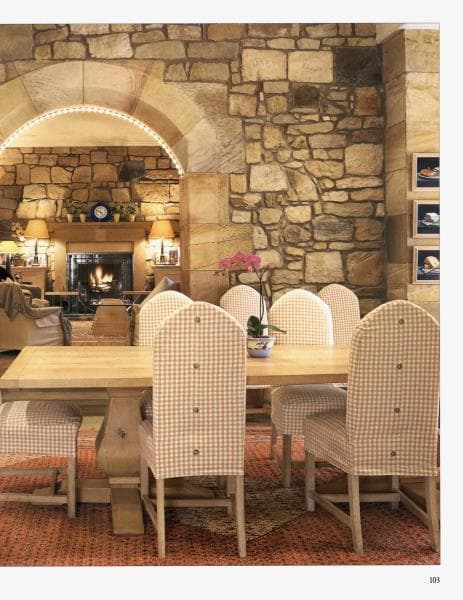
The library is floor-to-ceiling warm wood paneling with leather and upholstered seating, the private quarters feature exposed stone walls with oak furniture and gingham fabrics, and even the grand state rooms are warmed by gold damask, candelabras, and fireplaces — cold stone architecture tempered by centuries of layered warmth.
Every surface in the state rooms is activated — gilded ceilings, carved frames, wall-to-wall paintings, elaborate chandeliers, candelabras, silver, porcelain — and all of it in coherent Victorian-Italianate dialogue accumulated over centuries by the Percy family.
An 11th-century Norman castle with 14th-century Percy additions, 18th-century Robert Adam state rooms, and 19th-century Italian artisan decoration — the historical periods are genuine and integrated into the building's actual timeline with no visible anachronisms.
The Percy family has ruled Northumberland from these walls since the 14th century; the chinoiserie mural was painted by the duke's grandmother and her daughters, the furniture is attributed to specific 18th-century makers like John Linnell, and the 111-step stone staircase is worn from generations of use — this is irreducible, generational accumulation.
The castle is open to the public (it served as Hogwarts in Harry Potter films), the state rooms are on two levels designed for display and entertaining, there are multiple guest bedrooms, and yet the duchess carved out private family quarters specifically because the castle 'would just become a museum' without family life — a balance tilted toward public function.
The state rooms — dining room, library, Grand Staircase — enforce strict behavioral codes with their scale, gilding, and precious surfaces, though the private family quarters with gingham chairs and exposed stone deliberately break from this, and the article notes the children count the 111 stairs nightly, suggesting lived-in familiarity that slightly tempers the formality.
Robert Kime is credited as designer but his explicit task was to make the rooms livable and honor existing collections — 'My job was to bring the room down so people could live in it' — and the duchess herself designed the private kitchen quarters, making this a professional restoration guided by the family's actual needs rather than editorial staging.
Nothing here was acquired to perform wealth; the Old Masters, the Italian artisan ceilings, the 18th-century furniture were all inherited across centuries of ducal stewardship, and the family's reluctance to move in ('We were reluctant to move into a vast castle with all its treasures') signals that the grandeur is inherited obligation, not chosen display.