Homeowner Name
Alfredo Roa
About (information sourced from public biographical records)
Alfredo Roa operates in the business sector in Cagayan de Oro, Philippines, featured in Architectural Digest August 2003.
Epstein Connection?
 DETECTIVE
 RESEARCHER
 EDITOR
Property Details
Wealth Score
3.0
/ 10
Wealth Source
MIXED
Logistics, banking, and real estate businesses (Inland Corp., Rural Bank of Alfo…
Professional Category
BUSINESS
Fame Score
5
104,943 wiki views
Board Memberships
Director (2010-2012), Araneta Properties, Inc.
Influence Score
—
Architectural Digest Issue:
“earthly temples”
by Patricia Leigh Brown
Home Score Summary (Custom Aesthetic Scoring Instrument v2.3)
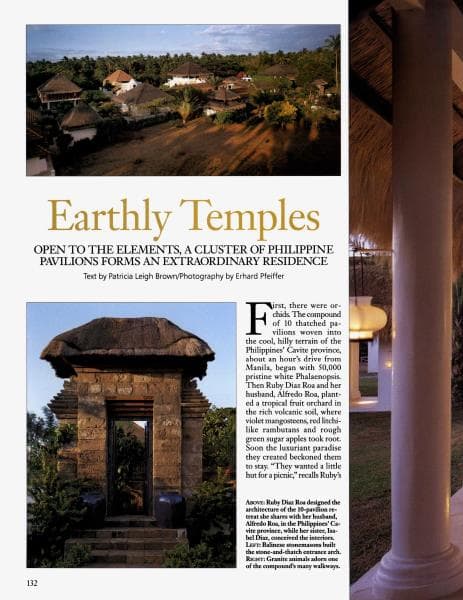
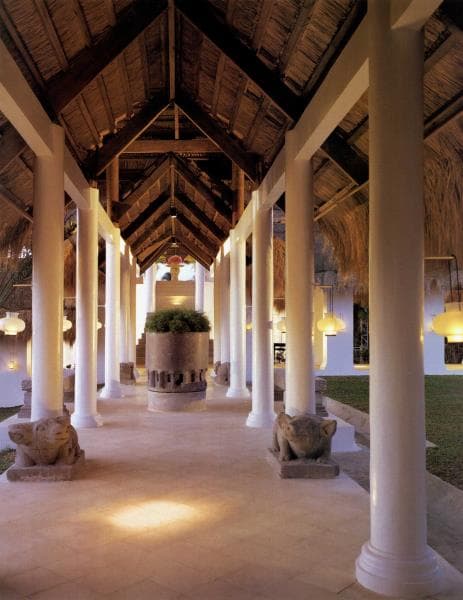
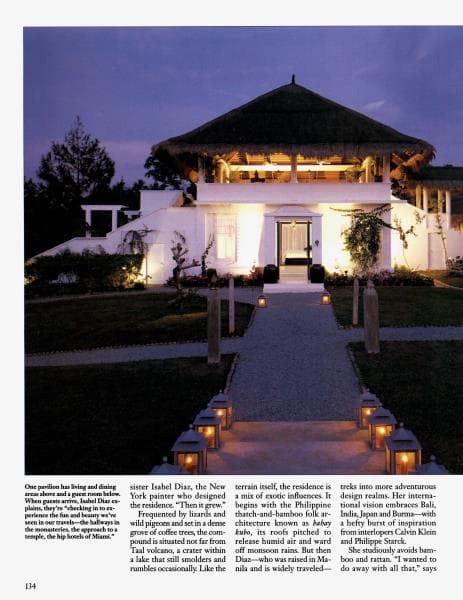
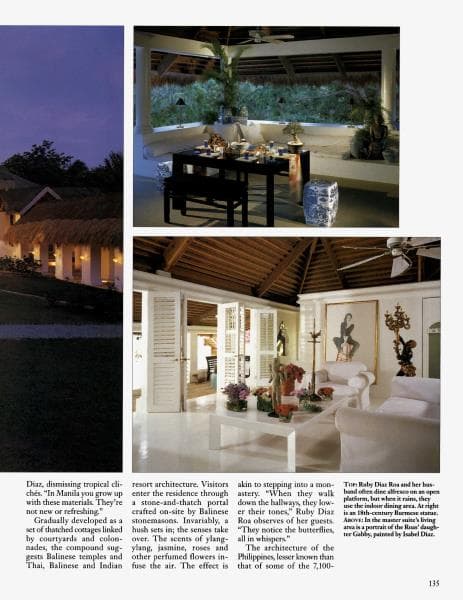
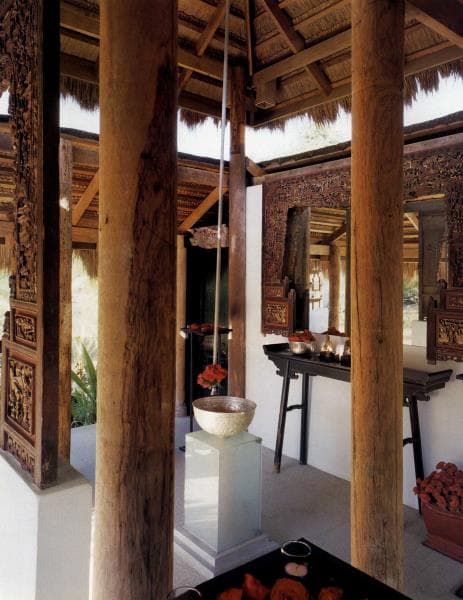
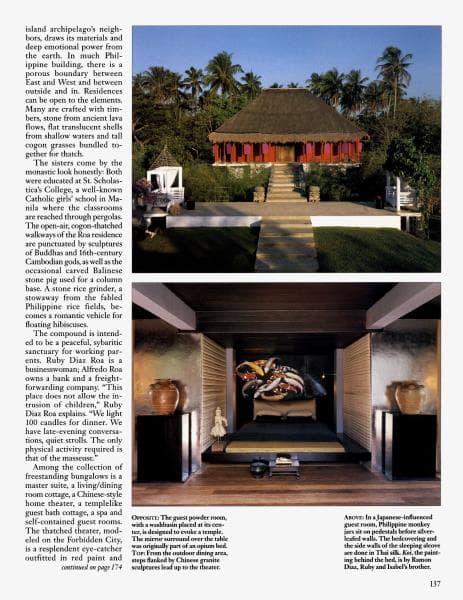
A devotional compound where Philippine vernacular architecture meets pan-Asian temple aesthetics, open to monsoons and volcanic soil alike. The ten thatched pavilions accumulate Buddhas, Cambodian gods, and Balinese carvings with the seriousness of a private museum but the sensuality of a tropical retreat. This is wealth that worships the earth it stands on, not the audience looking at it.
Feature Pages
 p.132
p.132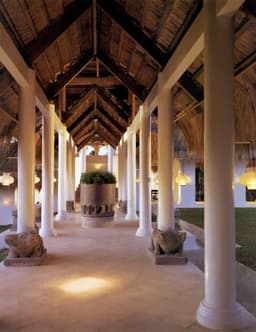 p.133
p.133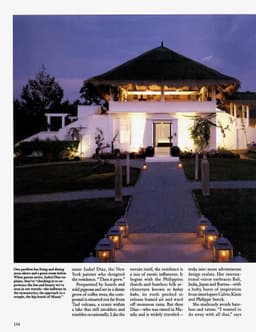 p.134
p.134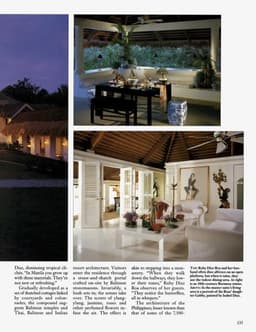 p.135
p.135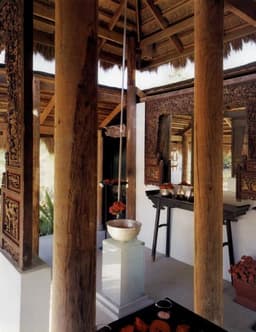 p.136
p.136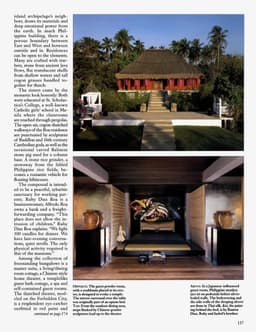 p.137
p.137Home Score
Radial Graph
The Alfredo Roa compound achieves balanced scoring across Space and Story (both 4.3) through strong Material Warmth and Hospitality that ground its aesthetic, while Stage drops to 3.0 due to suppressed Theatricality and Formality—a pattern driven by inward-focused devotional curation that prioritizes tactile authenticity and spiritual accumulation over visual performance or formal presentation.
Scoring Explanations
The soaring thatched rooflines, columned colonnades, and open pavilion architecture with dramatic volumes create impressive spatial weight, though the natural materials keep it from reaching palace-level grandeur.
Massive rough-hewn timber columns, thatched cogon roofs, carved Balinese wood panels, stone floors, and natural fibers dominate every surface — this is architecture born from the earth with no cold or synthetic materials in sight.
Sculptures of Buddhas, 16th-century Cambodian gods, carved Balinese stone pigs, antique opium beds, Chinese granite sculptures, and Philippine monkey jars layer densely across the compound, all in coherent Southeast Asian dialogue.
The compound commits deeply to traditional Philippine bahay kubo folk architecture fused with Balinese, Thai, and Indian temple references, with the thatched theater modeled on the Forbidden City — minor modern intrusions like ceiling fans are the only breaks.
A stone rice grinder from Philippine rice fields, an 18th-century Burmese screen, antique carved Balinese panels, and a collection of Southeast Asian artifacts suggest genuine accumulation by well-traveled collectors, not a single decorator's shopping trip.
The article explicitly describes 10 pavilions including guest bath cottages, a home theater, outdoor dining for groups, 100 candles lit for dinner, and the compound as a 'sanctuary for working parents' — yet one designed for late-evening conversations and quiet strolls with guests.
The open-air architecture dissolves walls and invites the elements in, and the article describes quiet strolls and picnic origins, but the temple-like processional entry with Balinese stonemasons' portal and sculpture-lined walkways enforce a certain reverence.
Ruby Diaz Roa designed the architecture while her sister Isabel Diaz conceived the interiors — the composed sight lines through colonnades, symmetrical stone animal placement, and styled powder room with opium bed and Chinese granite sculptures reveal professional design direction.
Despite the compound's scale and exotic objects, the wealth serves deeply personal Southeast Asian cultural roots rather than brand performance — the orchids, tropical fruit orchards, and 'no children allowed' policy signal private sybaritic retreat, not social broadcasting.