Homeowner Name
Sally Quinn and Ben Bradlee
About (information sourced from public biographical records)
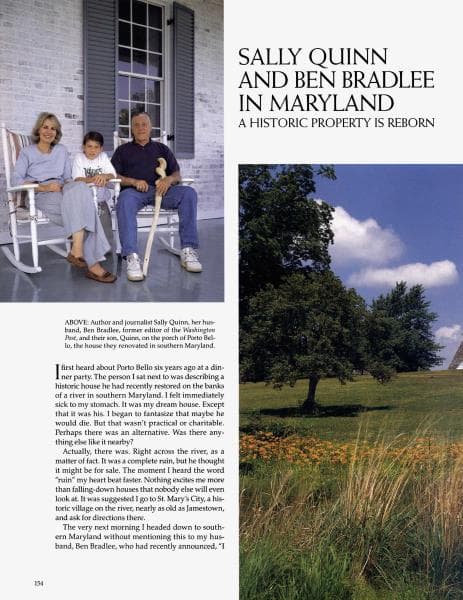
Ben Bradlee was executive editor of The Washington Post; Sally Quinn is a columnist and author. Their Maryland estate was featured in Architectural Digest's June 1995 issue. Bradlee came from Boston Brahmin stock depleted in the 1929 crash; Quinn from a military family, both building careers in journalism.
Epstein Connection?
 DETECTIVE
 RESEARCHER
 EDITOR
Property Details
Wealth Score
5.0
/ 10
Wealth Source
MIXED
Washington Post stock (finder's fee for Newsweek acquisition), journalism career…
Professional Category
MEDIA
Fame Score
8
2,712,489 wiki views
Board Memberships
Chairman, Historic St. Mary's City Commission; Vice Chairman, Board of Trustees, St. Mary's College of Maryland; Board Member, International Advisory Board of Independent News & Media
Influence Score
—
Architectural Digest Issue:
“sally quinn and ben bradlee in maryland”
by Sally Quinn
Connection Summary (Created by Opus 4.5 based on all evidence collected)
Investigation identified a surname-only match for "Quinn" in contact records with no first name correlation to Sally Quinn. DOJ records contain extensive documentation of Quinn and Bradlee as prominent Washington Post figures with no references to Epstein or related activities, indicating a coincidental surname match with no confirmed connection to Jeffrey Epstein.
DOJ Documents
15
results in Epstein Library
Evidence Sources
2
Black Book + DOJ Library
Evidence Entries
0
distinct pieces
Confidence
0%
pipeline certainty
Connection Evidence
The following documents were used as direct evidence of a possible connection for the Researcher and Editor to make an assessment:
Agentic AI Reasoning Logic

Researcher’s Assessment: COINCIDENCE
The Black Book match is a last-name-only hit on 'Quinn' with no first name correlation, appearing in a generic contact list context ('Topper'). The DOJ results exclusively reference Sally Quinn and Ben Bradlee as prominent Washington Post figures (Ben Bradlee was Publisher/VP, Sally Quinn was a journalist) in contexts about their child, awards, and architecture—with zero mentions of Epstein, trafficking, or any illicit activity. The AD feature describes their Maryland colonial manor restoration. This is a classic false positive: common surname match + public figures with extensive legitimate documentation + zero Epstein-related content in DOJ results.
Reviewed 2/25/2026

Editor’s Final Judgement: REJECTED
Auto-rejected: triaged as COINCIDENCE — The Black Book match is a last-name-only hit on 'Quinn' with no first name correlation, appearing in a generic contact list context ('Topper'). The DOJ results exclusively reference Sally Quinn and Ben Bradlee as prominent Washington Post figures (Ben Bradlee was Publisher/VP, Sally Quinn was a journalist) in contexts about their child, awards, and architecture—with zero mentions of Epstein, trafficking, or any illicit activity. The AD feature describes their Maryland colonial manor restoration. This is a classic false positive: common surname match + public figures with extensive legitimate documentation + zero Epstein-related content in DOJ results.
Reviewed 2/25/2026
Home Score Summary (Custom Aesthetic Scoring Instrument v2.3)
Generational warmth in a 1740s manor house restored with fanatical period fidelity. Every surface — the hand-hewn kitchen beams, the murals depicting the property's own colonial past, the 200-year-old Bradlee family furniture — serves a single coherent story of inherited American life. This is preservation as autobiography, not decoration as performance.
Feature Pages
 p.154
p.154 p.155
p.155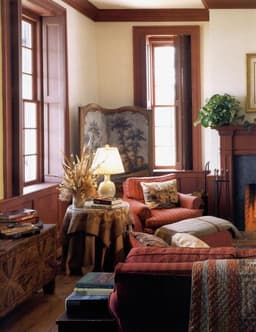 p.156
p.156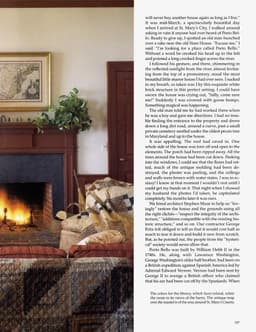 p.157
p.157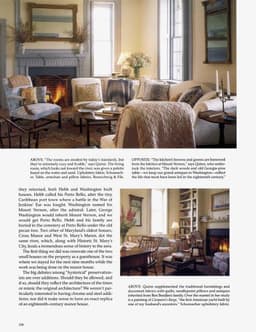 p.158
p.158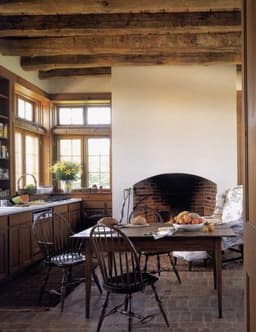 p.159
p.159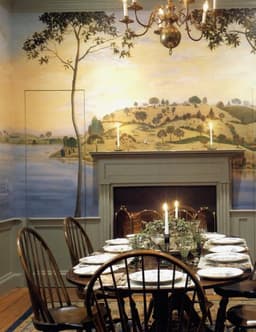 p.160
p.160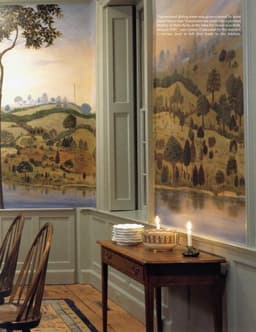 p.161
p.161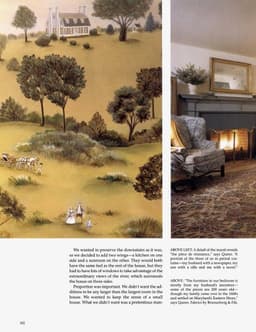 p.162
p.162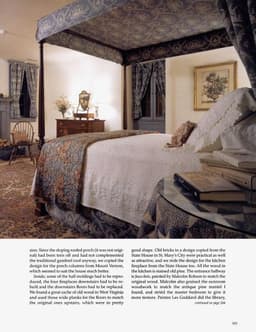 p.163
p.163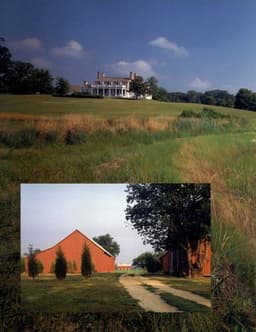 p.164
p.164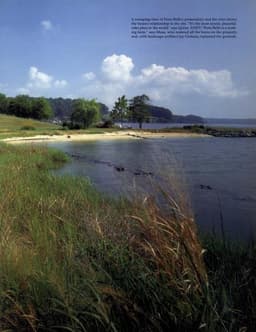 p.165
p.165Home Score
Radial Graph
Story dominates (4.3) through high Historicism and Provenance, Space maintains baseline solidity (4.0) via Material Warmth offsetting restrained Grandeur, and Stage is substantially suppressed (2.0) across all axes, creating a pattern where narrative authenticity and temporal depth override theatrical presentation.
Scoring Explanations
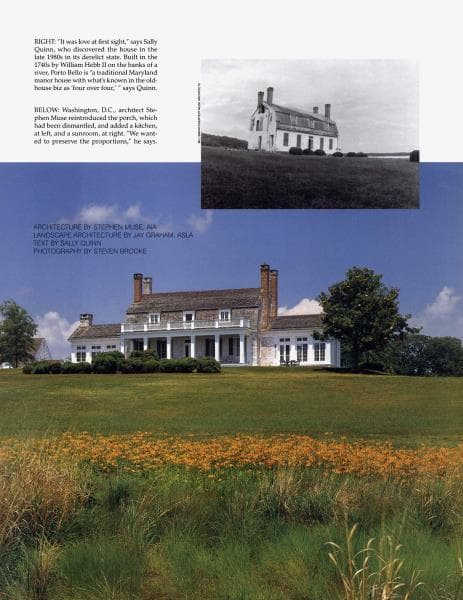
A traditional Maryland manor house with 'four over four' proportions — generous but not imposing rooms with adequate ceiling heights, substantial brick construction, and a columned porch modeled after Mount Vernon, conveying dignified scale without palace-like volume.
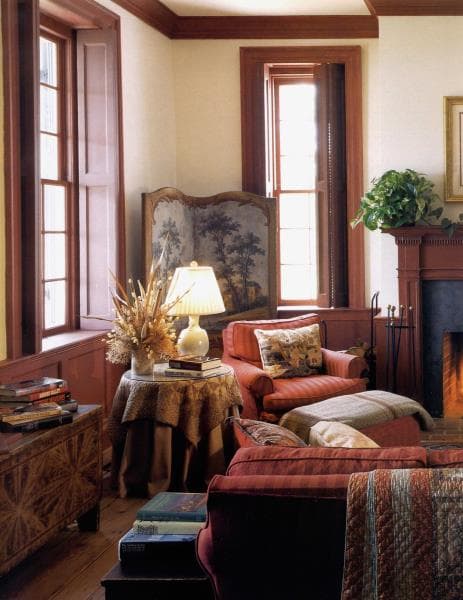
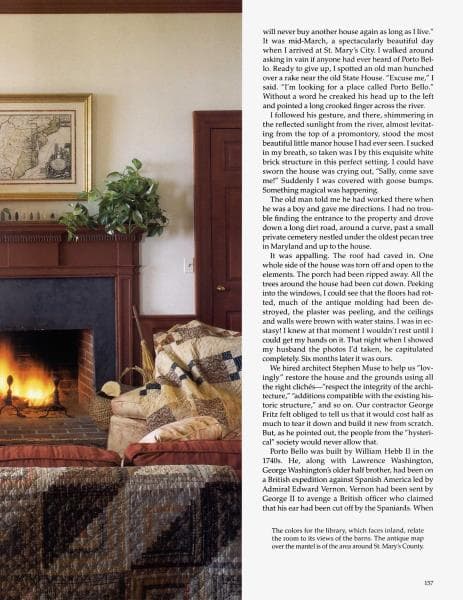
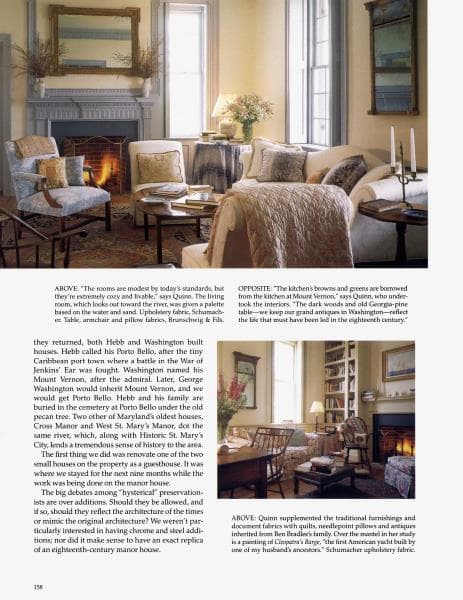
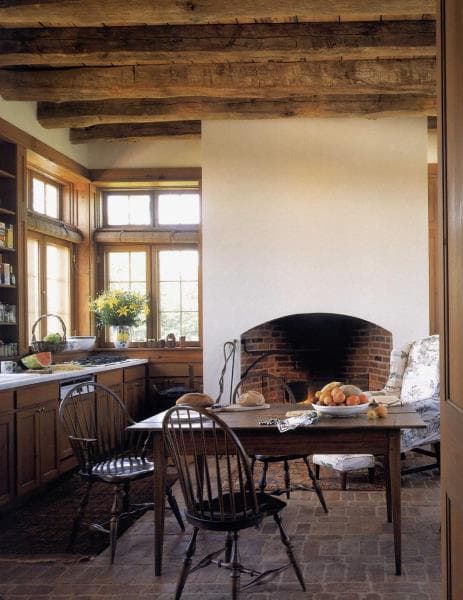
Wide-plank pine floors, exposed hand-hewn beams in the kitchen, brick hearth flooring, linen and quilted textiles, warm wood wainscoting, terracotta-toned upholstery, and antique pine mantels create an overwhelmingly tactile, natural warmth throughout every room.
Dense layering of quilts, needlepoint pillows, antique fabrics, painted screens, books, and inherited antiques fill every room with coherent warmth — the library's Schumacher and Brunschwig fabrics harmonize with family documents and paintings in a consistent colonial-era palette.
The 1740s house was restored with period-appropriate wide-plank floors sourced from West Virginia, reproduced moldings, brick copied from the St. Mary's City State House, hand-painted murals depicting the property circa 1740, Windsor chairs, and canopy beds — with no visible anachronisms breaking the 18th-century commitment.
The building itself dates to the 1740s with genuine age, the furniture includes 200-year-old pieces from Ben Bradlee's ancestors, family needlepoint pillows, inherited antiques from both families, and Quinn describes pieces that 'came over in the 1600s and settled on Maryland's Eastern Shore.'
The round dining table with its spectacular mural room suggests hosting intimate dinner parties, but the article emphasizes this as a personal retreat — 'the most serene, peaceful, calm place in the world' — with modestly scaled rooms described as 'extremely cozy and livable' rather than designed for large gatherings.
Despite the historical gravitas, Quinn describes the rooms as 'extremely cozy and livable,' the furniture is upholstered for sinking into, quilts are draped casually, books are stacked everywhere, and the kitchen with its brick hearth and simple farm table invites daily barefoot living.
Architect Stephen Muse and landscape architect Jay Graham provided professional direction, and Quinn herself undertook the interiors with clear editorial sensibility — the mural by Susan Davis and coordinated Schumacher/Brunschwig fabrics show deliberate design choices, but the accumulation of family antiques and personal objects keeps it from feeling styled.
Nothing here performs for an outside audience — the wealth is generational and inherited, the antiques are family pieces not trophy purchases, the house was a 'complete ruin' they restored out of love, and the entire presentation reads as genuine stewardship of history rather than display of status.
Analysis
AD Appearance
CollapseIssue
6/1995
Notes
{"social_circle": "Connection to Lawrence Washington and George Washington's family history through the property's origins; Ben Bradlee was former editor of the Washington Post", "previous_owners": ["William Hebb II"], "spread_pages": [154, 155, 156, 157, 158, 159, 160, 161, 162, 163, 164, 165], "spread_page_count": 12}
Designer
Stephen Muse
Location
St. Mary's City, Maryland
Design Style
18th-century Maryland colonial manor restoration
Article Title
SALLY QUINN AND BEN BRADLEE IN MARYLAND
Architecture Firm
Stephen Muse, AIA
Key Findings
Expand