Homeowner Name
David Whitcomb
About (information sourced from public biographical records)
David Whitcomb was a New York interior designer who established his practice in the 1950s. Architectural Digest featured his properties in 1974, 1975, 1980, and 1994. He purchased a Beekman Place townhouse in 1959 at age 34, suggesting family capital, and built a career serving elite clients while collecting English paintings and antiques.
Epstein Connection?
 DETECTIVE
 RESEARCHER
 EDITOR
Property Details
Wealth Score
3.0
/ 10
Wealth Source
MIXED
Interior design practice and real estate investments
Professional Category
ARCHITECTURE_DESIGN
Fame Score
6
24,989 wiki views
Board Memberships
Unknown (legacy text), None confirmed for the designer David Whitcomb; Board of Trustees member, Parsons School of Design; President, Parsons School of Design National Council of Alumni; Unknown (legacy text), Board of Trustees, Parsons School of Design; President of the National Council of Parsons Alumni
Influence Score
—
Architectural Digest Issue:
“hudson river anthology”
by Gini Alhadeff
Connection Summary (Created by Opus 4.5 based on all evidence collected)
Investigation identified a surname match in DOJ records referring to Jon Whitcomb (attorney, 2017), not David Whitcomb (interior designer, 1994). No confirmed connection between Whitcomb and Jeffrey Epstein was established.
DOJ Documents
26
results in Epstein Library
Evidence Sources
1
DOJ Library
Evidence Entries
2
distinct pieces
Confidence
15%
pipeline certainty
Connection Evidence
The following documents were used as direct evidence of a possible connection for the Researcher and Editor to make an assessment:
- 01DOJ Librarysurname confusion different person
Jon Whitcomb (attorney at DISERIO MARTIN O'CONNOR & CASTIGLIONI, LLP, Stamford, CT) appears in 26 DOJ documents dated August-September 2017, including direct correspondence with Lesley Groff (Epstein's executive assistant) seeking legal representation.
MISIDENTIFICATION: The DOJ documents reference 'Jon Whitcomb' (attorney, Stamford CT, 2017), NOT 'David Whitcomb' (interior designer, Columbia County NY, 1994). Different first names, professions, locations, and time periods. Jon Whitcomb was indeed contacted by Epstein associates for legal services in 2017, but this is a completely different individual from the AD-featured designer.
- 02DOJ Libraryadditional documents
10 additional DOJ documents from search
Additional documents found in DOJ search not cited in primary analysis
Agentic AI Reasoning Logic

Researcher’s Assessment: COINCIDENCE
This is a textbook false positive caused by surname matching. The DOJ evidence involves 'Jon Whitcomb' (attorney, 2017), not 'David Whitcomb' (interior designer, 1994). Different first names, professions, locations, and time periods conclusively establish these are separate individuals. While David Whitcomb moved in sophisticated NYC design circles in the 1990s (evidenced by his AD feature and Hudson Valley location), there is zero evidence connecting him to Epstein or his network. The graph proximity (4 hops via Gini Alhadeff) is weak and based on geographic/professional overlap common in NYC design circles.
Reviewed 2/13/2026

Editor’s Final Judgement: REJECTED
Auto-rejected: triaged as COINCIDENCE — This is a textbook false positive caused by surname matching. The DOJ evidence involves 'Jon Whitcomb' (attorney, 2017), not 'David Whitcomb' (interior designer, 1994). Different first names, professions, locations, and time periods conclusively establish these are separate individuals. While David Whitcomb moved in sophisticated NYC design circles in the 1990s (evidenced by his AD feature and Hudson Valley location), there is zero evidence connecting him to Epstein or his network. The graph proximity (4 hops via Gini Alhadeff) is weak and based on geographic/professional overlap common in NYC design circles.
Reviewed 2/13/2026
Home Score Summary (Custom Aesthetic Scoring Instrument v2.3)
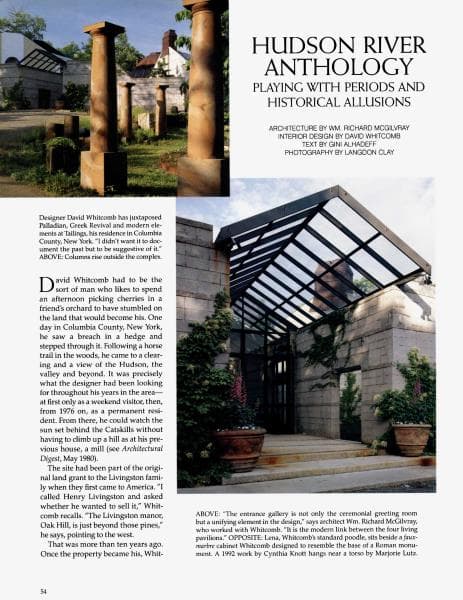
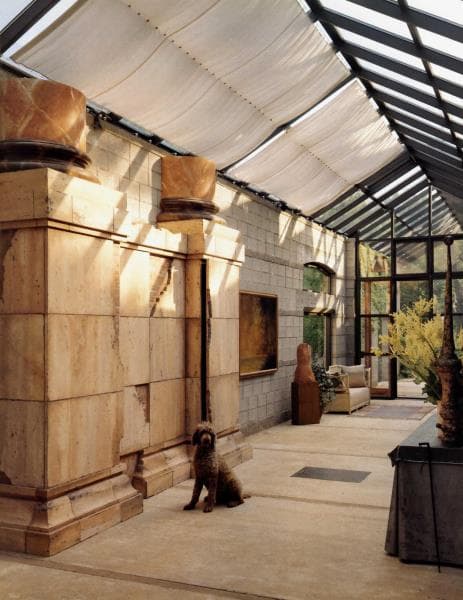
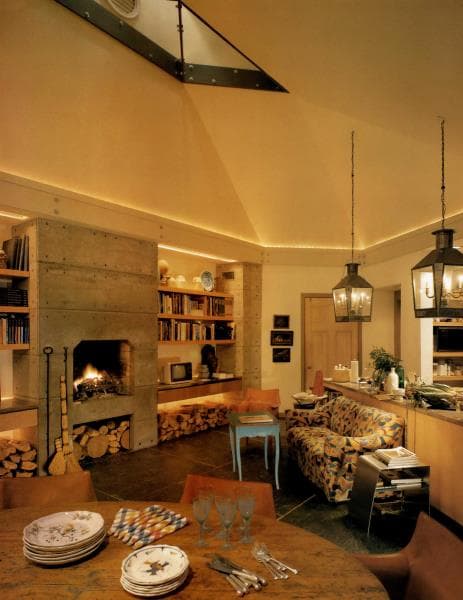
An architect-designer's intellectual folly on a Hudson River ridge, where Palladian columns meet poured concrete and glass-roofed passageways connect pavilions that each commit to a different historical period. The trick is genuine — salvaged elements and painted illusions blur the line between ruin and new construction — but the dog sleeping in the entrance gallery and firewood stacked beside the concrete fireplace betray a home that's used hard despite its museum-grade ambitions. It's a capriccio built for one person's pleasure, not an audience's approval.
Feature Pages
 p.54
p.54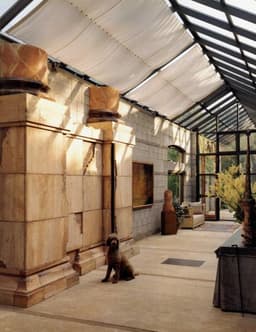 p.55
p.55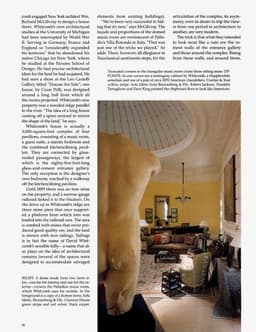 p.56
p.56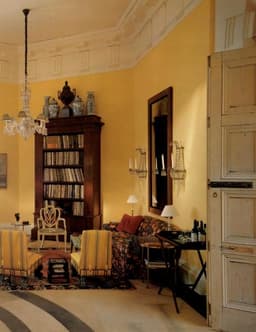 p.57
p.57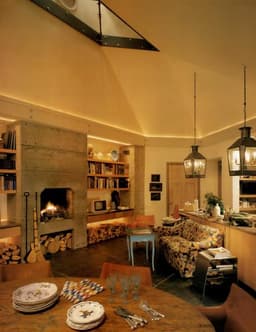 p.58
p.58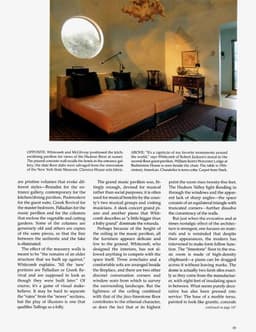 p.59
p.59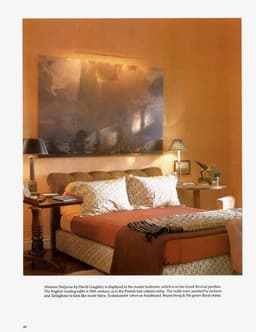 p.60
p.60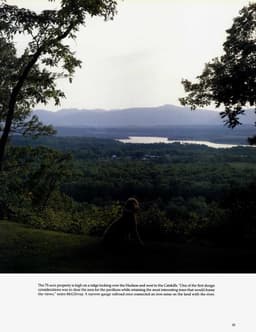 p.61
p.61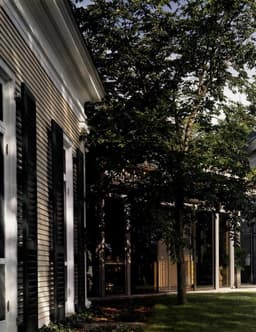 p.62
p.62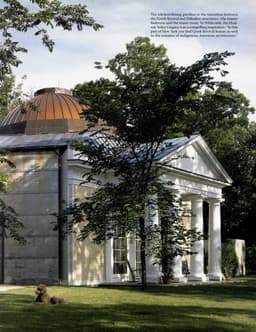 p.63
p.63Home Score
Radial Graph
The David Whitcomb home achieves perfect horizontal equilibrium across all three groups (Space, Story, Stage each averaging 3.3), with divergence driven by high Grandeur and Historicism paired with elevated Curation, while Material Warmth, Hospitality, and Theatricality remain suppressed—a pattern reflecting intellectual ambition that resists both sensory comfort and performative drama.
Scoring Explanations
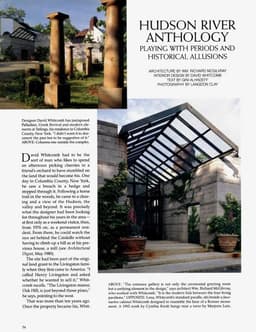
The eighty-five-foot glass-and-cement entrance gallery, massive stone columns with Corinthian capitals, copper dome, and Greek Revival portico with full-height columns create imposing architectural volume that dominates the occupant, though the intimate pavilion scale tempers it from a 5.
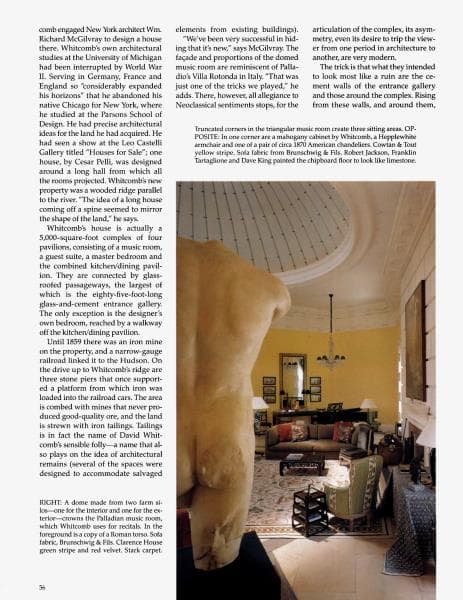
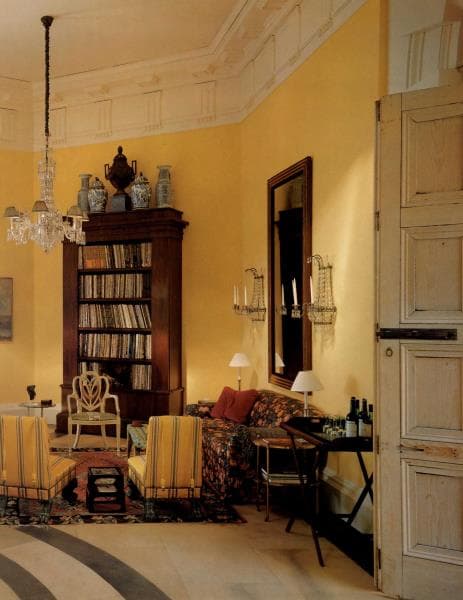
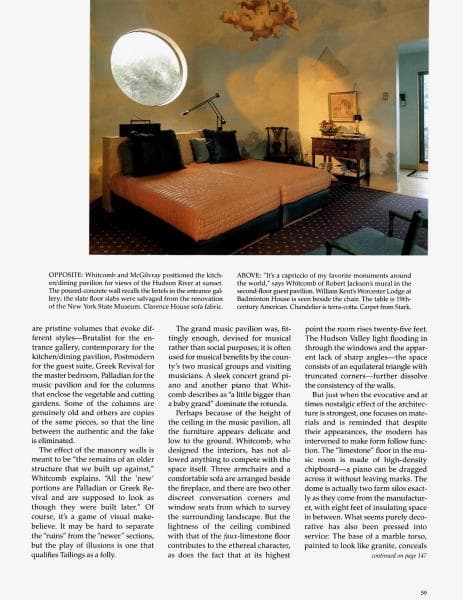
A balanced tension between cold materials — poured concrete, glass roofing, stone walls, limestone floors — and warm elements like the golden-ochre painted walls, firewood stacking, upholstered furniture, and the warm amber light suffusing the bedroom and music room.
Moderate layering throughout: the music room has multiple seating areas, antique chandeliers, books, and pattern-on-pattern fabric, while the entrance gallery and kitchen/dining pavilion are more restrained and architectural, creating an overall moderate density.
The complex deliberately juxtaposes Palladian, Greek Revival, and Brutalist/modern elements with genuine architectural commitment — salvaged columns, Roman-inspired marble bases, faux-moiré painted walls — though the intentional mixing of periods and the article's own framing as 'playing with historical allusions' keeps it from full period consistency.
Whitcomb convincingly fabricates accumulated life using salvaged architectural elements from the New York State Museum, 19th-century English reading tables, circa-1870 chandeliers, and painted chipboard floors designed to look like limestone — impressive illusion but the article reveals much is deliberate artifice rather than genuine inheritance.
The complex includes a music room used by the county's two musical groups and visiting musicians, guest suite, and multiple pavilions suggesting social use, but the property is fundamentally a personal retreat — Whitcomb discovered it while picking cherries alone, and the bedroom is his private sanctuary off the kitchen pavilion.
The entrance gallery with its monumental columns and marble enforces respect, but the kitchen/dining pavilion with its stacked firewood, concrete fireplace, and casual dining setup, plus the dog sitting comfortably in the gallery, signals a space that's lived in despite its architectural ambition.
Whitcomb, a professional designer who also designed the interiors, created composed vignettes throughout — the triangular music room's three sitting areas, the deliberately styled bedroom with its Hudson River School painting, and the entrance gallery's calculated juxtaposition of faux-marble cabinet and Roman torso copy all betray a designer's editorial eye.
The architecture performs boldly — a copper dome, Greek Revival portico, and eighty-five-foot glass gallery are unmistakably ambitious — but the performance serves Whitcomb's genuine intellectual obsession with architectural history rather than brand display; the 'capriccio of my favorite monuments' quote reveals personal passion, not wealth signaling.
Analysis
AD Appearance
CollapseIssue
July 1994
Notes
Homeowner is also the designer - self-designed interior designer's own home featured in AD
Designer
David Whitcomb
Location
Columbia County, New York
Design Style
Historical eclectic with period allusions
Article Title
HUDSON RIVER ANTHOLOGY
Square Footage
3,400
Architecture Firm
Richard Meiselman Interior Design or David Whitcomb
Home Analysis
ExpandPattern Analysis
ExpandKey Findings
Expand