Homeowner Name
Ramon Novarro
About (information sourced from public biographical records)
Ramon Novarro was a silent film star who earned over $100,000 per film in the 1920s, including Ben-Hur. His April 1994 Architectural Digest featured his Lloyd Wright-designed Hollywood Hills home. Born to an upper-class Mexican family who fled the Revolution as refugees in 1913, he worked as a singing waiter before rising to Hollywood stardom and making strategic real estate investments.
Epstein Connection?
 DETECTIVE
 RESEARCHER
 EDITOR
Property Details
Wealth Score
5.0
/ 10
Wealth Source
MIXED
Silent film acting career (highest-paid actor earning $100,000+ per film) and re…
Professional Category
ENTERTAINMENT
Fame Score
9
1,644,136 wiki views
Board Memberships
—
Influence Score
—
Architectural Digest Issue:
“ramon novarro”
by Brendan Gill
Home Score Summary (Custom Aesthetic Scoring Instrument v2.3)
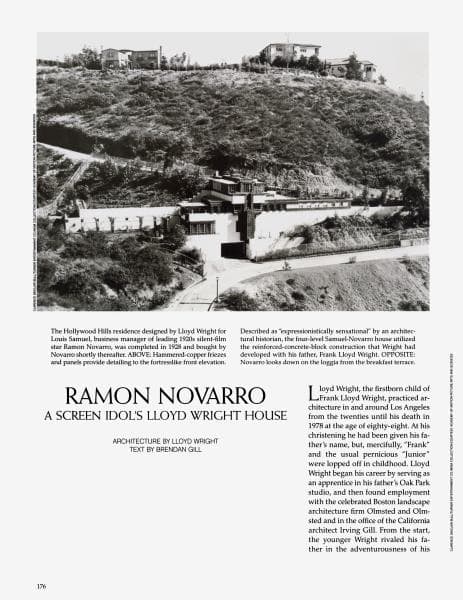
A Jazz Age fortress where Pre-Columbian gravitas meets Art Deco glamour on a Hollywood hillside. Lloyd Wright's reinforced-concrete castle is intimate in its rooms but monumental in its site — a screen idol's retreat that performs through architecture rather than possessions. The tubular aluminum furniture and chromium-plated walls feel genuinely of their moment, not curated nostalgia.
Feature Pages
 p.176
p.176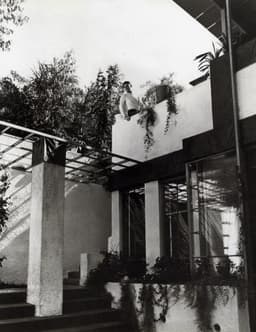 p.177
p.177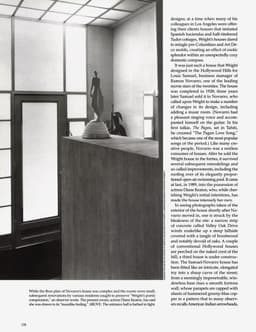 p.178
p.178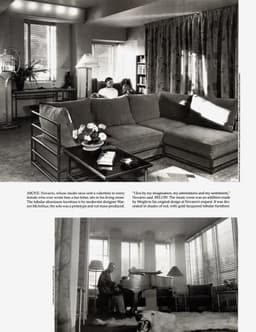 p.179
p.179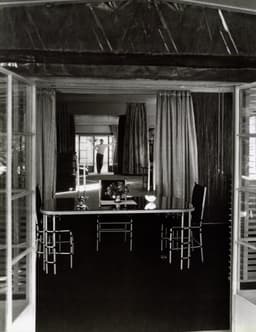 p.180
p.180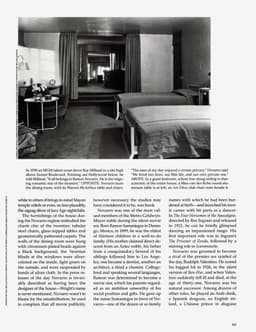 p.181
p.181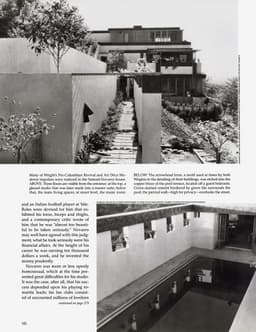 p.182
p.182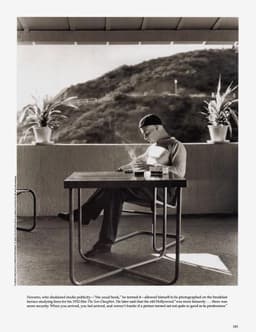 p.183
p.183Home Score
Radial Graph
Story dominates at 3.7 through elevated Historicism and Provenance, while Space and Stage remain flat at 3.0, indicating a home whose aesthetic impact derives from architectural and historical narrative rather than spatial grandeur or performative curation.
Scoring Explanations
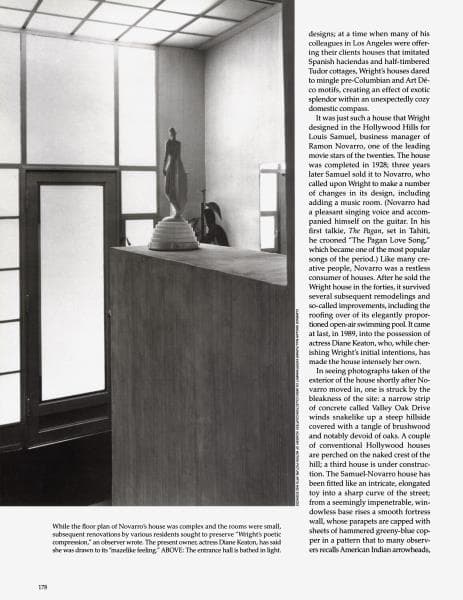
The multi-level reinforced-concrete-block construction with generous terraces and loggia creates impressive architectural volume, but the rooms themselves are intimate and complex rather than soaring — the article notes the floor plan was complex and rooms were small.
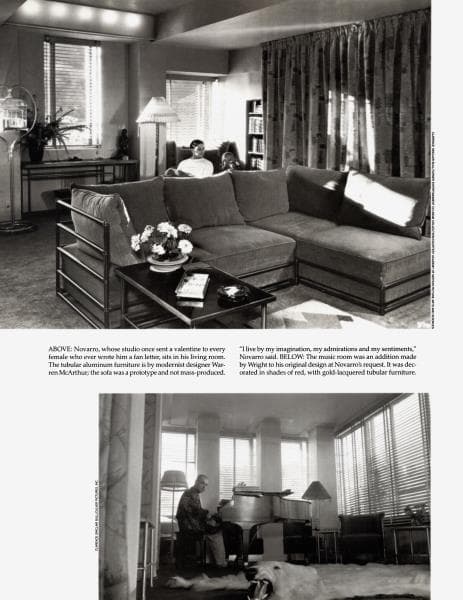
A balanced tension between the cool concrete-block and cement construction, glass walls, and chrome/aluminum tubular furniture against the upholstered sectional, curtained windows, patterned carpets, and gold-lacquered surfaces in the music room.
Moderate layering with chromium-plated beads on walls, geometrically patterned carpets, tubular furniture, and Art Deco motifs — dense enough to feel designed but not overwhelming, with each room holding a coherent material language.
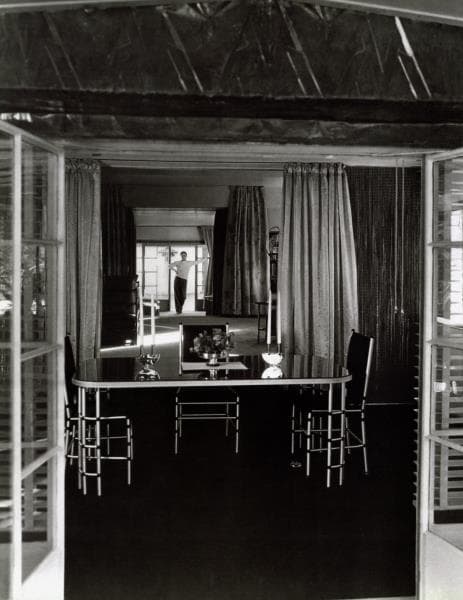
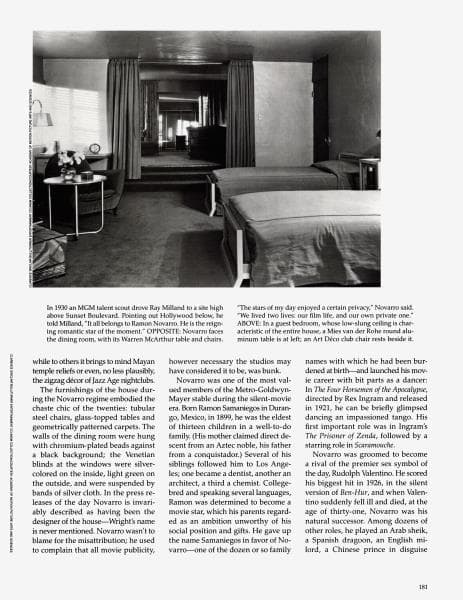
The house is a genuine 1928 Lloyd Wright design blending Pre-Columbian Revival and Art Deco motifs with period-appropriate Warren McArthur tubular aluminum furniture and Mies van der Rohe pieces, maintaining strong era consistency in the photographs shown.
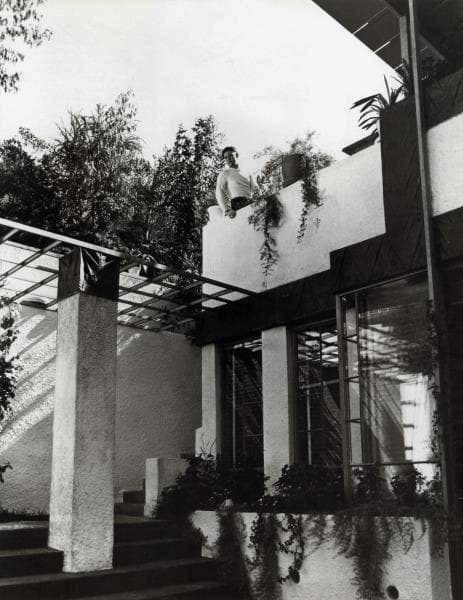
These are period photographs showing Novarro actually living in the house — reading scripts on the terrace, sitting in his living room — and the article describes his personal additions including the music room, giving the space genuine accumulated life rather than staged decoration.
The house balances private retreat (Novarro studying lines alone on the breakfast terrace, the intimate music room) with social spaces like the dining room with its McArthur table and chairs and the loggia overlooking the pool, suggesting both personal and entertaining use.
The Warren McArthur and Mies furniture are deliberate and carefully placed, and the fortress-like windowless base with its smooth walls commands respect, but Novarro is shown casually lounging and reading throughout — the space is lived in with dignity rather than stiffness.
Lloyd Wright designed the architecture and the furnishings were by recognized modernist designers (McArthur, Mies), showing professional direction, but Novarro's personality — his guitar, his scripts, his music room addition — remains clearly present throughout.
The Mayan-inspired concrete fortress perched dramatically on a Hollywood hillside with its arrowhead copper friezes and American Indian motifs is inherently performative as a silent-film star's residence, but the scale remains intimate and the luxury is architectural rather than branded.