Homeowner Name
Donald Judd
About (information sourced from public biographical records)
Donald Judd was a leading minimalist artist whose Swiss retreat was featured in Architectural Digest in September 1991. He built wealth through his art practice and critical writing, acquiring properties in Switzerland and Marfa, Texas.
Epstein Connection?
 DETECTIVE
 RESEARCHER
 EDITOR
Property Details
Wealth Score
8.0
/ 10
Wealth Source
SELF MADE
Career as a leading Minimalist artist, art criticism, furniture design, and real…
Professional Category
ART
Fame Score
9
832,330 wiki views
Board Memberships
Board of Visitors member, McDonald Observatory, University of Texas at Austin
Influence Score
—
Architectural Digest Issue:
“donald judd's swiss retreat”
by Nicholas Fox Weber
Home Score Summary (Custom Aesthetic Scoring Instrument v2.3)
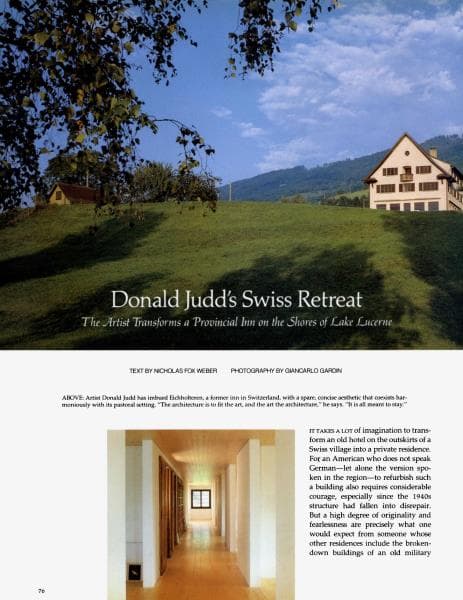
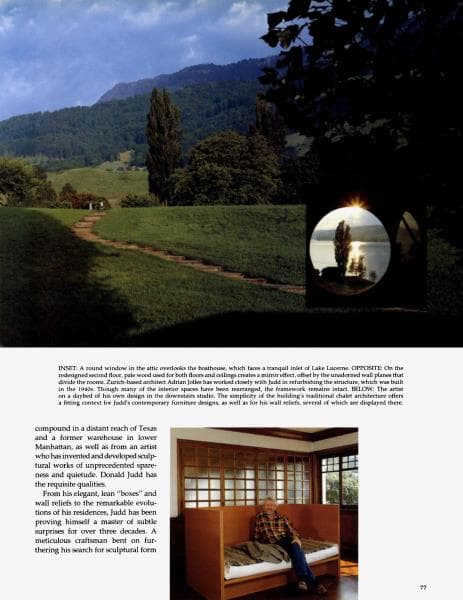
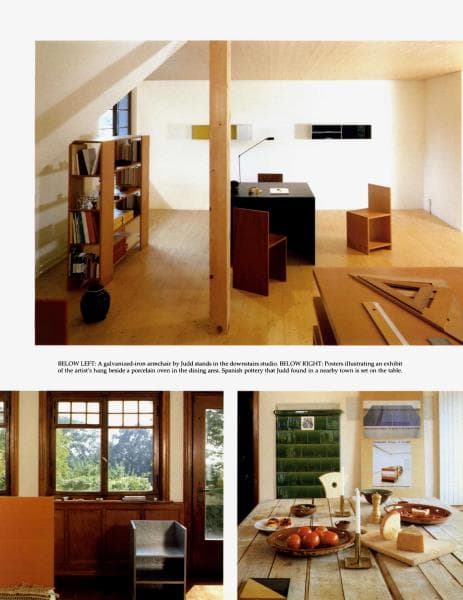
An artist's monastery on Lake Lucerne—Judd strips a 1940s Swiss inn to its bones and fills it with nothing but his own furniture and sculptures, achieving a radical spareness that feels not empty but profoundly inhabited. The blond wood envelope is warm where Minimalism is usually cold, and the Spanish pottery on a pine trestle table betrays a sensuality his gallery work rarely admits. This is a home that exists entirely for one person's intellectual and aesthetic life, indifferent to anyone else's opinion.
Feature Pages
 p.76
p.76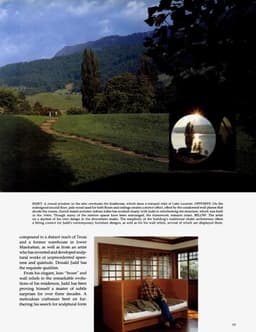 p.77
p.77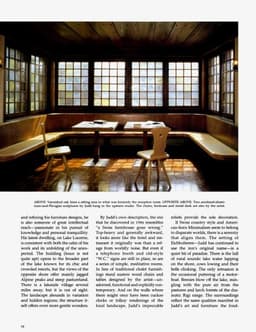 p.78
p.78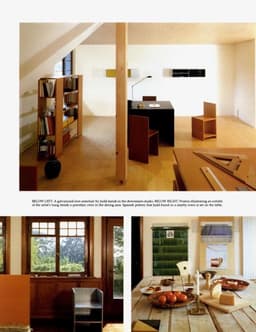 p.79
p.79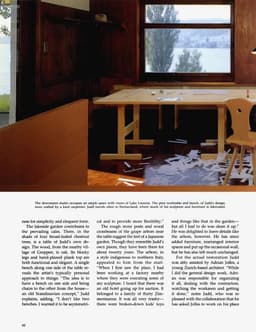 p.80
p.80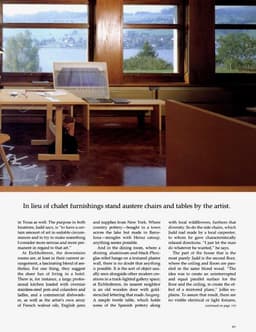 p.81
p.81Home Score
Radial Graph
The score pattern reveals a minimalist interior suppressed across Stage (1.3) while moderately elevated in Space and Story (both 2.7), with Material Warmth and Provenance driving the modest uplift against a background of near-zero Theatricality and Curation.
Scoring Explanations
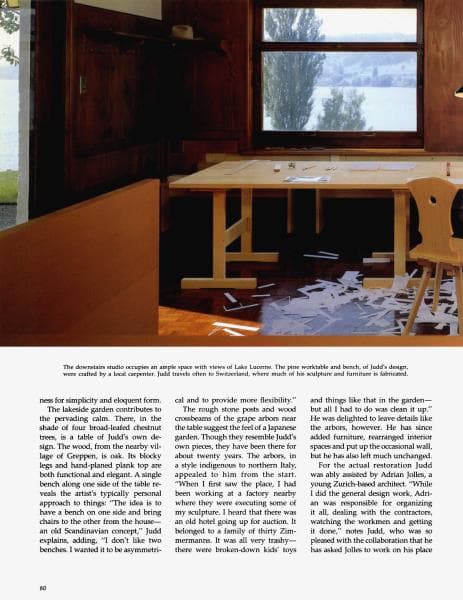
The spaces are modest in scale—standard ceiling heights in a converted provincial inn, with simple wood construction and no monumental volumes, though the lake views and generous studio space elevate it slightly above minimal.
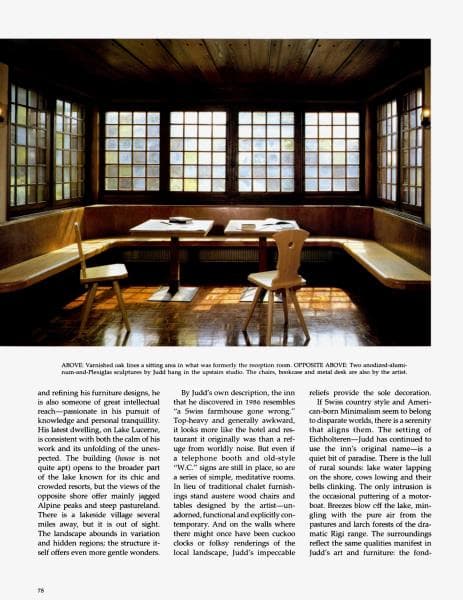
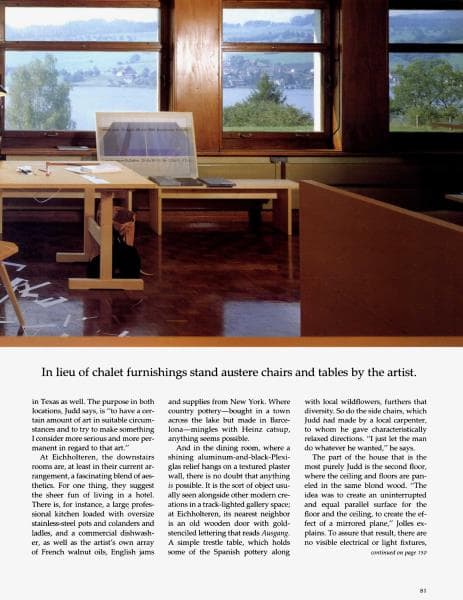
Pale blond wood floors, ceilings, and wall planes dominate every room; varnished oak, pine worktables, chestnut trees framing outdoor tables, wide-plank surfaces, and a green porcelain oven create an enveloping tactile warmth throughout.
Judd's signature spareness is fully expressed—rooms contain only essential furniture pieces, walls are largely bare or hold a single sculpture, and open floor planes breathe with deliberate emptiness.
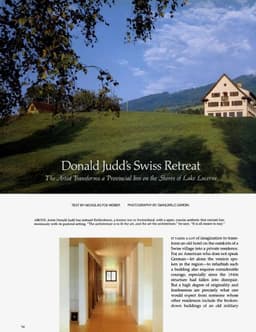
The 1940s Swiss chalet framework remains intact with traditional window grids, wood paneling, and porcelain oven, but Judd's contemporary furniture and aluminum-and-Plexiglas sculptures create intentional anachronisms that refuse period consistency.
The building itself dates to the 1940s with original frameworks kept intact, the arbors in the garden have been there twenty years, Spanish pottery was found locally, and the text describes Judd discovering and slowly restoring a 'trashy' old hotel—genuine accumulation over time.
The article describes a deeply personal retreat—a private residence converted from a hotel, with Judd's own studio as the primary space, no entertaining areas emphasized, and the text focuses on solitude, personal work, and the artist's quiet coexistence with the landscape.
Despite the austere minimalism, the spaces feel lived-in and personal—a daybed for resting, a worktable covered with pottery and objects in use, worn wood surfaces—suggesting comfortable daily habitation rather than disciplinary strictness.
Every object and piece of furniture was designed or chosen by Judd himself for his own reasons—his own chairs, his own tables, his own sculptures on the walls—this is pure self-curation by an artist living inside his own aesthetic philosophy.
Nothing here performs for an audience; the aluminum-and-Plexiglas sculptures are Judd's own work hung for himself, the galvanized-iron armchair is his design, and the entire retreat embodies 'if you know you know' wealth that serves the self entirely.