Homeowner Name
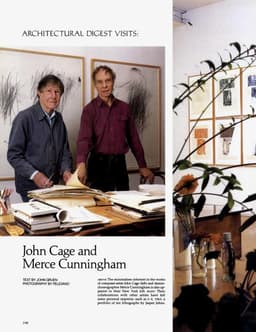
John Cage and Merce Cunningham
About (information sourced from public biographical records)
John Cage was an experimental composer; Merce Cunningham was a choreographer and dancer. Their New York residence appeared in Architectural Digest's November 1988 issue. Both built avant-garde careers without documented family wealth, becoming central figures in 20th-century American art.
Epstein Connection?
 DETECTIVE
 RESEARCHER
 EDITOR
Property Details
Wealth Score
8.0
/ 10
Wealth Source
SELF MADE
Cage: compositions, performances, teaching, visual art, lectures. Cunningham: da…
Professional Category
ENTERTAINMENT
Fame Score
9
3,514,003 wiki views
Board Memberships
Member (Cage, elected 1968), American National Academy and Institute of Arts and Letters; Member (Cage, elected 1978), American Academy of Arts and Sciences; Co-founder (Cage), Foundation for Contemporary Arts (FCA); Founding Trustee (Cunningham), John Cage Trust; Founder (Cunningham), Merce Cunningham Trust; Fellow (Cage), Wesleyan University; Charles Eliot Norton Professor of Poetry (Cage, 1988-1989), Harvard University
Influence Score
—
Architectural Digest Issue:
“john cage and merce cunningham”
by John Gruen
Home Score Summary (Custom Aesthetic Scoring Instrument v2.3)
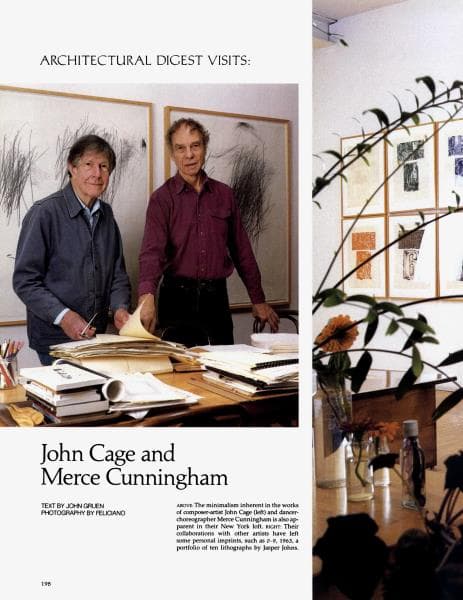
A forty-year accumulation of avant-garde friendship in loft form. The Johns lithographs and Rauschenberg prints aren't collection pieces — they're gifts from collaborators, pinned alongside cacti and cat hair on worn wooden floors. Two of the twentieth century's most radical artists built something deeply domestic and unpretentious.
Feature Pages
 p.198
p.198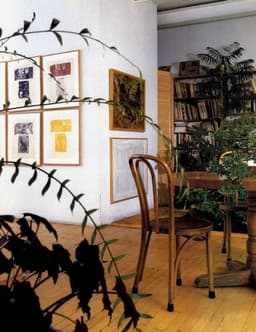 p.199
p.199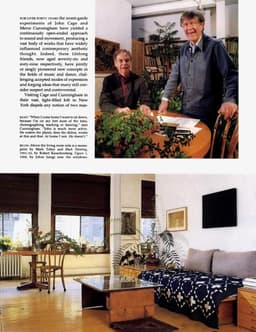 p.200
p.200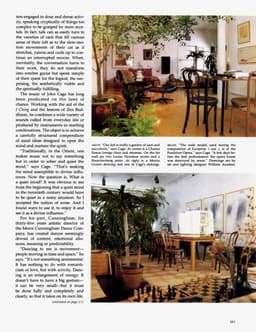 p.201
p.201Home Score
Radial Graph
The score pattern is dominated by a single outlier—Provenance at 5—while Stage collapses uniformly to 1 and Space sustains modest mid-range consensus, creating a profile where deep personal relationship networks suppress both formal grandeur and theatrical presentation.
Scoring Explanations
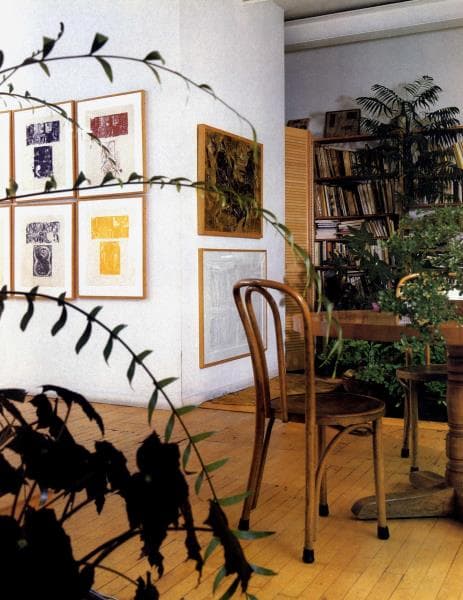
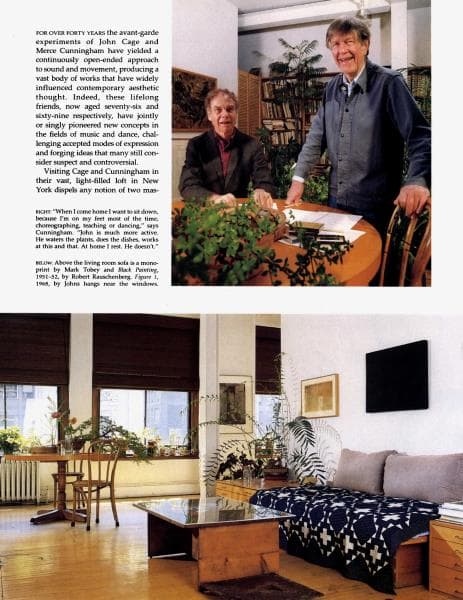
A vast light-filled New York loft with generous proportions and high ceilings, but it reads as a bohemian artist's workspace rather than an imposing architectural statement — drywall, exposed wood floors, and casual furnishing keep it human-scale.
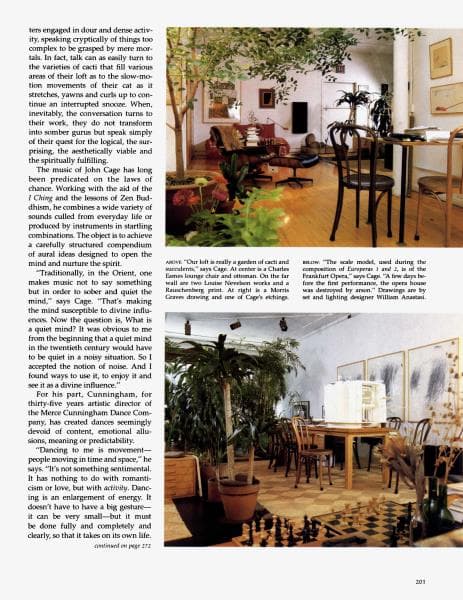
Wide-plank wood floors throughout, abundant plants and cacti, woven textiles on furniture, wooden Thonet-style chairs, and a Charles Eames lounge chair create a predominantly warm, tactile environment softened by greenery.
The loft is layered with art by notable friends — Jasper Johns lithographs, Rauschenberg prints, a Mark Tobey monoprint, Morris Graves drawing — plus cacti collections and books, but the open loft layout gives everything breathing room.
No historical period commitment whatsoever; this is a contemporary New York loft furnished with mid-century modern pieces and contemporary art, reflecting the avant-garde sensibility of its occupants.
Over forty years of accumulated life between two of America's most important avant-garde artists — the art is by personal friends (Johns, Rauschenberg, Tobey, Graves), the worn floors and lived-in furniture are genuine, and nothing feels purchased for effect.
The article describes Cunningham wanting to sit down after dancing all day and Cage watering plants and doing dishes — this is a deeply private domestic retreat for two artists, with no entertaining spaces or guest accommodations mentioned.
Papers spread across work tables, a cat that stretches and curls up for a snooze, plants everywhere, and curl-up furniture including the Eames lounger — this is a home where creative work and daily life blend seamlessly and informally.
Every object is self-selected from decades of artistic life and personal friendships — the Jasper Johns portfolio, the Rauschenberg prints, the cacti collection, the Eames chair — all reflecting the owners' taste rather than any designer's editorial vision.
Despite containing museum-worthy art by globally significant artists, every piece arrived through genuine personal relationships and collaborative history — this is wealth of friendship and creative exchange, not performative display.